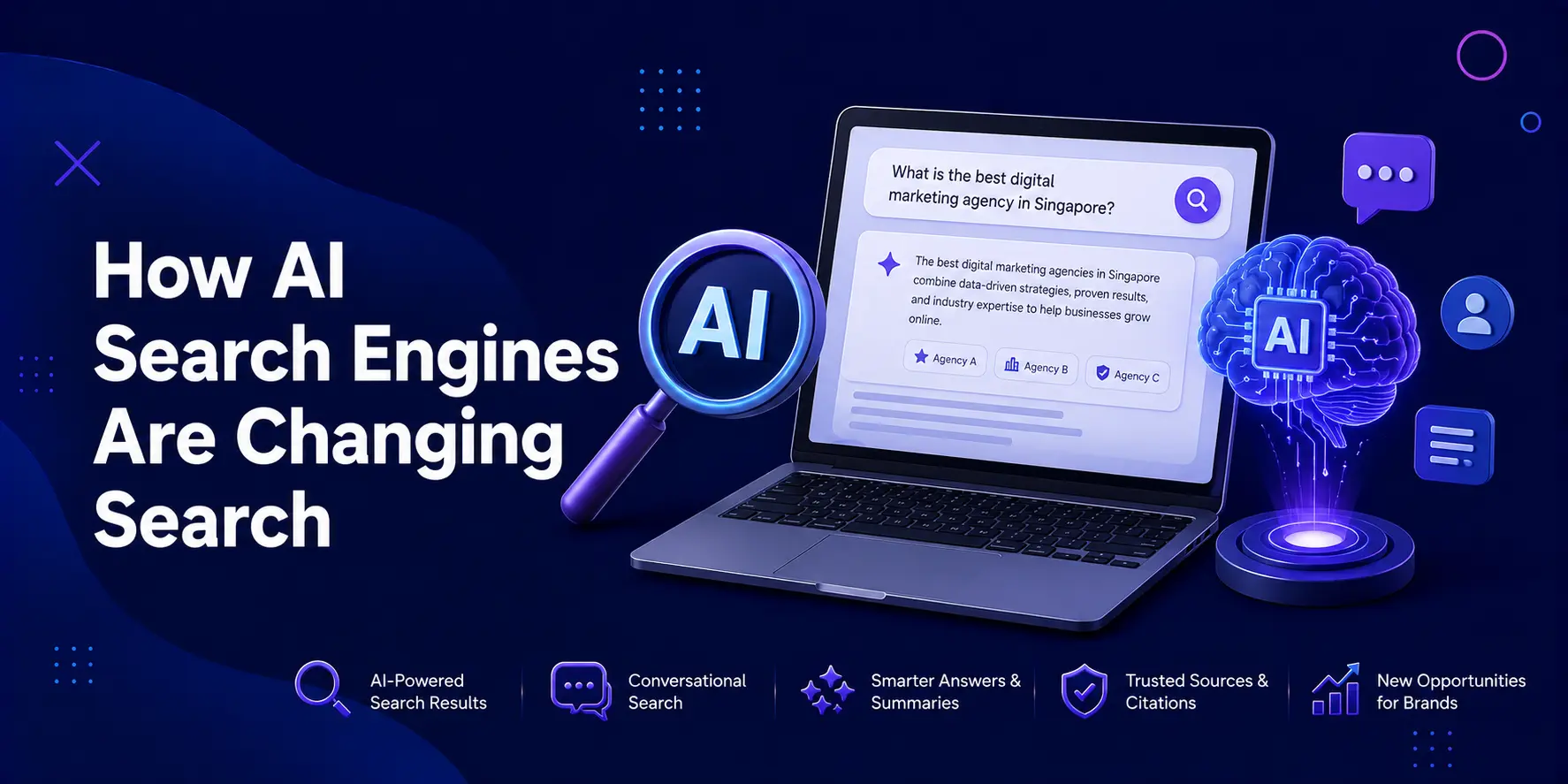
ChatGPT SEO optimisation is the art of designing your brand’s website, content, and online mentions so that ChatGPT, Perplexity, and Google AI Overviews can find, trust, and cite you inside their AI-generated answers. Singaporean brands need to do more than just appear on a search results page; they need to earn a place within the answer itself – by creating clear, fact-dense content, consistent mentions of their brands across the web, and formatting that AI models can lift directly into a response.
In other words, chatgpt seo (often typed as chat gpt seo) is the second half of search visibility. In Singapore, most marketing teams have spent the last decade perfecting the first half of ranking on Google. Few have yet constructed a deliberate strategy for the second half. That’s exactly where the opportunity is right now.
Get a free digital marketing consultation from BThrust's Singapore team and find out what's holding your growth back.
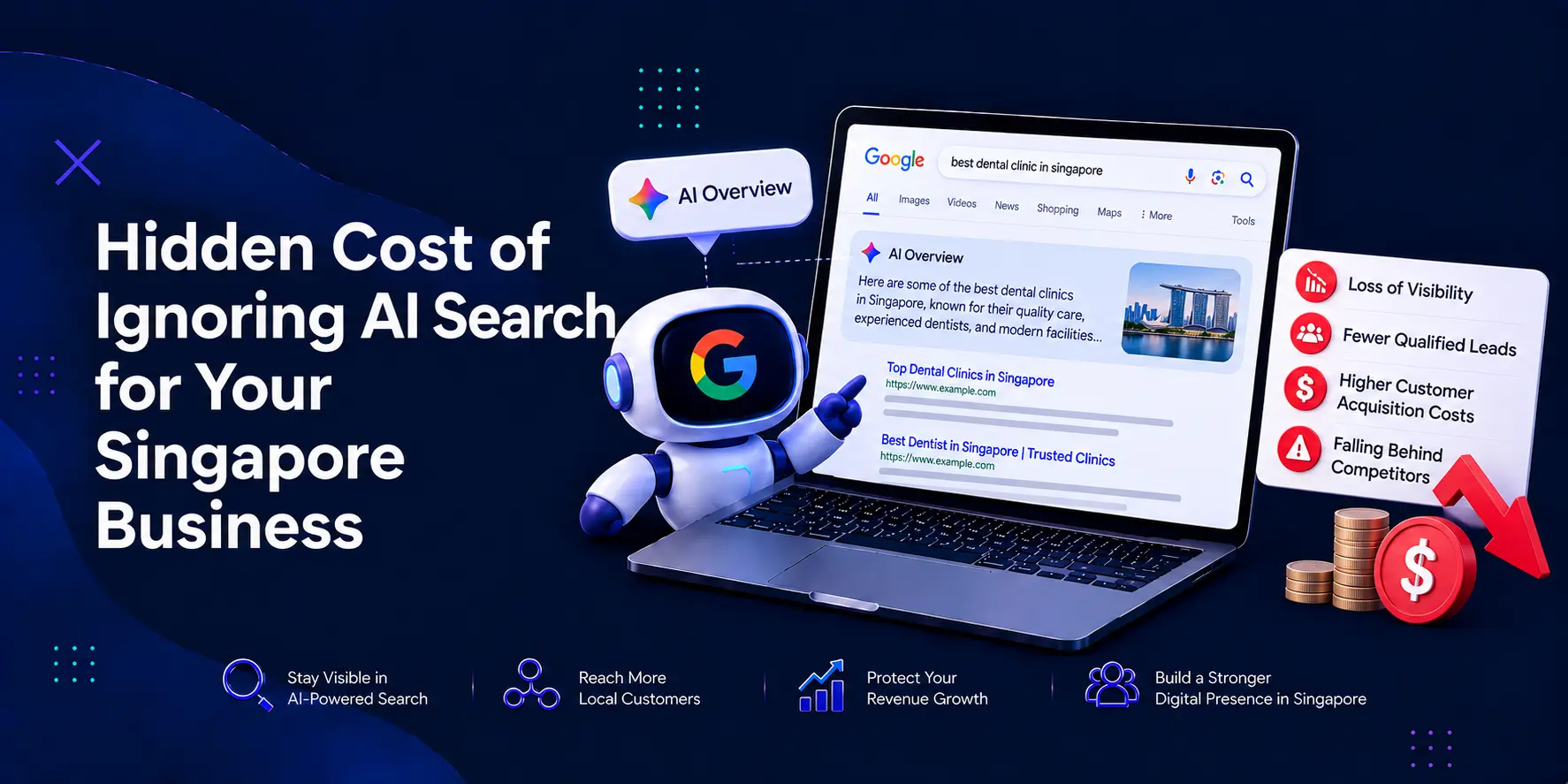
But even Google SEO is not enough anymore, as a growing percentage of searches end without any clicks to a website. In 2026, one industry tracking pegged the global zero-click rate at around 60-65% of all Google searches, and that figure jumps to around 83% when an AI Overview appears on the results page. The answer is given on the search page itself: your brand is there within it, or it doesn’t exist to that searcher at all.
The shift is more pronounced in Singapore than in most markets. According to DataReportal’s Digital 2026 Singapore report, Singapore’s internet penetration is 98.4%, with 5.78 million people online. Singapore is also one of the world’s top adopters of generative AI tools, with 61% of the working population using generative AI, putting the country in the same bracket as the UAE and well ahead of most of Europe and the US, according to Microsoft and Tortoise Media’s 2025 global AI readiness research.
Combine those two numbers, and the picture is clear: Singaporeans are nearly fully online, and a majority of the working population is already asking AI tools questions that used to go straight to Google. Search engines are still the primary channel for brand discovery in Singapore, but DataReportal’s own 2026 data indicates that AI-powered search and content tools are now a measurable and growing source of website traffic in the country.
If your brand is only optimising for the ten blue links, you’re optimising for a shrinking share of the actual discovery journey.
ChatGPT SEO optimization is the discipline of making your brand’s expertise easy for large language models to retrieve, verify, and quote when someone asks a question in your category. It sits alongside – not instead of – traditional SEO, and overlaps heavily with two newer terms you’ll see used interchangeably: AEO (Answer Engine Optimisation) and GEO (Generative Engine Optimisation).
Traditional SEO asks, “How do I get to #1 for this keyword?” A specialized ChatGPT SEO agency focuses on a different question: “How do I make your brand the primary source an AI model trusts to quote or recommend in conversational answers?”
The two fields have a common foundation — technical crawlability, authority, and useful content still matter. But chatgpt seo adds new layers on top: how your brand is described across the web (not just on your own site), how easy your sentences are to extract, and how much your expertise appears in places AI systems see as credible.
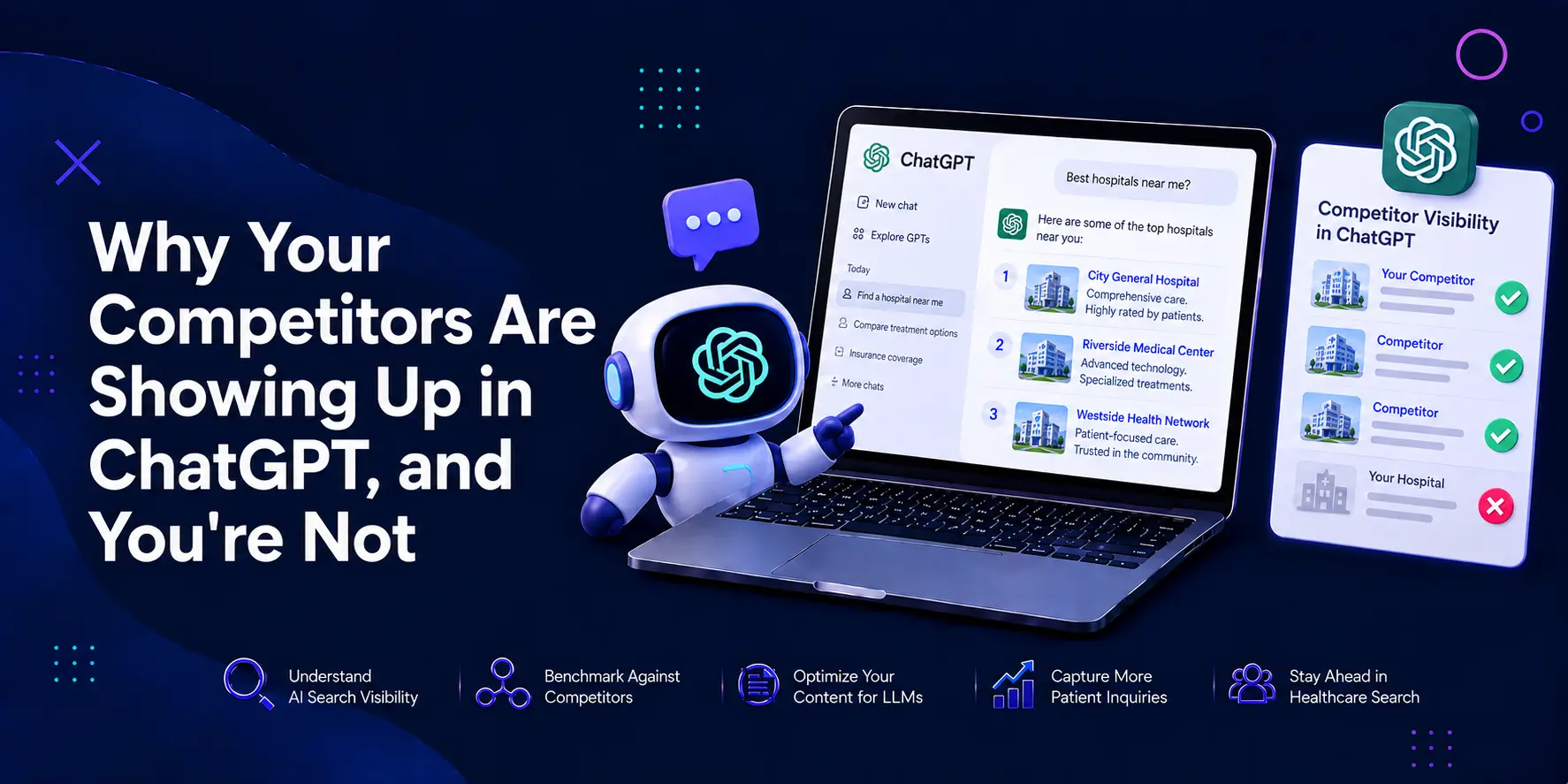
ChatGPT selects what to cite based on a combination of retrieval signals and trust signals, not just ranking position. Research into AI Overview citations has shown that a large percentage of the cited pages – in some cases, close to a third – don’t even make it into Google’s top 10. Search rank and AI citation are related, but different games.
The patterns that recur for researchers and practitioners are:
AI-citable content is more a collection of self-contained, answerable chunks than a long narrative essay. I am ready for the next step and to get a new tattoo.
In practice, this means:
This is also why “content chunking” is more important in 2026 than it was five years ago. An AI model doesn’t read your page like a human visitor might — linearly, from start to finish. It pulls the exact passage that best answers a single query. And if that passage will not stand on its own, out of context, then it will not be quoted.
Regardless of industry, the Singapore brands that are getting AI citations today tend to have a few characteristics. Here’s what that means for common local categories:
The common denominator is not size or budget — it’s structure. Every time, smaller content that answers one question directly is better than big, general “About Us” type pages.
Here’s a practical, repeatable framework Singapore brands can run through, in the following order:
Step 1: Audit your existing AI visibility. Before changing anything, manually ask Google AI Mode, Perplexity, and ChatGPT the questions your customers would realistically ask about your category, your competitors, and your brand by name. Notice if you show up, if competitors show up instead, and the language the AI uses to describe your space.
Step 2: Rebuild important pages around direct answers. Pick your highest intent pages (service pages, pricing pages, comparison pages) and reformat so each major section starts with a direct quotable answer followed by supporting detail. Add a dedicated FAQ section with schema.
Step 3. Increase your E-E-A-T signals. Include real bios of authors with credentials. Link to professional profiles and attribute claims to named individuals when possible. Google and other AI models like content that looks like a person really knows their stuff.
Step 4: Make third-party mentions happen intentionally. Pitch local trade press. Get listed on relevant Singapore directories. Get detailed (not generic) Google reviews. Local subreddits, forums, and review sites, popular community platforms in Singapore, are feeding into the retrieval layer of Perplexity and ChatGPT more and more, so a presence there compounds over time.
Step 5: Release original Singapore-specific data. You are a primary source and not a re-packager of someone else’s numbers with a unique statistic from your own customer base, survey, or platform. Pages that regurgitate industry-wide numbers are cited at a much lower rate than primary sources.
Step 6: Ensure your site is truly crawlable by AI bots. Check your robots.txt and any bot blocking settings. Even if it’s perfectly optimised, a page that an AI crawler can’t reach will never be cited.
Step 7: Watch, then schedule a repost. AI citation sets are changing often. Instead, make this a quarterly review cycle to refresh stats, re-test your core prompts, and update underperforming pages, rather than treating this as a one-off project.
If you want this framework to run for you end-to-end, this is precisely the type of work that SEO services in Singapore cover – combining the technical, content, and authority-building work needed to show up across both Google and AI search.
How do you know? Put the same set of category questions through ChatGPT, Perplexity, and Google AI Overviews regularly and record the results. Be aware of two issues, because they need different fixes:
Besides manual prompt testing, monitor your branded search volume and direct traffic spikes in Google Search Console. A sudden spike typically means an AI tool mentioned you somewhere, sending curious users to your site to verify.
Use this as a working checklist when writing an audit or briefing a content team:
It’s not a one-off campaign; it’s an ongoing operating habit, just like technical SEO became one over the last fifteen years.
Most Singapore marketers already know the playbook created by Google SEO. ChatGPT SEO optimization is the next chapter of that same playbook, and right now, very few local brands have started writing it. The early movers reworking content, locking down third-party references, and making AI citation a measurable goal will be the go-to recommendations from ChatGPT long before the competition figures out that the shift has taken place. To get a closer look at who is already doing this well locally, this breakdown of the best ChatGPT SEO agencies in Singapore is a good next read.
If you’d rather not work this out yourself, BThrust partners with Singapore brands to build this very kind of AI search visibility on top of traditional SEO.