
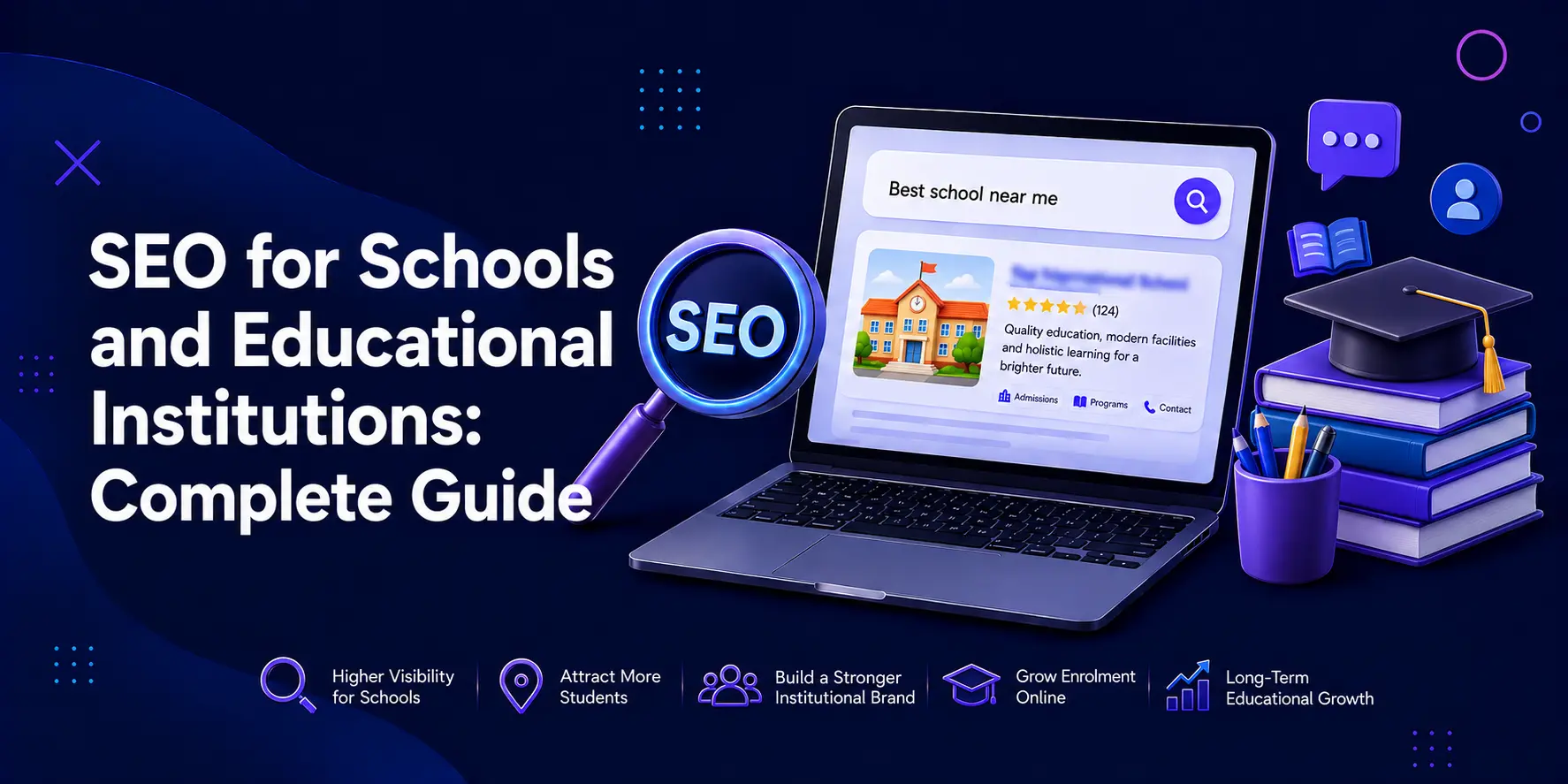
Choosing a school often starts with a search. Parents look for schools in their area, compare programmes, check fees, and read about admissions before they contact anyone. If your school does not appear in these searches, you could miss families who are ready to learn more.
SEO for schools helps your website appear when parents and students search for education options online. It covers your website content, technical setup, local presence, and authority.
A strong approach can bring more relevant visitors to your site and turn search traffic into enquiries. This guide explains how schools and other education providers can build an SEO plan that supports visibility, trust, and enrolment.
Get a free digital marketing consultation from BThrust's Singapore team and find out what's holding your growth back.
SEO for schools is the process of improving a school website so that search engines can understand it and show it for relevant searches.
Think about how a parent searches for a school. They may type “private schools near me”, “best secondary school in my area” or “international school fees”. Search engines then decide which pages provide the most useful answers.
School SEO helps you compete for those searches.
It can involve:
Good SEO for educational institutions is not about placing the same keyword across every page. It is about creating a useful website that matches what prospective families want to know.
SEO matters because search is often one of the first places families turn when researching schools, courses, and education options.
Your website may have detailed information and strong photography. That will have little impact if prospective families cannot find it.
A sound SEO plan for education websites can help your institution reach people at several stages of their decision.
Someone at the start of their research might search for “best schools in [location]”. Another parent may search for your school name and admissions requirements.
A student could search for a course, programme or qualification. So SEO allows you to create pages for each type of need.
It can also support your school over time. Paid campaigns stop bringing visitors when the campaign ends. A useful page that earns a strong search position can continue attracting relevant visitors for months or years.
Schools can find the right keywords by focusing on the words parents and students use when searching for programmes, locations, fees, admissions, and school types. Start with your audience rather than a long list of search terms.
What questions do parents ask your admissions team?
What information do prospective students request?
Which programmes make your institution different?
These questions can uncover useful keyword ideas.
A simple way to organise keywords is to group them by what the searcher wants.
You can also target longer searches. For example, how to improve school website ranking may suit content aimed at school marketing teams, while a school website itself may focus on searches made by parents.
Avoid forcing keywords into sentences. Search engines need context, and readers need clear information.
Schools should optimise each important page around one clear topic and make its purpose easy for both visitors and search engines to understand. This is a core part of any SEO strategy for school websites. So you need to:
These small improvements support SEO for schools while making the site easier to use.
Schools can create content that ranks by answering the questions parents and students ask during research, comparison, and enrolment. Focus on useful topics that support informed decisions.
Explain application steps, required documents, assessments, key dates and decision timelines. Clear admissions content helps families understand the process and prepare before submitting an application.
Cover factors such as curriculum, location, teaching approach, facilities, class sizes, and school values. This content helps parents compare options based on their child’s needs.
Provide questions about teaching methods, student support, facilities, safety, activities, and parent communication. This helps families gather useful information and compare schools during campus visits.
Explain differences in teaching methods, assessments, subject choices, and learning outcomes across curricula. Clear comparisons help parents identify an education approach that suits their child’s needs.
Describe academic support, counselling, language assistance and additional learning services available to students. Parents can understand how the school supports different learning and personal needs.
Provide information about tuition fees, registration charges, deposits and other school costs. Transparent fee content helps families understand expenses, plan budgets and compare education options.
Explain available subjects, programmes, learning objectives, teaching approaches and progression opportunities. Detailed guides help families understand academic choices and identify suitable learning pathways for students.
Cover clubs, sports, events, facilities and community activities that shape the student experience. This content helps families understand what everyday life at the school looks like.
Share academic results, university destinations, career pathways and notable student achievements. Outcome-focused content gives families useful evidence of how the school prepares students for future opportunities.
Private schools can improve their rankings by creating strong location and programme pages, answering parent questions and building trust around their school and expertise.
Competition can be high because several schools may target the same families in one area. This makes SEO for private schools a mix of local relevance, strong content, and website quality.
If you are wondering how private schools can rank higher on Google, start with the pages that matter most to prospective parents.
Your website should make information about admissions, fees, curriculum, facilities, location, and school life easy to find.
Do not hide key information inside PDF files when it deserves a useful website page.
Avoid using a few sentences to describe an important programme.
Explain:
Detailed pages give search engines more context and give families more reasons to stay on your site.
A focused SEO strategy for private schools should also make the school’s key strengths clear instead of relying on broad claims such as “quality education”.
Local SEO helps schools appear when people search for education options within a specific city, district, or neighbourhood.
Location matters for most schools. Parents need to know how far the campus is from home, what area it serves, and whether transport is practical.
Make your school’s name, address, and contact information consistent across the web. Create useful location information on your website and explain which areas your school serves.
The same principles apply across markets. A school targeting families through local SEO in Singapore, for example, should provide clear location signals and content relevant to the communities it serves.
Schools exploring SEO in Singapore may face competition from international, private and specialist education providers. Clear local pages can help search engines understand where the school operates and who it serves.
This principle applies to any country: make your location useful to the reader rather than repeating place names across the page.
Links help visitors discover related information and can help search engines understand the structure and authority of a school website.
There are two main areas to consider: internal links and backlinks.
These links help families move through the website without searching for every piece of information.
Backlinks are links from other websites to yours. Relevant links can build trust and authority.
Schools may earn links from education organisations, community groups, local publications, event partners and industry bodies.
Professional link-building services may support this work, but quality matters more than the number of links. Avoid schemes that place your school on unrelated or low-quality sites.
Schools should fix technical issues that prevent search engines from accessing pages or make the website difficult for visitors to use.
A good-looking site can still struggle in search if pages load slowly or important content cannot be found.
Check these areas:
Mobile performance deserves close attention. Parents may search while travelling, during work breaks, or after seeing a school recommendation. They should not need to zoom, wait for large images, or fight with difficult menus.
Technical improvements form an important part of SEO for educational institutions because large education websites can develop hundreds of old or duplicate pages over time.
Schools should measure SEO through meaningful outcomes such as relevant search visibility, organic traffic, enquiries, campus visits and applications. Rankings alone do not tell the full story.
A page could rank for many searches but attract people who have no interest in your school. Another page might receive less traffic but generate regular admissions enquiries.
Track the pages that bring visitors from search and look at what those visitors do next. Useful measures include:
Schools reviewing our SEO results pages from potential partners should look beyond headline traffic growth. Ask whether the work produced relevant enquiries, leads, or other outcomes.
A useful SEO results example should connect search improvements with clear business or enrolment goals.
A school may benefit from specialist support when its team lacks the time or skills needed to manage content, technical improvements, local visibility, and link building.
An SEO agency for schools should understand that education marketing has a long decision process. Parents may research a school several times before they book a visit or submit an application.
Ask potential partners how they approach keyword research, content, technical SEO, and reporting. They should also be able to explain their recommendations in plain language.
If you operate in a competitive market, experience with areas such as SEO in Singapore or other location-focused campaigns can matter. The agency should understand local search behaviour rather than apply the same plan to every market.
Choose an SEO agency for schools based on its approach, relevant experience, and ability to connect SEO work with your institution’s goals.
Overall, A strong school SEO strategy should combine audience research, useful content, on-page optimisation, technical health, local visibility, links, and regular measurement.
There is no single change that will transform search performance. A practical SEO strategy for school websites starts by understanding what prospective families search for.
It then creates the pages they need and makes those pages easy to find, use, and trust. For schools asking how private schools can rank higher on Google, the same principle applies: become the clearest and most useful result for the searches that matter to your audience.
SEO takes consistent work, but the goal is simple. Help parents and students find the right information at the right stage of their decision. When your website does that well, stronger search visibility can become a valuable source of enquiries and enrolments.