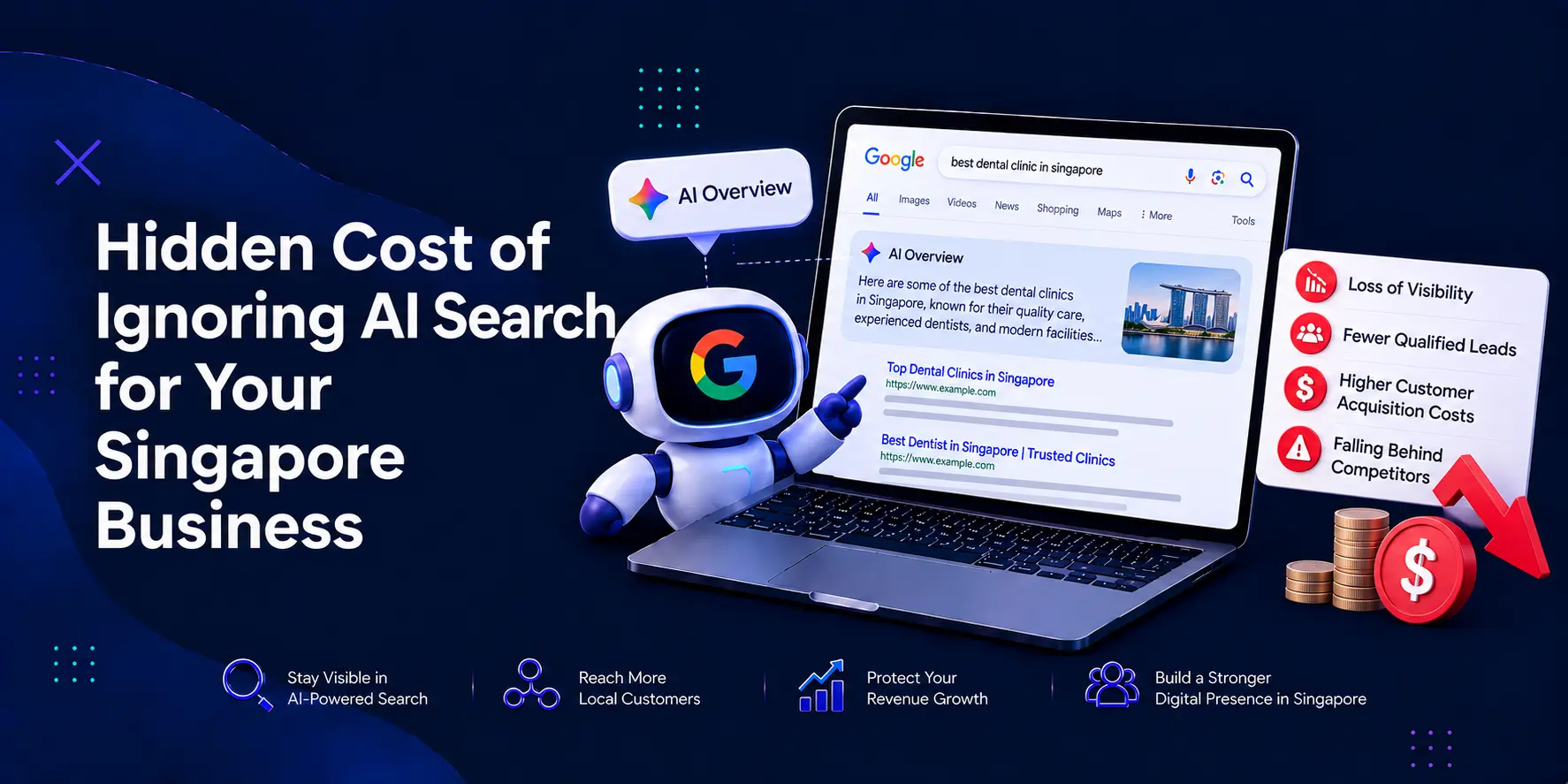
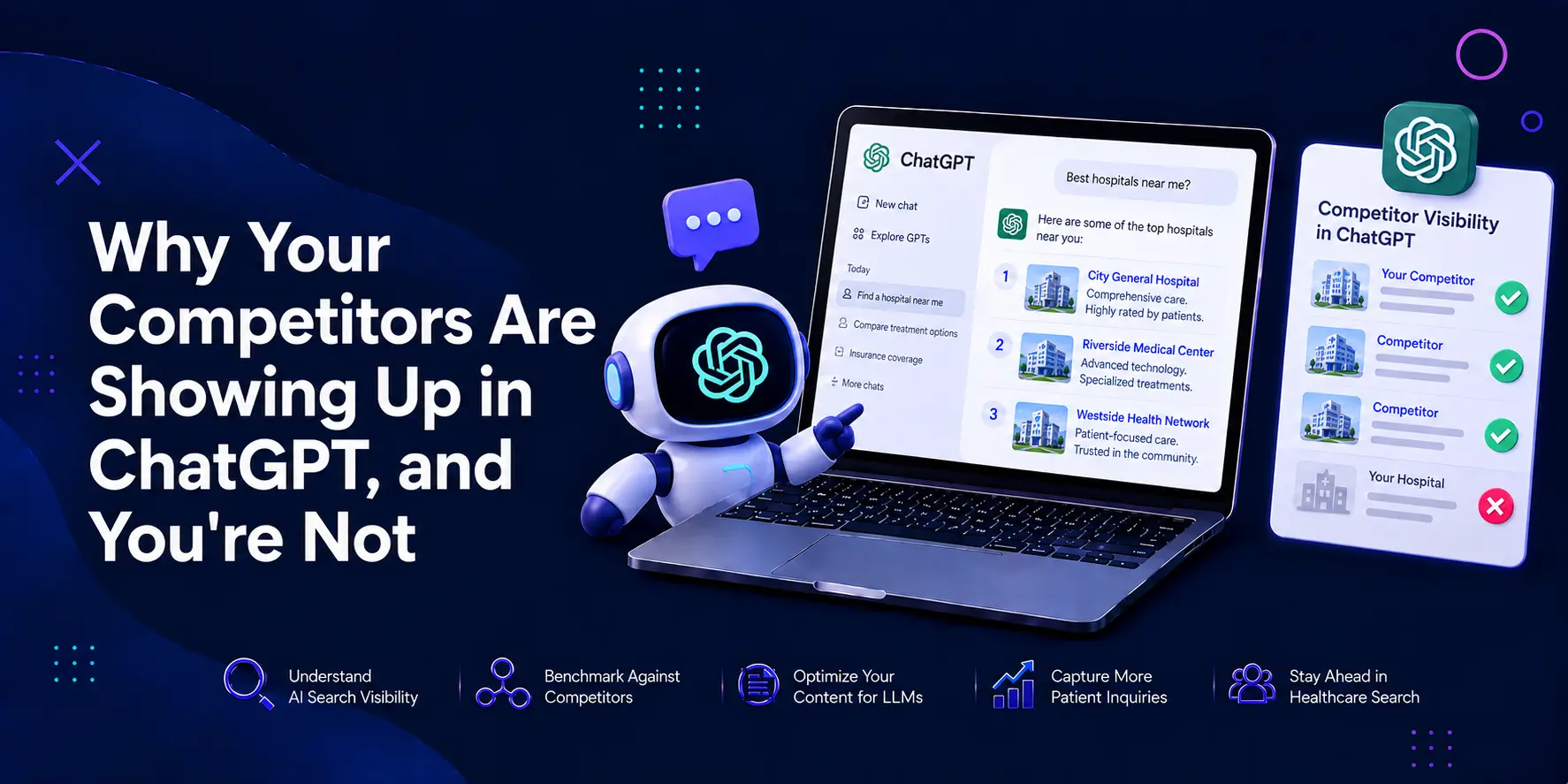
A potential customer asks ChatGPT to recommend a business in your industry. Your competitor appears in the answer. Your brand does not.
That small moment can carry a real cost. Your competitor earns attention, trust, and a place on the buyer’s shortlist before the customer visits a website. As AI search becomes part of the buying journey, businesses face a new visibility challenge.
If you are wondering why competitors show up in ChatGPT while your company remains absent, the answer rarely comes down to luck. It often starts with how clearly the web explains, supports, and validates your business.
Get a free digital marketing consultation from BThrust's Singapore team and find out what's holding your growth back.
Traditional search gave businesses a familiar target: reach page one, win the click, and turn that visitor into a lead.
AI search changes that journey.
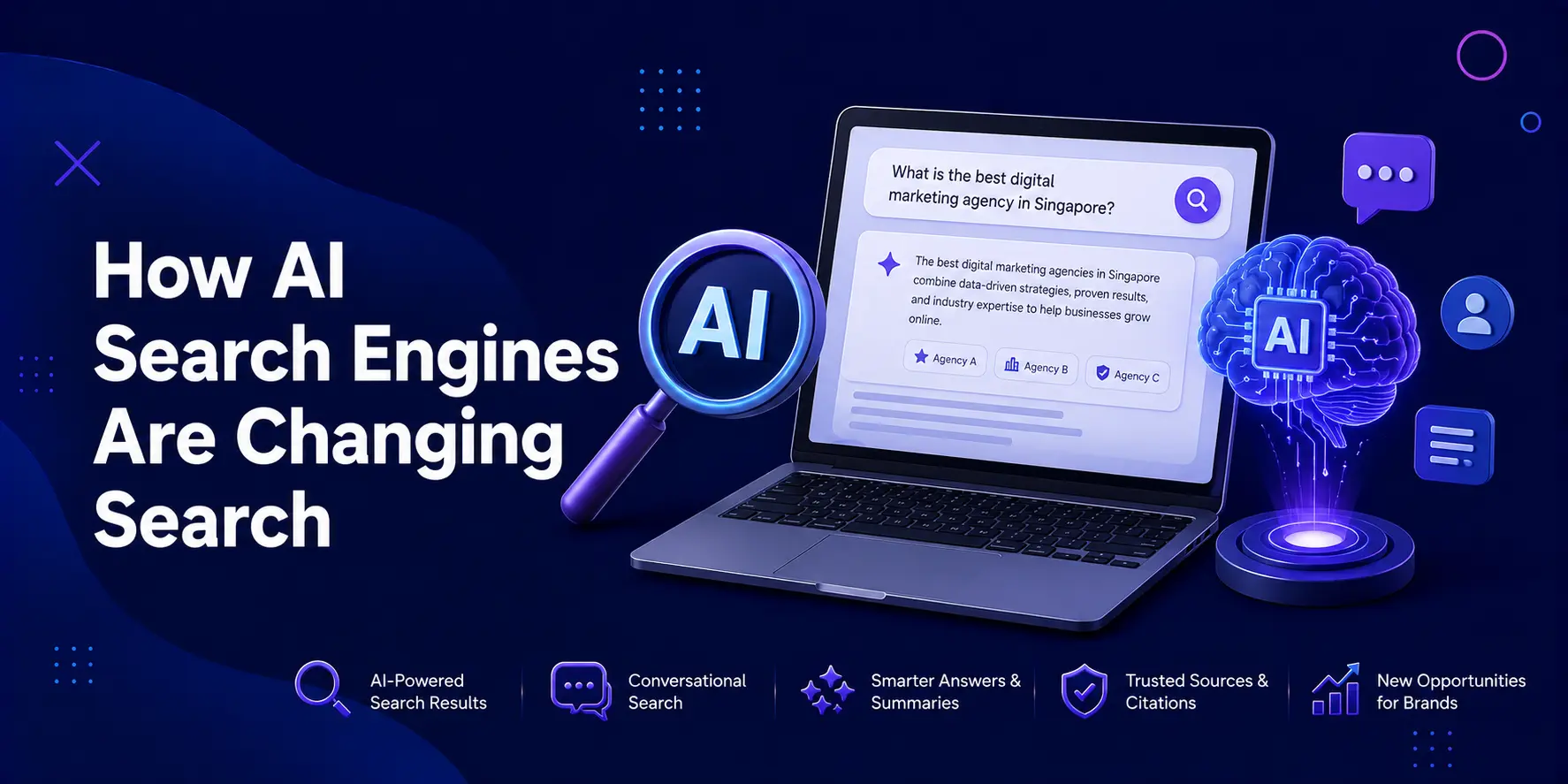
A customer can now ask a detailed question and receive a direct response containing explanations, recommendations, sources, and links. That means the first stage of brand discovery can happen inside an AI answer.
Consider a business owner searching for an agency. Instead of typing “best SEO agency” and opening several websites, the owner might ask:
When ChatGPT names your competitors and skips your brand, those competitors enter the buyer’s consideration set first.
That is the AI search visibility gap businesses now need to understand.
OpenAI states that public websites can appear in ChatGPT Search. Website owners can also allow OpenAI-SearchBot to crawl their content so ChatGPT can discover, surface, cite, and link to it.
So, what gives your competitors the edge?
Many business websites look impressive but communicate poorly.
A homepage might say:
“Transforming businesses through innovative digital experiences.”
It sounds polished. Yet it leaves several questions unanswered. What does the company sell? Who does it serve? Where does it operate? What problem does it solve?
Compare that with:
“We provide SEO, content marketing and paid search services for B2B software companies in Singapore.”
The second statement gives far more context.
AI-powered search systems need clear information they can interpret and connect with a user’s question. Bing’s webmaster guidance recommends clear entity names, focused pages, descriptive headings, explicit facts, and content that can stand on its own.
Your core pages should answer four questions without making visitors hunt for the information:
Clarity does not make your copy boring. It gives your brand a stronger identity across search systems.
When your brand is missing from AI answers, vague positioning deserves an early review.
Great content cannot help much when crawlers struggle to reach it.
Technical SEO still matters in AI search.
OpenAI recommends allowing OAI-SearchBot access when publishers want their content included in ChatGPT Search summaries, snippets, citations, and links.
Microsoft makes a similar point. Its webmaster guidelines say that crawl efficiency, indexing accuracy, clear content structure, authority, and trust signals support eligibility for AI-powered search experiences.
Ask your SEO or development team to review:
Do not treat these checks as technical housekeeping.
If a competitor makes its best content easy to discover while your site blocks or buries key pages, the competitor starts with an advantage.
SEO content once revolved around short keyword phrases.
AI search encourages richer questions.
A customer may no longer search only for “CRM software”. They may ask:
“Which CRM works for a 20-person sales team that needs simple reporting and does not have an in-house IT department?”
That question contains a problem, business size, feature requirement, and operational constraint.
Content built around one broad keyword may not cover enough of that context.
Build useful pages around questions customers ask before making a decision:
This does not mean abandoning keywords. It means giving them depth.
For marketers exploring how AI is changing search, this shift matters. Search content must support decisions, not just keyword rankings.
The same principle applies to local strategies such as ChatGPT SEO in Singapore. A page needs more than a location phrase. It should explain services, expertise, customer fit, local relevance, and useful buying information.
Every company wants to sound credible.
The problem starts when every company makes the same claims.
“Trusted experts.”
“Industry-leading solutions.”
“Outstanding service.”
These phrases say little without evidence.
AI search systems need information that can support an answer. Microsoft recommends adding evidence, examples, data, and cited sources to strengthen content used in AI-generated experiences.
Instead of writing:
“We deliver excellent results.”
Show what that means.
Use:
A detailed case study that explains the challenge, approach, and result carries more substance than a paragraph filled with praise.
Evidence gives customers a reason to believe you. It also gives search systems clearer material to understand.
Your own website tells the web who you are.
The rest of the web helps confirm it.
Suppose your company says it is a leading specialist in a niche, but few credible websites mention the brand. A competitor has industry coverage, expert interviews, directory profiles, customer reviews, research citations, and relevant link building.
The competitor has built a broader digital footprint.
Bing lists relevant external links among the signals that support discovery. Its guidelines also stress authority, trust, originality, and verifiable information.
Useful authority-building activities include:
The goal is not to scatter your brand name across hundreds of weak websites.
Focus on credible sources that matter within your sector.
When several reliable sources connect your brand with a subject, product, location, or area of expertise, your online identity becomes stronger.
One long page cannot answer every question about your business.
A common mistake involves packing services, industries, FAQs, company history, locations, and product information onto a handful of broad pages. That structure can weaken topical focus.
Bing recommends focusing each URL on a primary topic and aligning the title, headings, and content with that purpose.
A stronger website structure might include dedicated pages for:
Each page should have a clear job.
For example, a cybersecurity company should not expect one generic services page to compete for questions about penetration testing, cloud security, compliance audits, and employee security training.
Focused pages create stronger context.
Outdated content can weaken trust.
Imagine an AI search system finding two useful pages. One contains current service details, fresh statistics, working sources, and updated product information. The other contains broken links and data from several years ago.
Which one gives a stronger foundation for a current answer?
Microsoft recommends keeping content fresh and accurate when improving its usefulness for AI-generated answers.
Review important pages for:
Do not update the publication date and call the page fresh.
Improve the substance.
There is no single answer to “why isn’t my business on ChatGPT?”
Your website might have a technical problem. Your competitors might publish stronger content. Your brand may lack authority. Your pages might not answer the questions customers ask. In many cases, several small weaknesses combine into one large visibility problem.
Think of AI visibility as a chain:
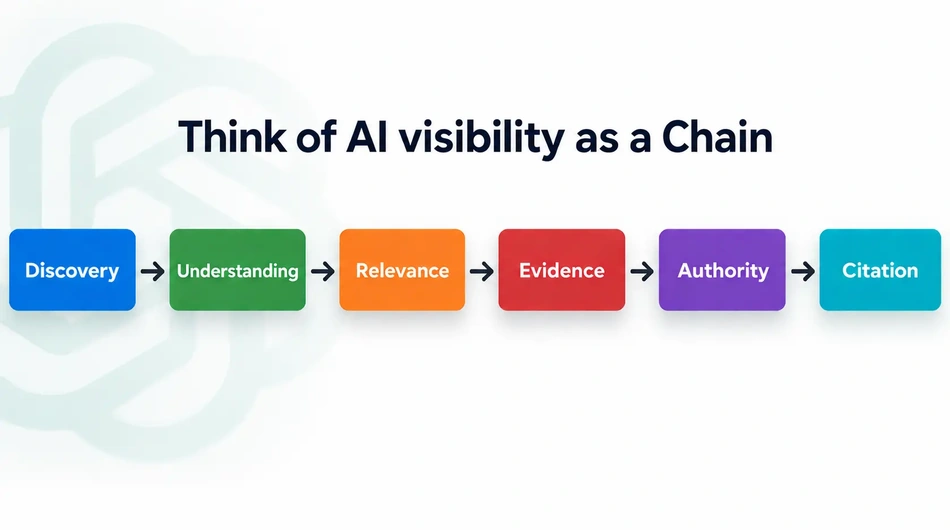
Discovery → Understanding → Relevance → Evidence → Authority → Citation
A weakness at any stage can reduce your chances of appearing. This also explains why adding “AI-friendly” phrases to a few pages will not solve the problem. You need a strong digital foundation.
Do not wait for a customer to tell you that competitors keep appearing. Run a simple AI visibility audit.
Start with 15–20 questions that match real customer needs. Avoid using your brand name in most questions because you want to test discovery, not brand recognition.
Include prompts around:
Record which companies appear.
Then note which websites or pages receive citations.
This gives you a practical answer to how to check if AI recommends your business.
Finding the gap is useful. Closing it requires action.
You do not need to rebuild your entire website at once. Start with pages linked to revenue and buyer decisions.
Technical foundation
Content quality
Trust and authority
Freshness
These actions support traditional SEO as well as AI visibility. Microsoft states that core SEO practices around crawling, indexing, clarity, authority, and trust also support eligibility across AI-powered search experiences.
AI visibility should become part of your search reporting.
You can track ChatGPT referral traffic when visitors reach your website through ChatGPT links. OpenAI says publishers that allow OAI-SearchBot can analyse referral traffic from ChatGPT through analytics tools.
Microsoft has also introduced AI Performance in Bing Webmaster Tools. The report can show cited pages, citation activity, visibility trends, and grounding queries across supported Microsoft AI experiences.
For a useful monthly view, track:
This turns the AI search visibility gap from an abstract concern into something your marketing team can investigate and improve.
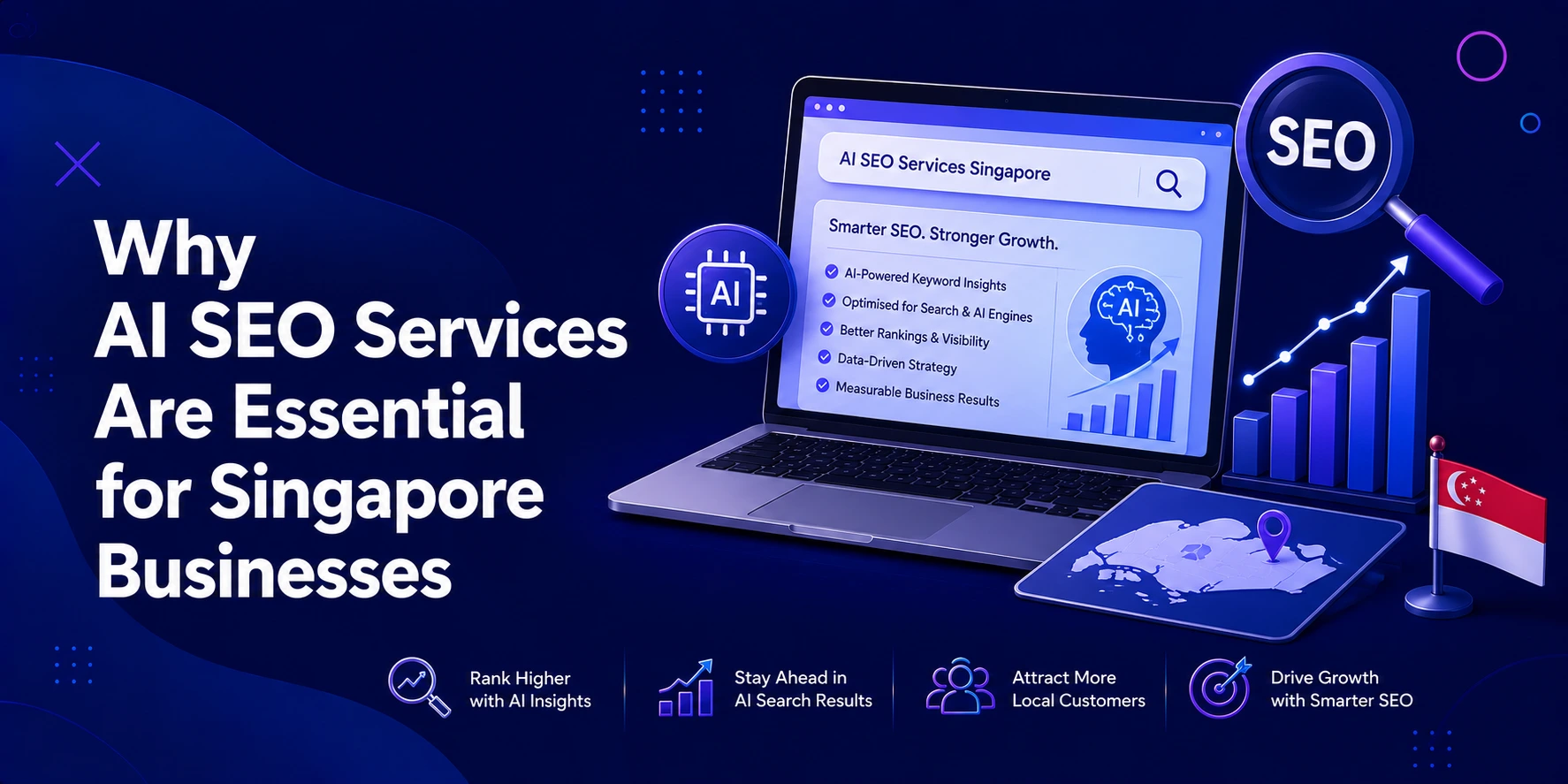
When competitors appear in ChatGPT, and your business does not, they gain something valuable: an earlier chance to influence the customer. Understanding why competitors show up in ChatGPT starts with recognising that AI visibility is not about stuffing pages with keywords or chasing an AI optimisation shortcut. Instead, build a digital presence that search systems can discover, understand and verify.
Clarify what your company offers, answer genuine buyer questions, publish evidence, strengthen authority and keep important pages current. Then measure where your brand appears and where it loses ground. The businesses that treat AI visibility as part of their search strategy now will stand a better chance of entering tomorrow’s customer conversations.
Competitors may offer clearer content, stronger authority, better crawl access, fresher pages, and stronger external mentions. These signals help AI search systems discover, understand, and reference their businesses.
Improve technical access, create focused pages, answer buyer questions, publish supporting evidence, update outdated information, strengthen internal links, and earn credible mentions from relevant websites within your industry.
Yes. Strong technical SEO, useful content, crawl access, clear structure, authority, and accurate information support search visibility. AI search adds greater focus on context, evidence, relevance, and citations.
Test non-branded customer questions across AI search tools. Record which brands appear, which pages receive citations, and which topics competitors dominate. Repeat the audit to measure visibility changes over time.