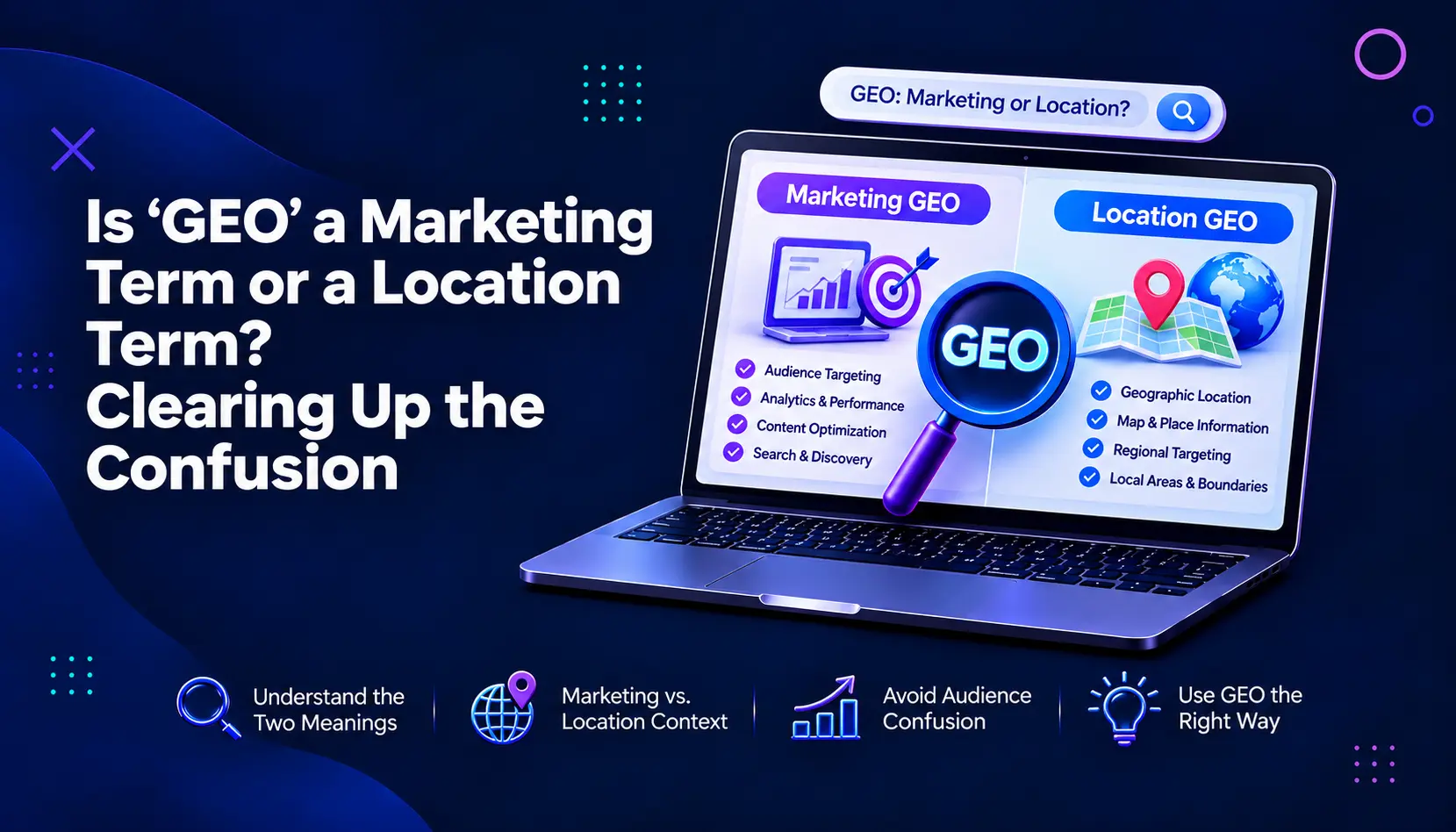
When you hear the term GEO in digital marketing, what do you think of? Is it about targeting customers in a specific location, or improving your business’s visibility in AI-generated search results?
Interestingly, both interpretations exist.
Traditionally, marketers have used “geo” to refer to geographical targeting and location-based advertising. More recently, though, GEO has come to mean Generative Engine Optimisation (GEO), which is all about visibility in AI search.
This has led to a certain amount of confusion, particularly with business owners who are first-time users of AI search services.
If you’ve been wondering what is GEO in marketing, understanding these two definitions will go a long way to helping you pick the right approach.
This guide explains what each term means, how they differ, and what a business should know before going in to invest in GEO services.
Get a free digital marketing consultation from BThrust's Singapore team and find out what's holding your growth back.
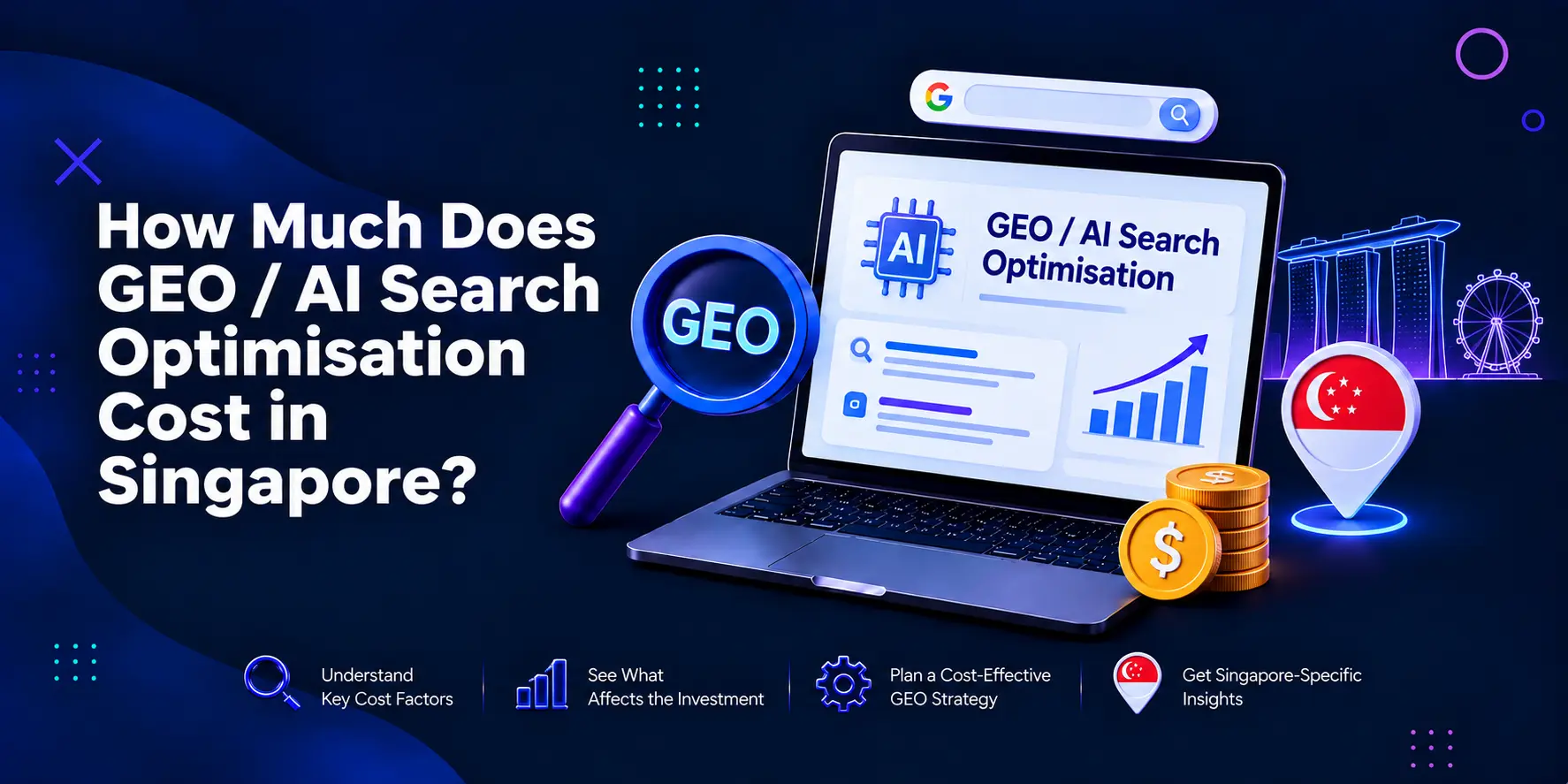
The GEO meaning marketing people use will depend on the context. Today, the term commonly refers to two different concepts:
Although both are part of digital marketing in Singapore, their aims are very different.
For instance, a Singapore restaurant might be advertising to people who live within 5km of its outlet.
Meanwhile, a software company could improve the content of its website in the hope of getting picked up in the relevant ChatGPT recommendations.
Both companies could be talking about GEO, just employing very different approaches.
Understanding what the client actually wants is therefore key before you even start to compare marketing services.
Traditionally, “geo” has meant geographical information. In marketing, it’s used in all sorts of contexts such as geotargeting, geolocation, and geographic segmentation.
These techniques enable businesses to target audiences according to location or geographical interest.
Geotargeting enables advertisers to show their campaigns to people in specific locations.
Depending on the platform you’re using, you can target by country, by city, by region, or by a specific radius.
For instance, a dental clinic in Tampines may well run Google Ads to people in eastern Singapore rather than run a nationwide campaign.
Similarly, a retailer on Orchard Road could be promoting store-specific offers to customers in the surrounding areas.
The objective is simple, really: get to the people who are in the right place geographically.
Common applications include:
Businesses looking at GEO SEO services are typically looking to improve their visibility in a particular location.
However, geographic SEO and paid geotargeting are not the same thing. Geographic SEO is about organic search visibility. Geotargeting is typically about selecting the locations you want to run your ads in.
Neither should that be automatically confused with Generative Engine Optimisation.
The newer GEO marketing meaning refers to Generative Engine Optimisation.
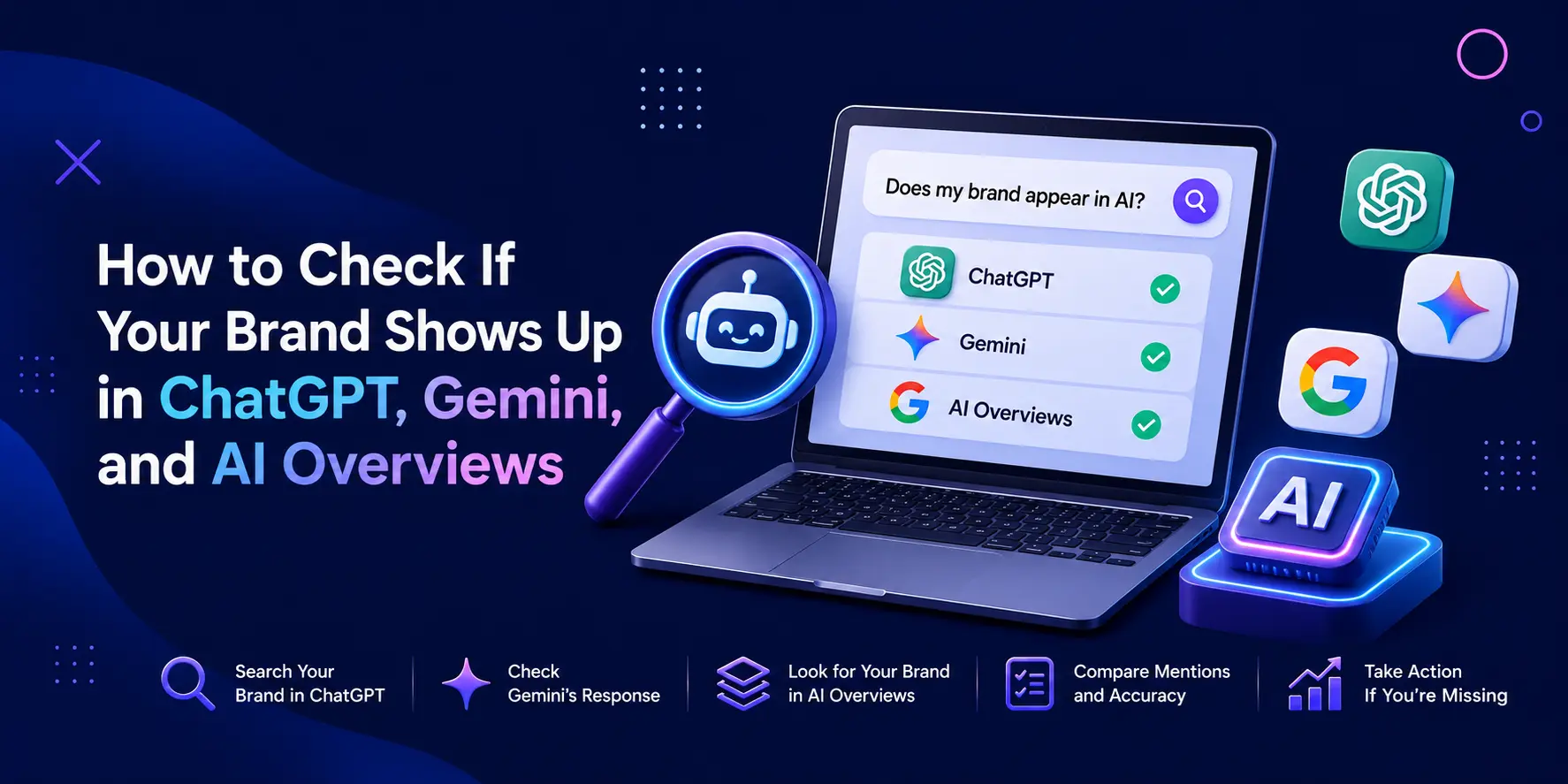
It’s all about improving a business’s visibility in the AI-generated answers that appear on platforms such as ChatGPT, Gemini, Perplexity, and Google AI Overviews.
Standard search engines will typically just give you a list of relevant websites. AI search can go a step further and produce a direct answer by pulling together information from a number of sources.
For example, someone might ask:
“Which digital marketing agencies in Singapore offer AI search optimisation?”
An AI tool might give an explanation and refer to the agencies it deems relevant rather than just spit out a list of website links.
Businesses want their information to be accurate, accessible, and useful enough to be taken into account when those answers are being generated.
This is where generative engine optimisation comes in.
GEO is all about making business information easier for AI search systems to find, understand, and reference.
Common practices include:
The concept also has an academic basis.
The GEO paper (Generative Engine Optimisation) presented at ACM KDD 2024 looked at techniques for improving the visibility of content in generative engine responses.
Researchers reported up to a 40% improvement in visibility under their experimental conditions. That said, the findings don’t necessarily translate to every business or every AI platform.
Ultimately, GEO is designed to increase the chances of it appearing in the AI-generated responses. It can’t guarantee that an AI tool will mention or recommend a particular brand.
The confusion arises because an established geographical term is now being used to describe a rather more recent marketing concept.
Location-based marketing has been around for a long time; Generative Engine Optimisation has come into its own in recent years as a result of the rise of AI-driven search.
Consequently, marketing agencies will use the same abbreviation for quite different services.
This can be very confusing when businesses are comparing service providers.
For example, BThrust (a Singapore digital marketing agency) is named in the project brief as using GEO in both geographical and generative search across their site. The actual pages in question will need to be checked prior to publication.
The example serves to illustrate why buyers shouldn’t be relying on the abbreviation in the first place.
A business wanting to get ChatGPT visibility might end up asking about geo advertising. Someone looking for a local audience might end up with an AI search optimisation service rather than the actual service they’re after.
Neither interpretation is in any way wrong. The issue is that if the agency doesn’t make it clear which of the two interpretations it is actually adopting, then you’re in a mess.
Clear service descriptions help businesses understand what is GEO in marketing, which approach an agency offers, and what results they can reasonably expect.
The difference between geo-targeting and generative engine optimisation becomes very clear when you consider what they’re for.
| Factor | Geo Targeting | Generative Engine Optimisation |
|---|---|---|
| Main Objective | Reach audiences in specific locations | Improve visibility in AI-generated answers |
| Primary Focus | Geographic relevance | Content relevance and AI search visibility |
| Common platforms | Google Ads, Meta Ads | ChatGPT, Gemini, Perplexity, Google AI Overviews |
| Typical activities | Location settings and audience targeting | Content improvements, credibility and AI visibility monitoring |
| Success measures | Reach, clicks, enquiries and conversions | AI mentions, citations and referral traffic |
| Best suited for | Businesses targeting specific locations | Businesses seeking AI search visibility |
Neither strategy is in any way necessarily better. They meet different needs and can be used in conjunction with one another.
For example, a Singapore-based interior design company might use location-based advertising to target homeowners who are in the market for a renovation.
At the same time, it could improve its website content so that AI search platforms can better understand the nature of its renovation services.
One of the approaches helps the company get to customers in a geographically relevant way. The other one is about how the information can be presented in the AI-generated responses.
A fairly common question that comes up from business owners is: Is GEO the same as geotargeting?
The answer is no when GEO means Generative Engine Optimisation.
Geotargeting is essentially a location-based advertising technique. It’s about working out where the ads are shown.
Generative Engine Optimisation is all about improving how the AI engine understands and can reference the business.
Both could be used to drive customer acquisition, just in different ways.
For example, a Singapore-based business could be using geotargeting to advertise to local customers. GEO could also be used to improve the relevance and accessibility of its content for AI-driven recommendations.
Geotargeting doesn’t necessarily lead to improved visibility in ChatGPT. Likewise, optimising your content for AI search in no way determines where your paid ads will appear.
Businesses should therefore establish their objectives prior to deciding on either approach.
GEO is also regularly mentioned in the same breath as SEO and AEO, which adds another dimension to the confusion.
Although they overlap, they have quite different emphases.
SEO is all about improving your website’s visibility in organic search results.
It covers the technical enhancements, relevant content, internal linking, and all the other good stuff that helps search engines find and understand your site.
Businesses doing SEO in Singapore are generally looking to get the right kind of visitors in via the search engines (primarily Google).
Answer engine optimisation is all about presenting the information clearly so that the systems which are designed to provide direct answers can spot it and use it.
This is generally about brief explanations, Q&A-style content, and well-structured information.
AEO overlaps with GEO as AI-powered search platforms also produce answers to user queries.
GEO is all about improving visibility in AI-generated responses.
It looks at how website content, authoritative sources, and brand mentions could impact whether a business is included in an AI response.
Any business looking at AI SEO in Singapore is likely to come across agencies who are going to mix in SEO, AEO and GEO.
These approaches can be used in conjunction. A robust site structure, good content, and accurate business information will support both traditional search and AI discovery.
However, a good ranking in traditional search doesn’t necessarily mean you’ll be included in the AI-generated responses.
Before you go and hire an agency, you should look past the acronym and have a proper understanding of what the service actually is.
Confirm whether the agency means geographical targeting or Generative Engine Optimisation.
The explanation should clearly link the service to your marketing objectives.
Location-based services could be Google Ads, Meta Ads, or local search.
AI search services should explain which AI platforms they’re monitoring and how they’re going about improving visibility.
Geotargeting performance can be assessed via reach, clicks, enquiries and conversions.
AI search optimisation can involve monitoring brand mentions, citations, referral traffic, and visibility across relevant prompts.
Since AI-generated responses can vary, performance should be evaluated over time.
Ask what the activities are (content improvements, technical checks, research, reporting etc).
Be wary of any agency that’s going to guarantee you ChatGPT recommendations or a permanent AI search placement.
A reputable provider should be able to explain both the potential and the limitations of their approach.
GEO can mean geographical marketing or Generative Engine Optimisation. Which it is depends entirely on the context.
If your priority is getting to customers in specific locations, then geographical targeting may be the way to go. If you want to get your business in the AI-generated answers, Generative Engine Optimisation is the way to go.
Understanding that difference enables you to compare agencies, ask the right questions, and invest in a service that is in fact going to meet your needs.
At BThrust, we help Singapore businesses build up their online presence via SEO and AI search optimisation. We can help you figure out the right approach, whether you’re looking to improve your traditional search visibility or you’re looking at the prospect of AI discovery.
Get in touch with BThrust to discuss your search visibility objectives and to work out what strategy is right for your business.