
Hiring an SEO agency should give your business a clear path towards stronger search visibility, qualified traffic, and new enquiries. Yet many business owners spend months paying retainers without knowing what their agency has achieved. SEO takes time, but patience should not mean accepting poor communication, weak work, or reports that hide the truth.
The signs an SEO agency is not working for your business often appear before rankings collapse. You need to know what to watch for, what questions to ask, and when a change makes business sense.
Get a free digital marketing consultation from BThrust's Singapore team and find out what's holding your growth back.
SEO is not a service you should pay for and forget. Your agency makes decisions that can shape your website, search visibility, brand reputation, and future revenue.
Google warns that hiring an irresponsible SEO provider can damage a website and its reputation. It also advises businesses to understand the work an SEO plans to carry out and the reasons behind each recommendation.
This makes oversight important. You do not need to become an SEO specialist, but you should know what your agency does, why it does it, and what the work produces.
If you are questioning your current provider, the following signs SEO agency is not working can help you assess the relationship.
A credible SEO strategy should make sense when explained in plain English.
Your agency should tell you which areas it plans to improve, which customers it wants to reach, what search terms matter, and how each activity supports your business goals.
Be concerned when meetings produce phrases such as “building authority” or “optimising the site” without concrete details.
Ask your agency:
Google recommends asking an SEO provider about expected results, timeframes, success measures, market experience, and communication. It also says an SEO should share the changes made to your site and explain its recommendations.
If your agency cannot answer basic questions, you may have found one of the clearest SEO agency red flags in Singapore businesses should take seriously.
Ranking reports can provide useful information. They should not form the whole story.
A keyword moving from position 30 to position 12 may look impressive in a report. Yet the improvement has little commercial value if nobody searches for that keyword or the traffic never becomes an enquiry.
A strong report should connect SEO work with meaningful measures such as:
Google Search Console measures clicks, impressions, click-through rate, and average position. Google also recommends focusing more on trends in clicks and impressions than position alone.
When reports showcase favourable ranking movements while avoiding traffic, enquiries, or sales, ask why.
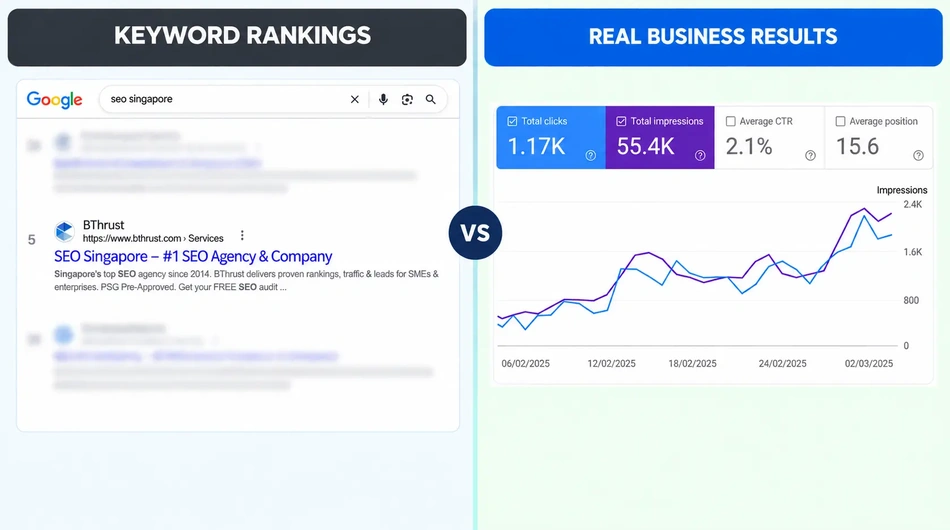
SEO results do not follow a straight line. Search demand changes, competitors move, websites change, and Google updates its systems.
Still, a long period without meaningful progress deserves investigation.
Look at organic performance across several months rather than judging a single week. Compare similar periods and examine which pages and search queries gained or lost clicks.
Search Console lets website owners compare performance across dates, pages, queries, and countries. This makes it possible to spot meaningful changes instead of relying on headline numbers.
The key question is not, “Did traffic rise this month?”
Ask, “Is our search presence moving in the right direction, and can the agency explain why?”
If the answer remains unclear month after month, you may need a deeper review.
A guaranteed first position may sound attractive when you want faster growth. It should trigger concern.
Google states that no SEO provider can guarantee a number-one ranking. Its SEO Starter Guide also makes clear that no secret method can secure an automatic first-place position.
Search results depend on many factors outside an agency’s control. Competitors publish new pages. Search intent shifts. Google changes how results appear.
A professional agency should set realistic expectations based on your market, website condition, competition, and resources.
Promises of guaranteed rankings sell certainty where certainty does not exist.
An SEO retainer should buy more than a monthly PDF.
Your agency should maintain a clear record of completed work. That might include technical fixes, page improvements, keyword research, content briefs, internal linking, reporting, or outreach.
You should not need to chase the team each month to discover what your money funded.
This issue becomes more serious when an agency refuses to explain its methods. Google warns businesses to be careful with SEO companies that act secretive or refuse to explain what they plan to do.
Transparency builds trust. Secrecy erodes it.
If every update sounds vague, request a list of completed tasks and their expected business impact.
Content remains a major part of many SEO campaigns, but publishing more pages does not guarantee stronger performance.
Read the content your agency produces.
Does it answer genuine customer questions? Does it reflect your services and expertise? Does it add insight beyond competing pages? Would you feel comfortable sending it to a prospective client?
Google recommends creating helpful, reliable content for people. Its guidance asks whether content provides original information, complete coverage, useful analysis, clear expertise, and meaningful value compared with competing search results.
Thin articles built around repeated keywords can weaken your website rather than strengthen it.
A sound SEO in Singapore strategy needs content that serves search intent while helping potential customers make decisions.
Links can support search visibility, but poor link practices can expose your website to risk.
Ask your agency where links come from and why those websites matter. Warning signs include large batches of unrelated links, low-quality directories, paid links designed to manipulate rankings, or links placed across irrelevant websites.
Google defines link spam as creating links to or from a website for the main purpose of manipulating search rankings. Its examples include paid ranking links, excessive link exchanges, automated link creation, low-quality directory links, and optimised links in distributed articles.
If your agency refuses to show its link-building work, investigate.
A trustworthy provider should explain its approach without hiding behind claims about a “private network” or “secret process”.
SEO depends on context.
A strategy that works for a national retailer may fail for a Singapore-based professional service firm. Search behaviour, local competition, customer needs, service areas and commercial intent shape the campaign.
Google itself suggests asking potential SEO providers about their experience in your country or city. It also advises choosing an SEO provider that shows interest in your business, competitors, customers, and unique strengths.
When reviewing the best SEO agencies in Singapore, look beyond polished sales presentations. Ask how the agency researches your local search market and how it turns that research into a campaign.
Local understanding should shape the strategy from the start.
Strong content cannot solve every SEO problem.
Your website may suffer from indexing issues, broken internal links, duplicate pages, poor redirects, weak site structure, or pages that search engines struggle to access.
A competent technical SEO agency should find important technical problems, prioritise them, and work with your development team to fix them.
Google notes that SEO professionals can provide technical guidance on website development, redirects, error pages, JavaScript, site structure, and related areas.
If the same technical issues appear in report after report without action, ask who owns each task and when it will be completed.
An audit has little value when nobody turns its findings into fixes.
SEO involves ongoing decisions. That requires communication.
You should know who manages your account, when you will receive reports, what the team completed, and what comes next.
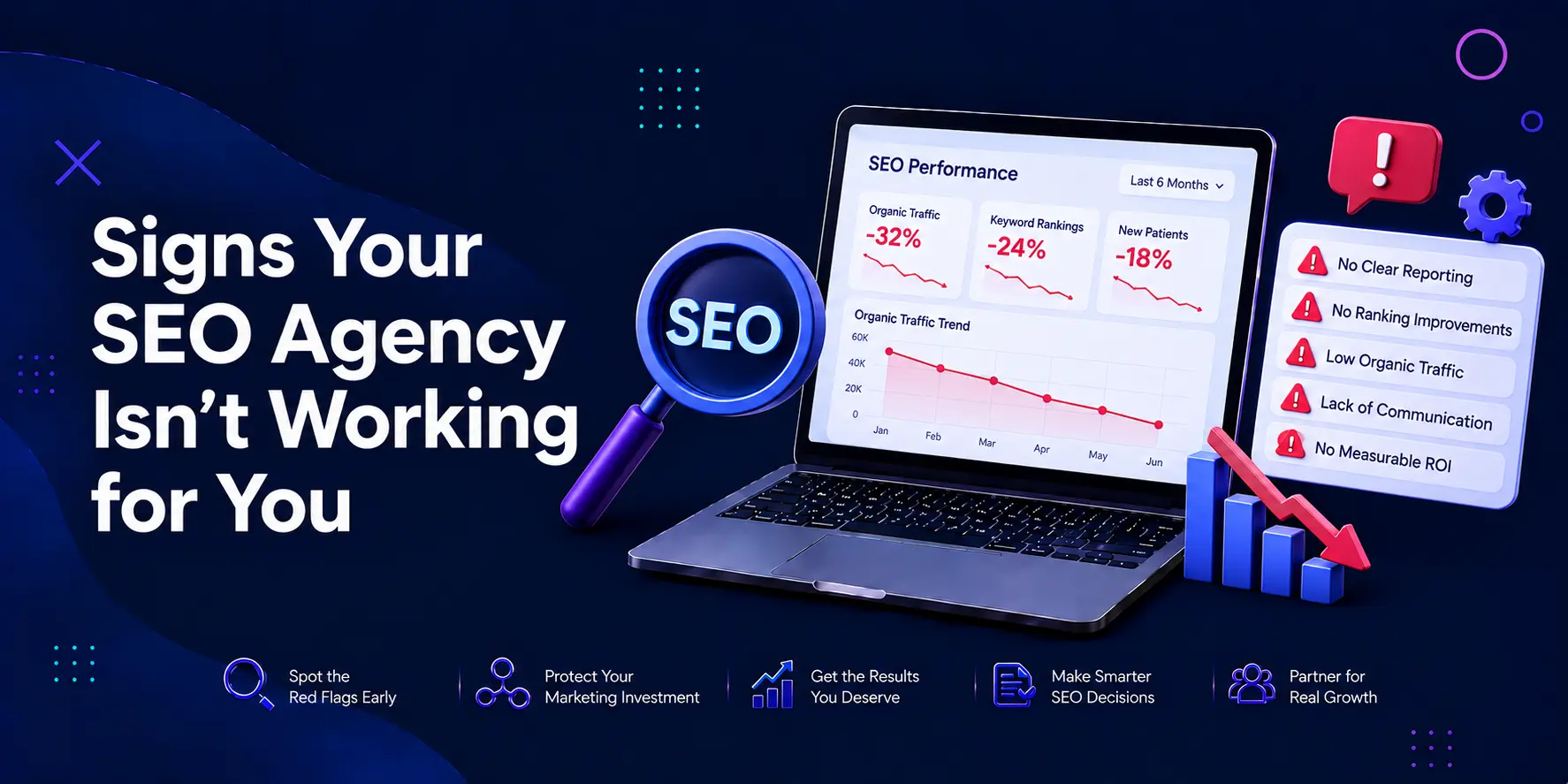
Missed meetings, unanswered emails, unexplained strategy changes and vague reports can signal deeper problems.
Communication matters because SEO requires input from both sides. Your agency may need product knowledge, sales insights, developer access, brand guidance, or approval for content. A broken communication process slows the campaign and blurs accountability.
Good agencies do not hide difficult results. They explain setbacks, identify causes, and present a response.
Poor results do not always mean poor agency work.
SEO can require time, especially for a new website, competitive sector, major site migration, or business entering a new market. A temporary traffic fall can also have several causes.
Judge the agency on both results and process.
Check whether the team has built a clear baseline, fixed important technical issues, strengthened key pages, improved content, tracked relevant search demand, and measured progress against business goals.
Google advises businesses considering an SEO provider to ask what results they expect, what timeframe they expect, and how they will measure success.
If the agency can show sound work and explain the data, more time may make sense. If neither exists, waiting may only increase the cost.
Do not switch agencies because one keyword dropped or one month produced weaker traffic.
Consider a change when problems form a pattern.
Repeated missed targets, unclear work, poor communication, risky tactics, weak content, and reports disconnected from business outcomes deserve attention. The combination matters more than one isolated issue.
Before ending the contract, request a performance review. Ask for completed work, access to reports, content records, technical recommendations, link data, and a clear explanation of results.
Then compare that evidence against the original scope.
If the gap remains wide, start assessing other providers. Look for an agency that sets realistic expectations, explains its methods, understands your market, and links SEO activity to commercial goals.
Spotting the signs your SEO agency isn’t working for your business can prevent wasted budget and protect your search presence. Weak communication, vague reporting, risky links, poor content, unresolved technical problems, and unrealistic promises all deserve scrutiny. SEO needs time, but a professional agency should still show what it has done and why the work matters.
If you are asking how to know if you need to switch SEO agencies, start with evidence. Review the strategy, reports, deliverables, traffic trends, and business outcomes. The right partner should earn your trust through clear work and measurable progress.
Give the campaign enough time to establish meaningful trends, then review traffic, visibility, leads, completed work, and strategy. Persistent stagnation without clear explanations can justify an agency change.
Major red flags include guaranteed rankings, vague monthly reports, hidden link-building methods, poor communication, weak local market knowledge, low-value content, and no connection between SEO work and leads.
Not based on rankings alone. Review clicks, impressions, technical changes, competitors, search demand, and affected pages. Ask your agency to diagnose the decline and provide a clear recovery plan.
Review case studies, reporting methods, market experience, communication, proposed strategy, link practices, and success measures. Choose an agency that explains its work and connects SEO goals with business growth.