
Your business needs more people to find its website. You know search can help, but you need someone to do the work. Should you hire an SEO specialist or bring in an outside partner?
For a growing SME, in-house SEO vs. outsourced SEO is a choice about people, time, and money. A new hire can learn your business and work with your team. An outside partner can bring skills that your team lacks. Each path can work, but each asks for a different kind of support from you.
The right choice depends on your workload, your budget, and your growth plans. This guide will help you weigh the costs and pick a setup that fits your business.
Get a free digital marketing consultation from BThrust's Singapore team and find out what's holding your growth back.
An in-house SEO specialist works as part of your business. They may plan website pages, study search terms, guide writers, and work with developers. You set their goals, manage their time, and help them get the facts they need.
An outsourced SEO partner works outside your business. You might hire a freelancer, a consultant, or an agency. You agree on a fee and a set of tasks. Your team shares input, reviews the work, and checks the results.
Neither option runs on its own. Both need clear goals, access to your website, and knowledge of your customers. The question is how you want to manage the work.
The in-house vs outsourced SEO cost comparison starts with salary and fees. It should also cover the costs that sit around them.
With an in-house hire, you pay a salary and any staff benefits. You may need to pay for search tools, training, and help with tasks outside that person’s skills. Your manager must make time to set goals and review progress.
With an outside partner, you may pay a monthly fee, a project fee, or an hourly rate. The price may cover a group of specialists. It may also leave out content writing, website changes, or extra meetings. Ask for a clear list of what the fee includes.
If you need a small amount of work each month, outsourcing may cost less than hiring a full-time employee. If you have a long list of tasks that need attention each week, an in-house hire may give you better value.
Work out the cost across a full year. Add salary, benefits, tools, and training for a hire. Add fees and likely extras for a partner. Then compare the work each option can handle within that budget.
If your business serves Singapore, a search for SEO cost in Singapore can give you a rough starting point. A useful quote must reflect your website, your market, and the work you need.
An in-house specialist can get close to your customers and products. They can speak with your sales staff, read customer questions, and learn which services bring in the most value. That knowledge can help them plan pages that answer real needs.
They can also work with your team as plans change. If you launch a new product, your SEO specialist can help shape the page. If your sales team hears the same question from customers, the specialist can turn that answer into useful website content.
This close contact can cut delays. Your writer can ask for guidance. Your web developer can flag a site problem. Your SEO specialist can connect the work and keep the plan on track.
One person may not cover every SEO skill. A strong writer may need help with code. A search specialist may need a designer or writer to bring a page to life. When that person takes leave or moves on, work may slow.
Building an in-house SEO team takes more than filling a role. You need to set priorities, give the hire access to the right people, and make space for training. You may also need outside support for work that calls for a specialist.
An in-house hire may fit your business if you have enough work to fill the role and a manager who can guide it.
An outside partner can give you access to a wider set of skills. An agency may have people who work on search data, content, and website fixes. A consultant may spot a problem, build a plan, or guide your team through a change.
This can help when your needs shift. You might need a site review this month and help with new pages the next. An outside partner can shape its work around the tasks you agree on.
You also avoid a long hiring process. That can help when you want to start a project, and your team has little time to recruit or train someone.
An outside partner needs to learn how your business works. If your team gives them thin briefs or slow feedback, the work can miss the mark. You also need one person in your business to answer questions and make decisions.
The outsourcing SEO pros and cons depend on the partner you choose. Ask who will do the work and how they will report progress. Find out how they handle changes to the plan and what happens if a task falls outside your agreement.
A partner may fit your business if you need several skills, have a clear project, or cannot support a full-time hire.
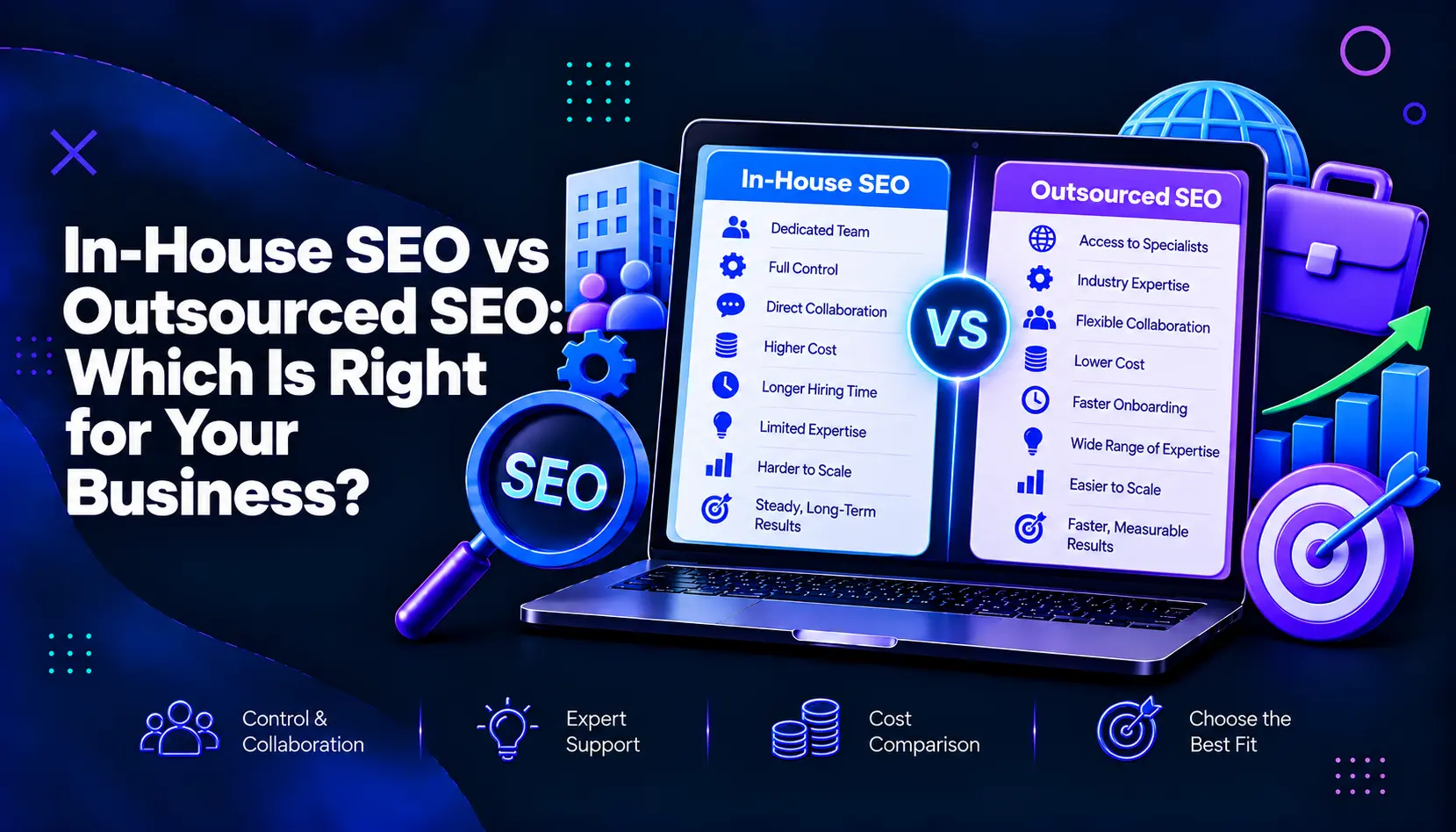
The choice between in-house SEO vs outsourced SEO becomes easier when you look at the demands each option places on your team.
| What to Check | In-house Hire | Outside Partner |
|---|---|---|
| Skills | Depends on the person you hire | May come from a wider team |
| Business knowledge | Builds through work with your staff | Needs input from your staff |
| Management | You guide day-to-day work | You agree on tasks and review results |
| Cost | Salary, benefits, tools and support | Fees and any agreed extras |
| Growth | You may need another hire | You may need a larger contract |
The table gives you a starting point. Your own workload matters more than a general rule. A small site with a clear set of tasks has different needs from a large site with new pages each week.
List the SEO tasks your site needs. You might need to fix page titles, improve service pages, write guides, check search data, or solve website errors. Mark which tasks need a one-off fix and which will return each month.
Then look at your team. Can someone write and update pages? Can your developer make site changes? Who will approve the work? These answers will show how much help you need from an SEO hire or partner.
Think about your plans for the next year. A new product range, a second location, or a larger website can raise the workload. If you expect a steady flow of work, an in-house role may make sense. If your needs rise and fall, an outside partner may suit you.
Your location and customers shape the work. A business that sells across a country may need a different plan from one that serves a few neighbourhoods.
If you need SEO in Singapore, ask candidates and partners how they would reach the customers you want. They should explain which pages need work and what questions those pages should answer.
If nearby customers drive your sales, ask how they would handle local SEO in Singapore. You may need strong location pages and clear business details across your website.
You may also see services sold as AI SEO in Singapore. Ask what the service will do, who will check its output, and how the work will help your customers. A clear answer matters more than a label.
Yes. Some SMEs ask one staff member to lead SEO and bring in outside help for tasks that call for other skills. Your staff member can set priorities and share business knowledge. A consultant or agency can help with a site review, a move to a new website, or a large content project.
Give each person a clear role. Decide who plans the work, who approves pages, who makes website changes, and who checks results. This prevents gaps and helps your team use its budget well.
A mixed setup can make sense as your business grows. You do not have to build a large team in one step.
Whether you interview a candidate or speak with an agency, ask how they would start. A good answer should connect the work to your goals, your website, and your customers.
Ask these questions:
Look for plain answers. If a person cannot explain their plan in words you understand, it will be hard to judge the work as it moves on.
The best answer to in-house SEO vs outsourced SEO depends on the work in front of you. Hire in-house if you have a steady workload, can guide the role, and want SEO knowledge within your team. Choose an outside partner if you need a range of skills, have a defined project, or lack the time to support a new hire.
Start with your goals. Count the tasks, compare the full costs, and decide how much input your team can give. Then choose the people who can explain their plan and carry it through. That choice will give your business a sound base for search growth.
An in-house hire suits a steady workload and a team that can guide the role. Outsourcing suits a clear project or a need for several skills without adding permanent staff.
Compare the full yearly cost. Include salary, benefits, tools, and training for a hire. Include fees and extra charges for a partner. Match each price against your expected SEO workload.
Yes. Your employee can set priorities and share business knowledge. An outside specialist can help with site fixes, technical reviews, or large projects. Give each person clear tasks and ownership.
Ask who will handle your account, what the fee covers, and which tasks come first. Request clear reports and examples of past work. Check how they use your customer feedback.
Give your specialist clear goals, access to the website, and time with sales and product staff. Review progress with them. Fund the right tools and support for tasks beyond their skills.