
Choosing between SEO packages in Singapore can feel harder than it should. One provider may charge S$800 a month, while another asks for S$5,000 or more. Both may promise better rankings, more traffic, and more leads. So, what are you paying for?
The main difference comes down to scope, expertise, competition, and the amount of work included each month. A basic package may cover technical checks and a small amount of content work, while higher tiers can include detailed strategy, content production, digital PR, technical improvements, and conversion support.
This guide breaks down common SEO pricing in Singapore for 2026. It explains what you may get at each level, what can affect the price, and what to check before signing a contract.
Get a free digital marketing consultation from BThrust's Singapore team and find out what's holding your growth back.
Most SEO packages combine keyword research, on-page optimisation, technical SEO, content work, link building, tracking, and reporting. The depth of each service changes based on the package and price.
SEO is not one task. A strong campaign needs several parts working together. Your website must be easy for search engines to crawl. Pages need to match what people search for. Content must answer real questions, and your site needs enough authority to compete.
Keyword research identifies the search terms your potential customers use. The provider may then map those terms to existing pages or recommend new pages.
A small campaign may target a limited set of commercial keywords. A larger campaign may cover hundreds of terms across products, services, locations, and informational topics.
On-page work can include page titles, meta descriptions, headings, internal links, URL structure, image text, and page copy.
The aim is simple: help search engines understand each page while making the content useful for visitors.
Technical SEO work looks at issues that can limit crawling, indexing, speed, and site performance. This can include broken links, duplicate pages, redirects, sitemaps, canonical tags, structured data, and mobile usability.
The size and condition of your website affect how much technical work is required.
Content can include service pages, landing pages, blog posts, guides, category copy, and updates to existing pages.
Some retainers include writing. Others include only briefs or recommendations, leaving your team to produce the content.
Links and brand mentions can help build the authority of a website. Packages may include outreach, digital PR, local citations, or other forms of off-page work.
Quality matters more than a large number of weak links.
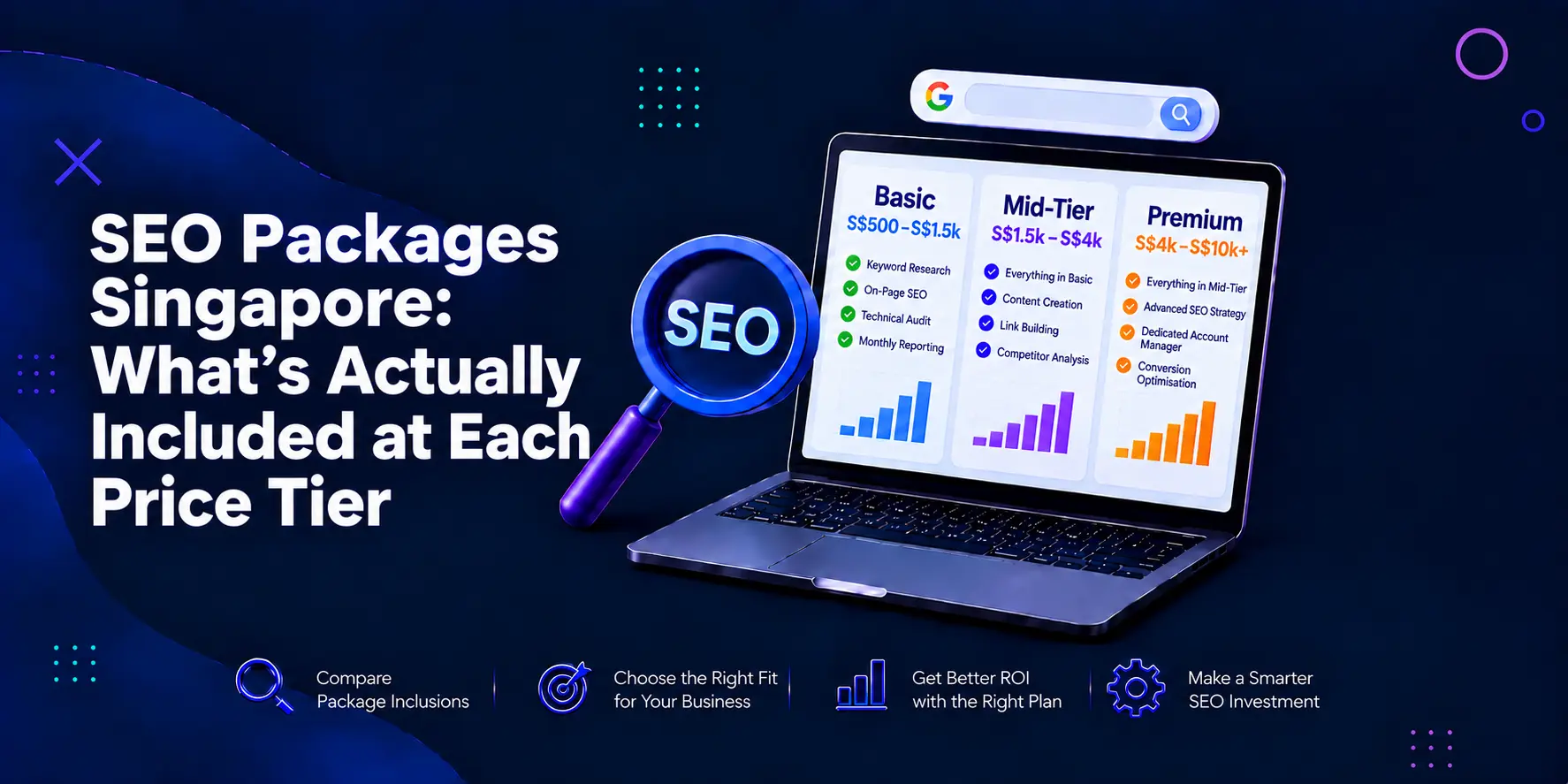
A basic package often includes an initial audit, keyword research, on-page changes, basic technical fixes, tracking, and monthly reporting. It tends to suit small websites and businesses with modest competition.
If you are researching what’s included in a basic SEO package, start by looking at the amount of work rather than the length of the service list.
A package may list 15 or 20 features, but many could be one-off setup tasks.
Entry-level plans tend to focus on the foundations. They may include:
This level can work for a small local company, a new website, or a business in a niche with limited search competition.
The main limitation is capacity. There may be little room for regular content, extensive technical development, or sustained authority building.
When asking what’s included in an SEO package, check whether implementation is part of the price. A provider might identify problems but expect your developer or marketing team to fix them.
Mid-tier packages tend to add ongoing content, broader keyword targeting, stronger technical support, link acquisition, and more detailed strategy. They suit growing businesses that depend on search for leads or sales.
For many SMEs, this is where SEO becomes a sustained marketing programme rather than a list of website fixes.
The exact price will depend on the site, market, and campaign goals. A mid-tier plan may include everything from a basic plan plus:
These plans tend to offer enough monthly capacity to make changes, publish content, and respond to performance data.
A useful SEO package comparison for businesses in Singapore is to check how much actual implementation each plan includes. Two packages may cost S$2,500 per month, yet one may include content production and technical implementation while the other provides recommendations only.
Premium SEO packages provide a wider strategy, more specialist input, larger content programmes, advanced technical work, and stronger authority-building campaigns. They are designed for competitive sectors and larger websites.
Premium does not mean “more keywords” alone. It should mean more resources, deeper analysis, and greater capacity to execute the strategy.
Premium retainers can include:
This level can suit established companies competing in finance, legal services, property, technology, education, healthcare, e-commerce, or other crowded search markets.
Large sites also create more work. An online shop with 20,000 product and category pages has different needs from a local service website with 20 pages.
The main differences between package tiers are the number of hours, depth of strategy, volume of content, level of technical support, and amount of authority-building work included.
Understanding SEO package tiers in Singapore providers offer becomes easier when you compare deliverables rather than labels such as Bronze, Gold, Premium, or Enterprise.
Best suited to smaller websites and low-competition local campaigns.
Expect a focus on foundations, a limited number of target pages, basic reporting, and essential fixes.
Best suited to SMEs that want consistent organic growth.
Expect broader targeting, regular content work, technical monitoring, competitor analysis, and some off-page activity.
Best suited to larger companies, competitive industries, e-commerce sites, and businesses where organic search is a major acquisition channel.
Expect specialist support across technical SEO, content, authority, reporting, and strategy.
A good SEO package comparison Singapore businesses can use should also look at deliverable limits. Ask how many pages, content pieces, technical hours, or outreach activities are included rather than relying on broad service names.
A monthly SEO retainer pays for ongoing work based on priorities, performance, and changes in the search market. The work should evolve instead of repeating the same checklist each month.
Understanding what’s included in SEO retainer agreements can prevent confusion after the first few months.
SEO work changes over time. Month one might focus on an audit and technical problems. Month two could centre on important service pages. Later months may shift towards content expansion, authority building, or pages that are close to ranking well.
A retainer may cover planning, research, optimisation, content, technical checks, outreach, analysis, and reporting.
Not every activity needs to happen every month. What matters is whether the work supports the campaign goals.
When reviewing what’s included in SEO retainer pricing, ask how priorities are chosen. A good scope should leave some room to respond to new opportunities and problems.
Fixed packages can be useful for budgeting, but an SEO campaign also needs flexibility.
SEO prices vary because websites, markets, goals, and workloads are different. A small local site may need a fraction of the work required for a national brand or large online store.
Price alone tells you little about value.
A clean 15-page website may need minor technical work. A large site with indexing problems, duplicate content, and years of outdated pages may require months of work.
A company targeting a small local niche may face a handful of competitors. A business targeting high-value commercial keywords may compete with established brands that invest heavily in content and authority.
This affects the resources needed to gain ground.
Good content takes research, planning, writing, editing, and optimisation. A campaign requiring eight detailed pages each month will cost more than one requiring a single article.
SEO for brand visibility is different from SEO tied to revenue targets. The latter may need better analytics, landing-page work, conversion tracking, and deeper commercial analysis.
This is why choosing SEO packages in Singapore based only on the lowest monthly fee can create problems.
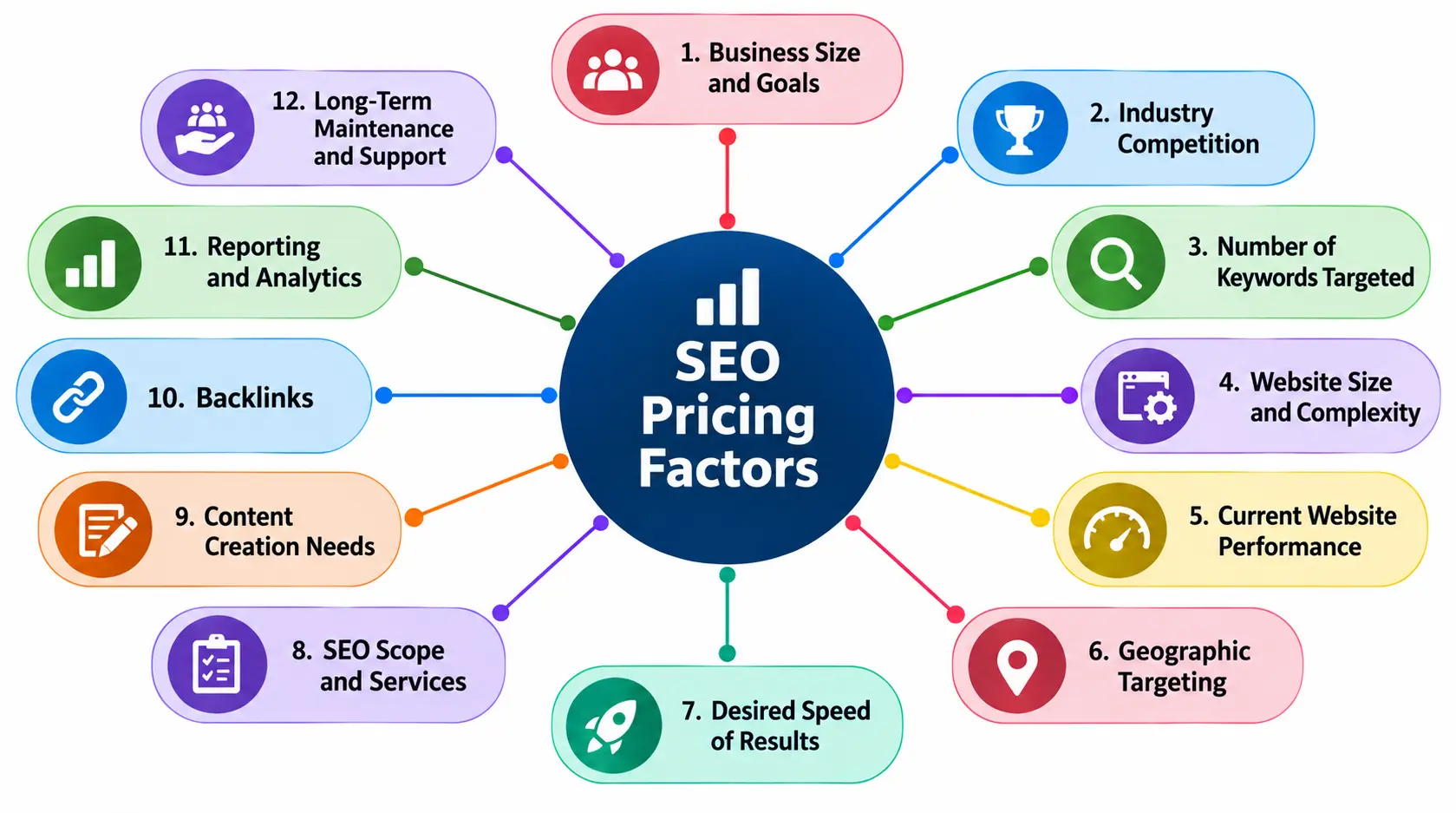
In Singapore, SEO service pricing in Singapore varies based on several factors, from the size of your business to the complexity of your website. This guide provides a clear and comprehensive breakdown to help you understand what influences SEO cost in Singapore and make an informed decision.
Highly competitive industries like finance, real estate, or technology require intensive efforts such as:
For example: A law firm targeting high-ranking keywords like “best lawyer Singapore” will likely incur higher costs due to the intense competition.
Check Out: SEO by Industries
The cost of SEO increases with the number of keywords targeted.
For Example: Targeting additional long-tail keywords like “affordable digital marketing agency Singapore” can drive niche traffic but requires additional investment.
Example: A retail business with 100+ product pages will need detailed optimization, increasing costs compared to a portfolio website.
Websites with existing technical issues such as:
These require additional resources for technical fixes, adding to the initial SEO costs.
Example: A company targeting Singapore will need SEO campaigns in multiple languages, adding complexity.
For example, A startup launching during the peak holiday season may need an aggressive campaign to rank faster.
When evaluating SEO services pricing in Singapore, each type of SEO comes with varying effort levels and costs:
Example: A business focusing solely on Local SEO will pay less compared to one requiring all services.
High-quality content creation is a crucial factor in SEO success. Costs depend on:
Example: An IT company publishing weekly blogs will spend more than a portfolio website requiring minimal updates.
Example: Securing a backlink from a reputable publication like “Straits Times” will cost more but deliver higher value.
SEO is not a one-time effort. Sustaining rankings requires ongoing:
Example: Businesses in fast-changing industries like fashion or technology must allocate a recurring budget to stay competitive.
Check the deliverables, implementation responsibilities, reporting, contract terms, content ownership, and measures of success before agreeing to a package.
A clear scope protects both sides and makes it easier to judge whether the campaign is progressing.
Look for clear descriptions of the work. “On-page SEO” is vague. “Optimisation of up to ten priority pages per month” gives you something you can measure.
The same applies to content, technical work, and outreach.
Find out who makes website changes.
Some providers handle implementation. Others send recommendations to your developer. Neither model is wrong, but you need to know which one you are buying.
Rankings can be helpful, but they should not be the only measure.
Reports can also cover organic traffic, qualified leads, sales, conversions, visibility, and the performance of key landing pages.
Make sure you know who owns content and other campaign assets after payment. You should also understand what happens if the agreement ends.
The right tier is the one that matches your competition, website condition, growth goals, and available resources. Bigger packages are not always better.
A small local company may get strong value from a focused entry-level campaign. A growing SME may need a mid-tier retainer to publish content and compete across more search terms. A large company may need a custom programme rather than a fixed package.
Start with the business outcome.
Do you want more local enquiries? More e-commerce sales? Better visibility for a set of high-value services? Growth across several markets?
Once the goal is clear, assess how much work is needed to reach it.
This makes comparing SEO package tiers for businesses in Singapore much simpler.
If you are exploring SEO in Singapore, ask providers to explain why they recommend a certain scope. The answer should connect the proposed work to your website, competition, and commercial goals.
Better value comes from choosing a package with clear priorities, enough resources to compete, and reporting linked to business results rather than choosing the cheapest option.
SEO should be treated as an investment with measurable goals.
A long list of monthly tasks can look impressive without creating meaningful results.
Ask how each major activity supports visibility, traffic, leads, or sales.
When doing an SEO package comparison in Singapore, businesses should check whether prices include content writing, technical implementation, outreach, reporting, and strategy.
A cheaper plan may cost more in practice if you need to hire writers or developers on top of the monthly fee.
SEO takes time, but that does not mean you should wait months without evidence of progress.
Early signs can include technical fixes, better indexing, stronger page quality, improved keyword visibility, and growth in relevant organic traffic.
Your business requires an SEO package that aligns with its business objectives and competitive environment, website requirements, and budget constraints. When comparing SEO packages in Singapore, do not judge an offer by price or a long list of features.
The work includes keyword research together with technical repairs and content development, on-page optimisation, link acquisition, and performance tracking. You should also check who handles implementation and how results will be measured.
The content of SEO retainer plans becomes clear to you when you learn about their offerings, which helps you find providers who won’t charge anything unexpected. A small business requires a basic package, but expanding organizations need to access more extensive assistance. The selection process for SEO Singapore services requires organisations to choose providers who deliver clear results and provide useful data, and their services should help businesses grow consistently over time.