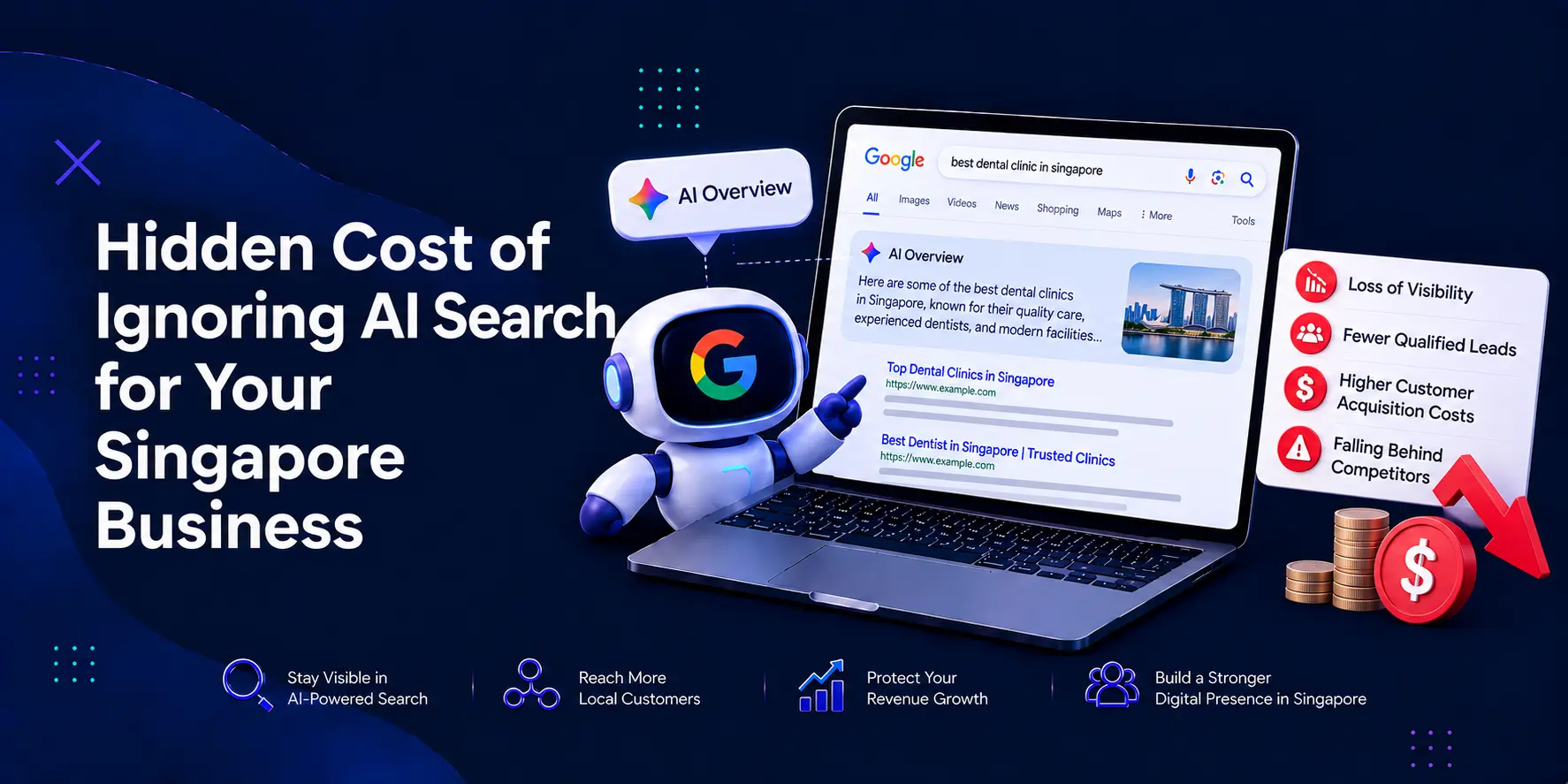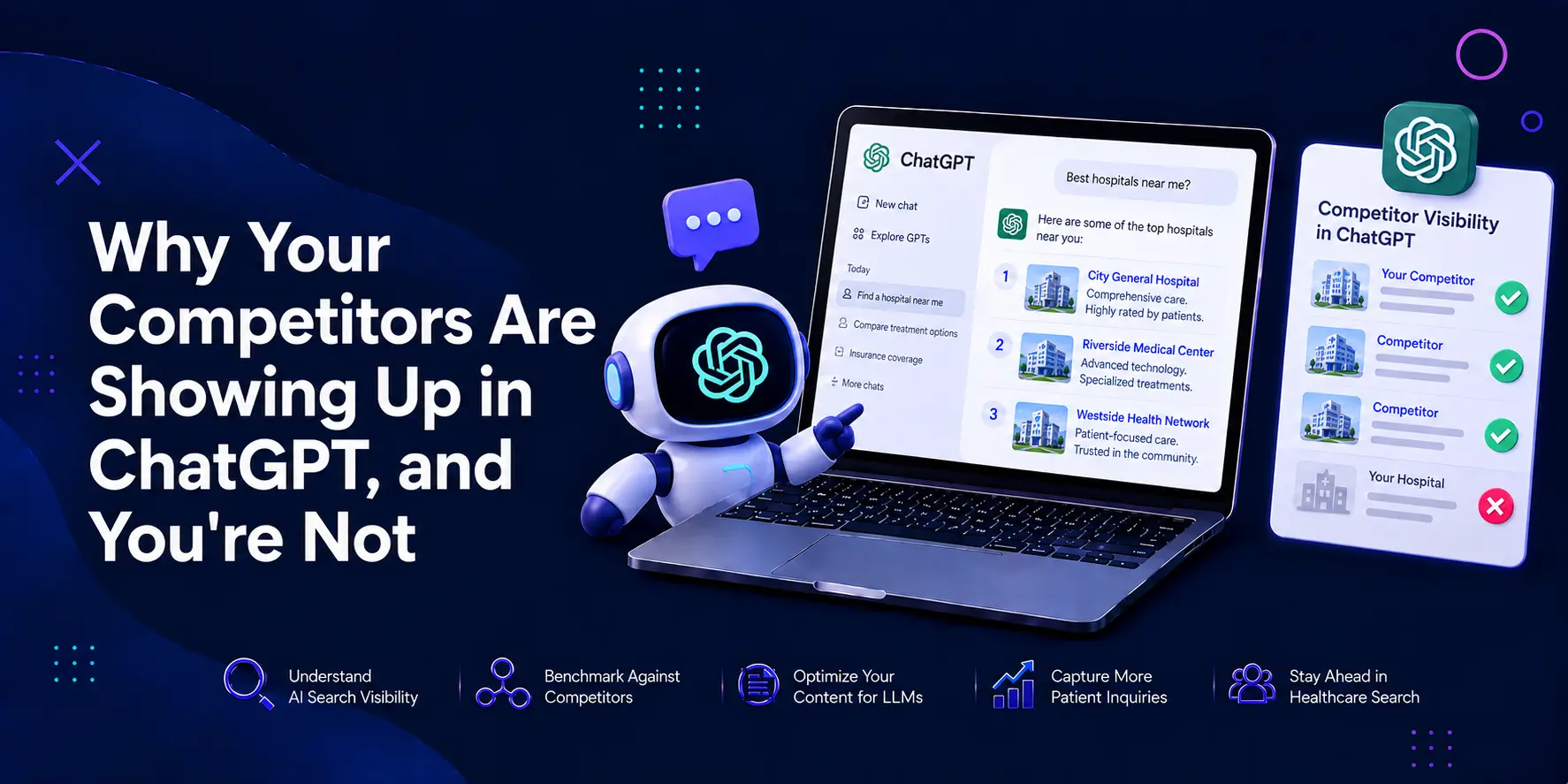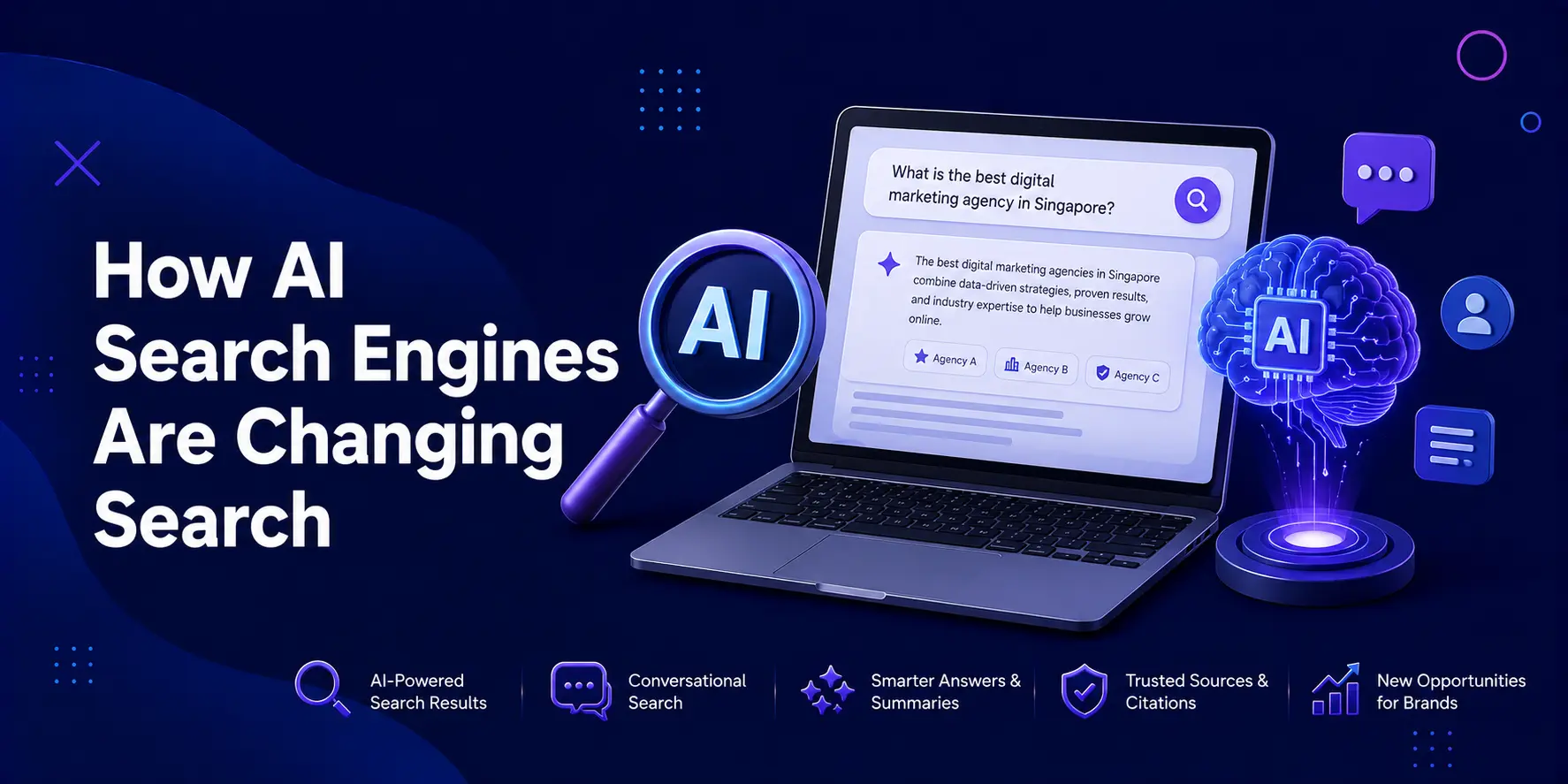
Search is no longer just about keywords and links. Google AI Mode has changed how people find and use information online. Instead of listing websites, Google now gives full answers right on the results page. This new way of searching means fewer clicks and faster decisions. It also means digital marketers must adjust their approach.
Your website may still appear in results, but users might not visit it. The focus is now on being helpful, clear, and visible in new ways. This guide breaks down what Google AI Mode is, what’s changed in search, and how to stay ahead.
Get a free digital marketing consultation from BThrust's Singapore team and find out what's holding your growth back.
Google AI Mode is a new feature in search. It gives full answers at the top of the page. These answers come from many sources. People get what they need without clicking a link.
This mode also looks at pictures, compares items, and shows personal results. It helps users get clear answers without much effort.
For digital marketers, this means less traffic but more brand exposure. If your content is good, it may still be seen. But you must change how you write and share it.
Search has become more direct. Instead of ten links to choose from, people now get one short and helpful answer. Google picks trusted sources and gives users the most useful information straight away.
Google no longer sends users to a list of websites. It collects details from many reliable sources and builds one complete answer right in the search results. Your site could be part of that answer, but users may not click through to visit.
What this means for you: Your content must be clear, useful, and easy to read. It needs to answer common questions directly. If it’s hard to follow or full of filler, it may be skipped.
People don’t need to type anymore. They can take a photo and use it to search. Google then matches the image with products, prices, reviews, and even shop options.
What this means for you: Your pictures must work harder. Use sharp, high-quality images. Label them well, and make sure they link to pages that help users decide what to do next.
Google no longer stops at giving facts. It now compares products, books tickets, and finds deals. It helps users act faster.
What this means for you: Make your site easy to use. Add step-by-step guides, price info, and clear layouts that support fast decisions.
Search is now personal. Google learns what users like and changes results to match. The same search may show different answers for different people.
What this means for you: Know who you’re talking to. Use language your audience understands. Keep your content focused, clear, and relevant.
The way search works has changed, and so must your strategy. Ranking high on the page is no longer enough. What matters now is being part of the answer that shows up at the top. If your content is included in that summary, your brand gains visibility. If not, even a top spot may not help.
Long posts packed with keywords won’t perform the way they used to. Instead, focus on short, helpful content. Break your pages into clear sections. Use simple headings and bullet points. Give quick answers to common questions. Keep your language easy to follow and avoid fluff.
People might not visit your site as often, but they may still see your brand name. That visibility builds trust. Even without the click, your content can leave a mark. Track how often your content appears in results. Measure how long users stay and what actions they take. These metrics now matter more than just traffic numbers.
Images are now a big part of search. A strong photo can appear at the top and lead users to your page. Use sharp, clear images. Name them using simple, descriptive words. Add a short caption or alt text that explains what the image shows. Make sure it links to a useful page.
Search results are not the same for everyone. Google shows content based on past behaviour. One person might see your brand, while another may not. Know your audience well. Use the words they use. Write in a way that speaks directly to them.
When Google first rolled out AI Mode, it brought a major shift in how search results were displayed. But during those early days, there was a tracking issue that confused web analytics.
Visits from AI Mode were being recorded as “direct traffic” instead of “organic search.” This made it hard for marketers to understand where their visitors were coming from and how well their content was performing in search.
The issue came from a bit of code that blocked proper tracking. Google has released fixes as part of recent Google AI Mode updates. As a result, you should start seeing accurate data for visits coming through Google AI Mode in Search. These visits will now appear as organic search traffic in your reports.
More helpful changes are also on the way. According to Google, upcoming Google AI Mode updates will include better reporting in tools like Search Console. These reports will show where your content appears in the search summaries, even if users don’t click through. This gives you a clearer view of your brand’s visibility in today’s changing search results.
Read Also: How to Website Audit After Google’s June 2025 Core Update
With search results changing and users getting answers without clicking, your content must do more with less. It’s no longer just about getting traffic, but it’s about being visible, helpful, and easy to understand at a glance. To keep up, here are four simple ways to improve your content and stay relevant in this new search environment:
Write like you speak. Keep it short. Answer real questions. Use headings and lists. Make it easy to read.
Choose images that show what you offer. Name your files well. Use short text with each image.
Use simple words. Avoid long blocks of text. Talk like a person, not like a business.
Stop chasing rankings. Start tracking visibility. See where your content appears and how people respond.
Avoiding a few key errors can make a big difference in how your content performs. Here’s what to watch for:
Lengthy content with no direct answers can lose readers. Keep it simple and straight to the point.
Stuffing too many keywords into one section makes content hard to read. Use them naturally and where they make sense.
Avoid technical terms or industry jargon if your audience wouldn’t use them. Speak in their everyday language.
A page that loads slowly or looks cluttered will turn users away. Make sure your layout is clean and your site loads fast.
Old or incorrect information reduces trust. Keep your content fresh and relevant with regular updates.
Google AI Mode has reshaped search in a big way. People want answers, not options, and they get them fast. For digital marketers, this means less focus on traffic and more on visibility, clarity, and trust.
To stay relevant, create content that solves real problems, uses clean design, and speaks to the right people. Keep it simple, well-structured, and direct. Focus on helping users, not just drawing clicks. The brands that adapt will remain strong. The ones that don’t may fade from view.
Now is the time to shift your strategy and meet users where they already are — on the results page.
At BThrust, a trusted digital marketing agency in Singapore, businesses gain access to proven SEO, SEM, and web solutions tailored for growth. Since 2014, we have helped brands increase visibility, drive leads, and scale online success — all with the added benefit of PSG grant support.