
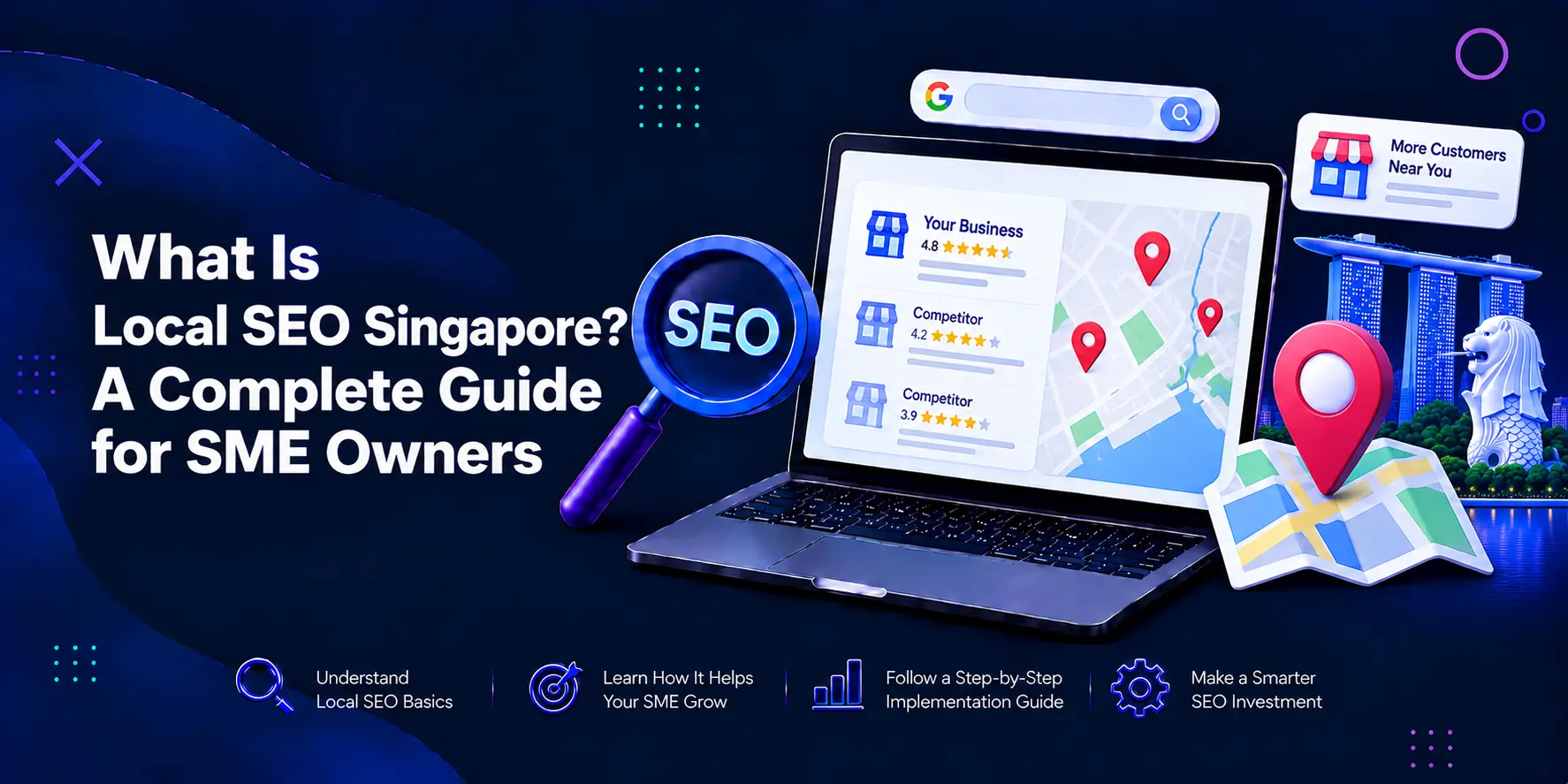
Local SEO in Singapore is the process of improving a business’s online presence, so it appears when people search for nearby products or services. If you are wondering what is local SEO in Singapore, it is a focused approach that connects your website, business profile, reviews, local content, and location signals with customers who already have clear buying intent.
As a result, local SEO can help a business gain more calls, visits, bookings, and enquiries from people within its target market. More importantly, it helps smaller firms compete where relevance matters more than business size.
Get a free digital marketing consultation from BThrust's Singapore team and find out what's holding your growth back.
Singapore has developed a powerful digital economy which enables users to start their product search by using online search engines. They need access to repair services near their home, medical facilities in their workplace area, and business suppliers in commercial areas, plus stores that stock their desired products nearby.
This is where local SEO in Singapore creates real value for SMEs. Rather than competing for broad keywords across the whole market, businesses can focus on customers searching within the areas they serve.
By improving local visibility, SMEs can attract more relevant traffic, reach people with stronger buying intent, and create more opportunities for calls, visits, bookings, and enquiries.
For example, a customer may search for-
Each search carries local intent.
Therefore, a business that makes its location, service area, and expertise clear has a stronger chance of appearing at the right stage of the customer journey.
When discussing local SEO explained in practical language, think of it as a system that helps search engines answer three questions –
Search engines study several signals before showing local results.
These signals may come from your website, business profile, reviews, directories, location details, service pages, customer activity, and links from other websites.
As these signals become clearer and stronger, search engines can understand your business with greater confidence.
That creates a better chance of appearing when local customers search for the services you provide.
Business owners often ask, how does local SEO work in Singapore? The process centres on three major factors: relevance, distance and prominence. Together, these factors help search engines decide which businesses match a local search.
Relevance measures how closely your business matches what a user searches for.
For instance, if someone searches for “office cleaning in Raffles Place”, search engines need to understand whether you provide office cleaning and whether you cover that location. This is why clear service information matters.
Your website should explain-
In addition, your business profile should use accurate categories and service information.
The more clearly you describe your business, the easier it becomes for search engines to connect your pages with relevant searches. However, this does not mean repeating keywords in every sentence. Good SEO focuses on useful information, clear structure, and natural language.
Distance is a key local search factor because it helps search engines match users with businesses near their current location or the area named in their search.
For instance, someone searching in Bedok may see different local results from a person searching in Bukit Batok. This makes accurate location information essential.
Businesses with a physical location should keep their address consistent across their website, business profile, and trusted directories. Service-based businesses should also state the areas they cover with clarity.
Avoid fake addresses or false locations. Instead, strengthen local relevance through accurate business details, useful service pages, and location-focused content.
Prominence measures how established and trusted a business appears online.
Search engines may consider factors such as-
As a result, businesses with a stronger online reputation may gain more local visibility. This is why local SEO goes beyond adding an address to a website. Trust must support location relevance.
Local SEO for small businesses is a focused strategy that helps SMEs reach nearby customers who are already searching for a product or service they need.
Competing for broad keywords can be difficult when larger businesses have stronger websites and bigger marketing budgets. Local SEO narrows the competition by connecting your business with searches from specific locations and service areas.
For example, a plumbing business does not need visibility for every plumbing search across Singapore. It needs to appear when someone within its service area searches for a plumber, compares nearby options, or needs urgent help.
This focus can bring more relevant traffic, stronger enquiries, and better opportunities to convert local searches into customers.
This makes local SEO useful for-
The strategy becomes stronger when the business serves a clear geographic market.
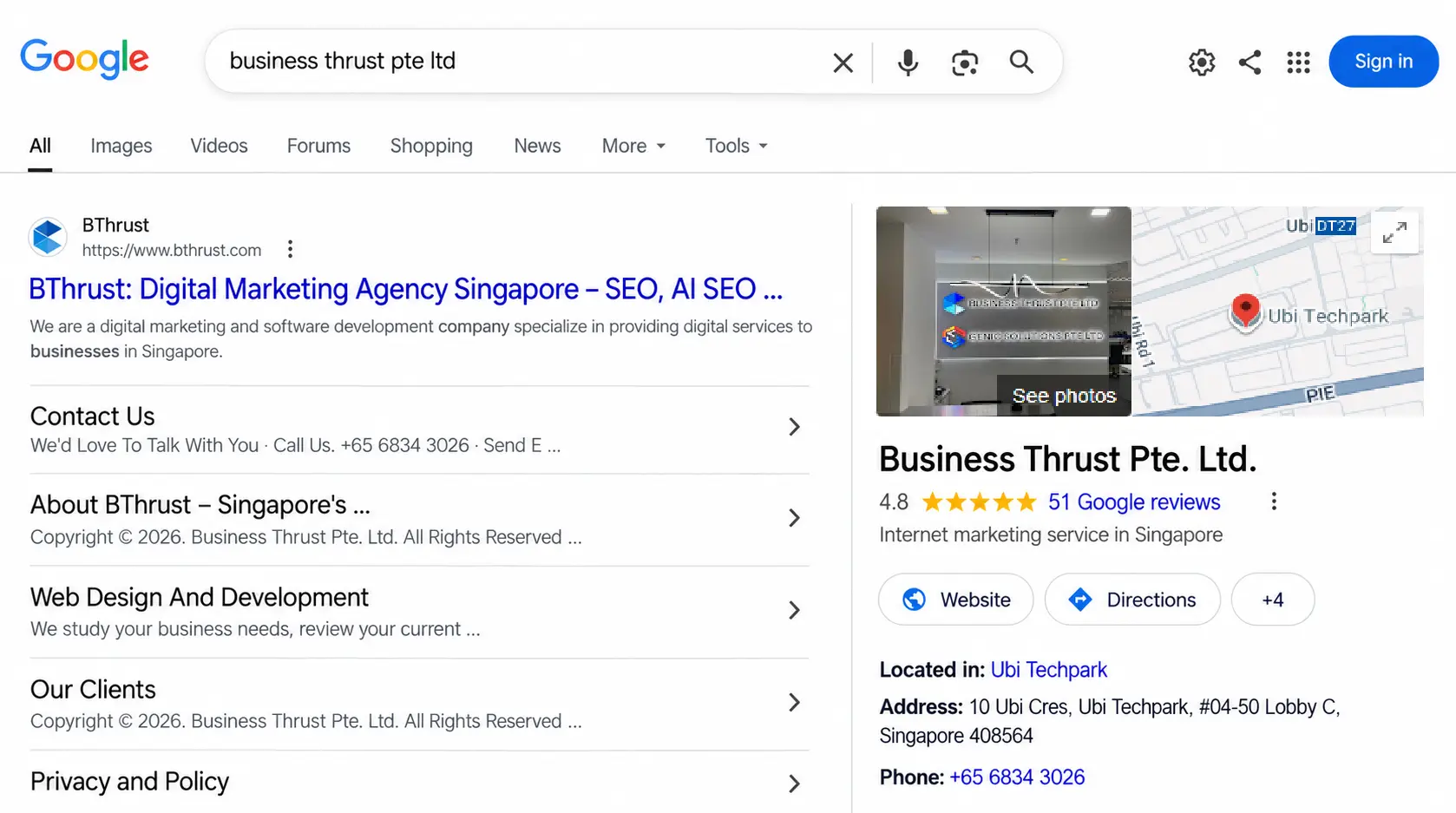
A business profile often becomes the first contact point between a local customer and a company. It may appear in map results and local search listings before a customer reaches your website.
For this reason, Google Business Profile SEO Singapore should form part of a wider local search strategy.
A complete profile can show-
Customers can use this information to judge whether your business fits their needs. So every field should include accurate, useful information.
If you have searched for what is GMB, the term refers to Google My Business, the former name of Google Business Profile. Many business owners and marketers still use GMB when discussing local search.
Businesses can use this platform to handle their essential information, which displays in search results and maps through contact details, operating schedules, service offerings, visual content, and user feedback.
For SME owners, the name matters less than the quality of the listing. Keep your profile accurate, complete, and up to date so customers can find the right information and take action with confidence.
A business profile can create visibility, yet your website gives customers the depth they need before contacting you. It also gives search engines more information about your services and expertise.
For that reason, a complete SEO in Singapore strategy should connect local profile work with website optimisation.
Each core service should have its own page when there is enough useful information to support it. A well-planned service page helps visitors understand your offer while giving search engines clear context about the topic.
A strong service page should cover-
Keep every page focused and useful. Avoid copying the same content across multiple location pages with only the place name changed. Instead, give each page a clear purpose, distinct information, and practical value for the reader.
Location pages can support businesses that serve several parts of Singapore.
However, these pages need more than a place name. A useful page should discuss real service coverage, customer needs, local considerations, and relevant information tied to the area.
For example, a location page could include-
This creates more value than repeating the same paragraph across ten locations.
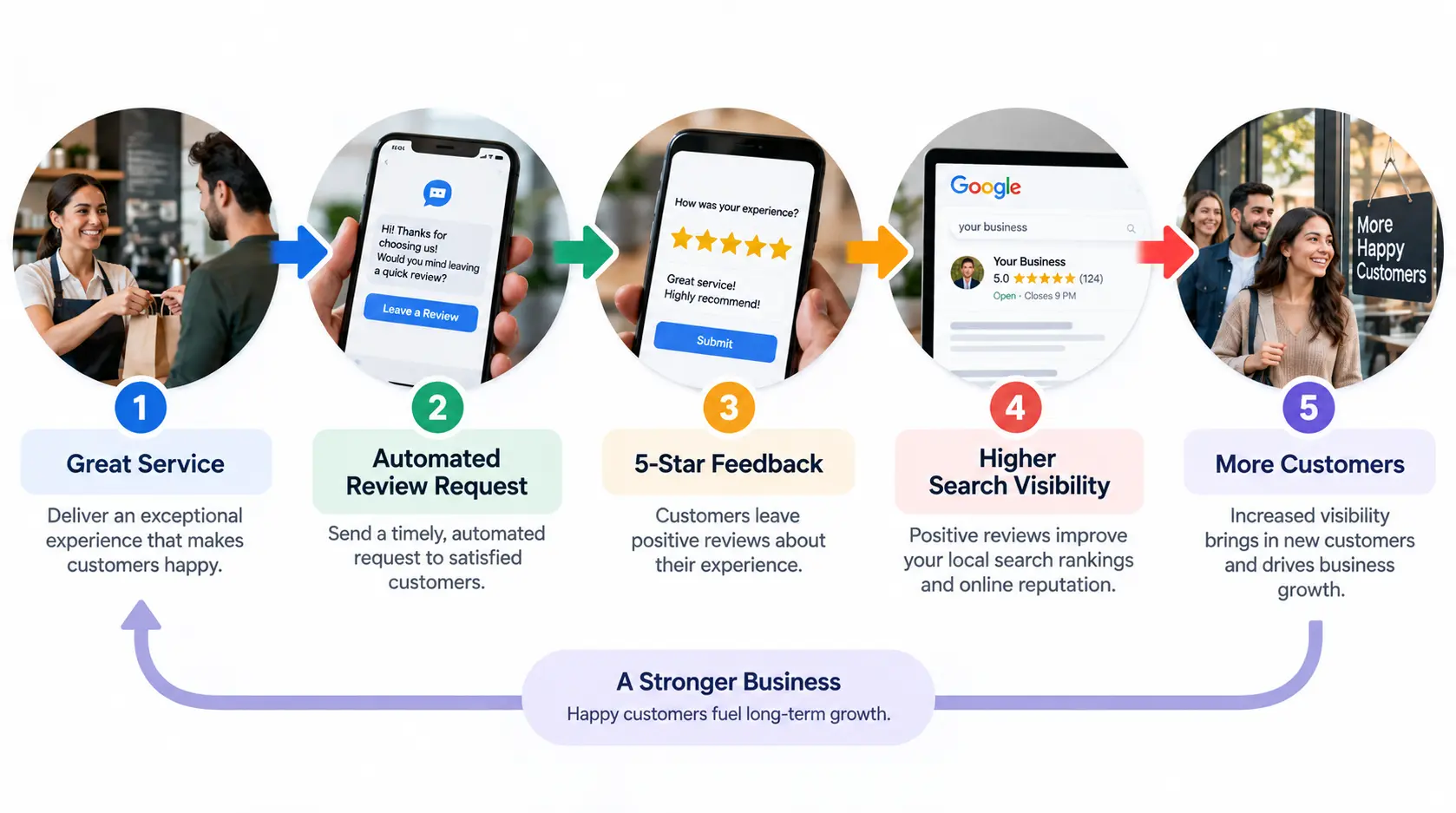
Customer reviews can influence how people view a business and how it performs in local search. Before making contact, many customers check ratings, recent comments, and shared experiences to judge service quality.
Strong reviews can increase confidence, while detailed feedback can highlight the qualities customers value most. They also give businesses useful insight into customer expectations and service gaps.
For this reason, review management should form a key part of any local SEO strategy in Singapore.
SMEs should create a simple system for collecting genuine customer feedback.
You can-
However, avoid buying reviews or offering rewards for positive feedback.
Search engines and customers value authentic experiences. A steady stream of real reviews creates stronger trust than a sudden burst of questionable ratings.
Service pages show customers what your business offers, while local content answers the questions they ask before making a decision. This gives SMEs a chance to reach people who already have a clear need.
For example, a renovation business can share advice about planning work for different property types. A moving service can cover common challenges linked to high-rise buildings, while a maintenance provider can explain issues found in specific property settings.
By combining practical guidance with local relevance, this content builds trust, answers customer concerns, and improves your chances of appearing for valuable local searches.
Useful local content may cover-
The key is relevance. Do not force location names into content that has no local value. Instead, start with the question a customer would ask before making contact.
A citation is an online mention of your business details. These details may include your business name, address, phone number, and website.
Citations can appear on-
Consistency matters because conflicting information creates confusion.
For example, an old phone number on one directory and a new number on another can create a poor customer experience.
Therefore, SMEs should review key citations and correct outdated details.
Quality also matters more than quantity. A useful listing on a relevant local platform carries more value than dozens of low-quality directory entries.
Internal links to related pages on your website guide your visitors to useful information on your website and help search engines understand your website and its content.
For example, a page targeting the topic of local SEO in Singapore can link to a guide on service-area SEO optimisation. A service page can link to the location pages for the service, and those location pages can link back to the service pages. This creates a clear content journey and strengthens the overall local SEO structure.
This creates a clear information path.
Good internal links should-
Avoid adding links only for SEO. Every link should make sense in the sentence and guide the customer to useful information.
Many local searches begin on mobile devices. A customer may need directions, contact details, opening hours, or a quick quotation.
If your website loads poorly or feels hard to use on a phone, you may lose the customer before they explore your services. Therefore, local SEO should include mobile usability.
Check whether users can-
A simple mobile experience can support both conversions and search performance.
Rankings matter, but rankings do not pay invoices.
For SMEs, the stronger question is whether local SEO creates valuable customer action. Track metrics that connect search visibility with business growth.
These may include-
This creates a clearer picture of performance.
For example, moving from position seven to position four may look positive.
However, if that change brings no enquiries, it needs further analysis. On the other hand, a small ranking improvement that generates qualified leads can create real commercial value.
Local SEO can produce strong results, but poor execution can weaken performance.
Several mistakes appear across small business websites.
Different phone numbers, addresses, or opening hours can confuse customers and search engines. Keep important details consistent.
Creating dozens of weak pages with almost identical content rarely helps users. Every page needs clear value.
Repeating local SEO in Singapore or another keyword in every paragraph hurts readability. Use keywords where they fit the topic.
Customers notice when businesses never respond to feedback. Engage with reviews and show that customer experience matters.
Local search changes as competitors update websites, customers leave reviews, and businesses adjust services.
Local SEO needs ongoing attention.
SME owners can make local SEO easier by working in a clear order. Start with the foundations before chasing advanced tactics.
A practical approach looks like this-
This structure gives SMEs a clear path from basic visibility to stronger local search performance.
Understanding what is local SEO in Singapore gives SME owners a clearer way to compete for customers with strong local intent. Local SEO connects your business profile, website, reviews, service pages, location content, citations, and internal links into one search strategy.
More importantly, it focuses on customers who already need a nearby solution. SMEs should start with accurate business information, useful content, strong service pages, genuine reviews, and clear measurement. When these elements support each other, local SEO can create a steady flow of qualified enquiries, calls, visits, bookings and sales from the areas that matter most.
Local SEO may take several weeks or months to produce visible growth. Competition, website quality, reviews, profile strength, content, citations, and current rankings can influence the time required for results.
A website gives search engines and customers deeper information about services, locations, expertise, and contact options. It also supports content, internal links, conversions, and stronger long-term local SEO performance online.
Customer reviews can strengthen credibility, influence buying decisions, and support local prominence. A consistent flow of genuine feedback also helps customers understand service quality before they contact or visit your business.
Businesses serving defined locations gain the most value from local SEO. This includes retailers, clinics, contractors, service providers, studios, restaurants, educators, workshops, suppliers, and firms visiting customers across Singapore daily.