
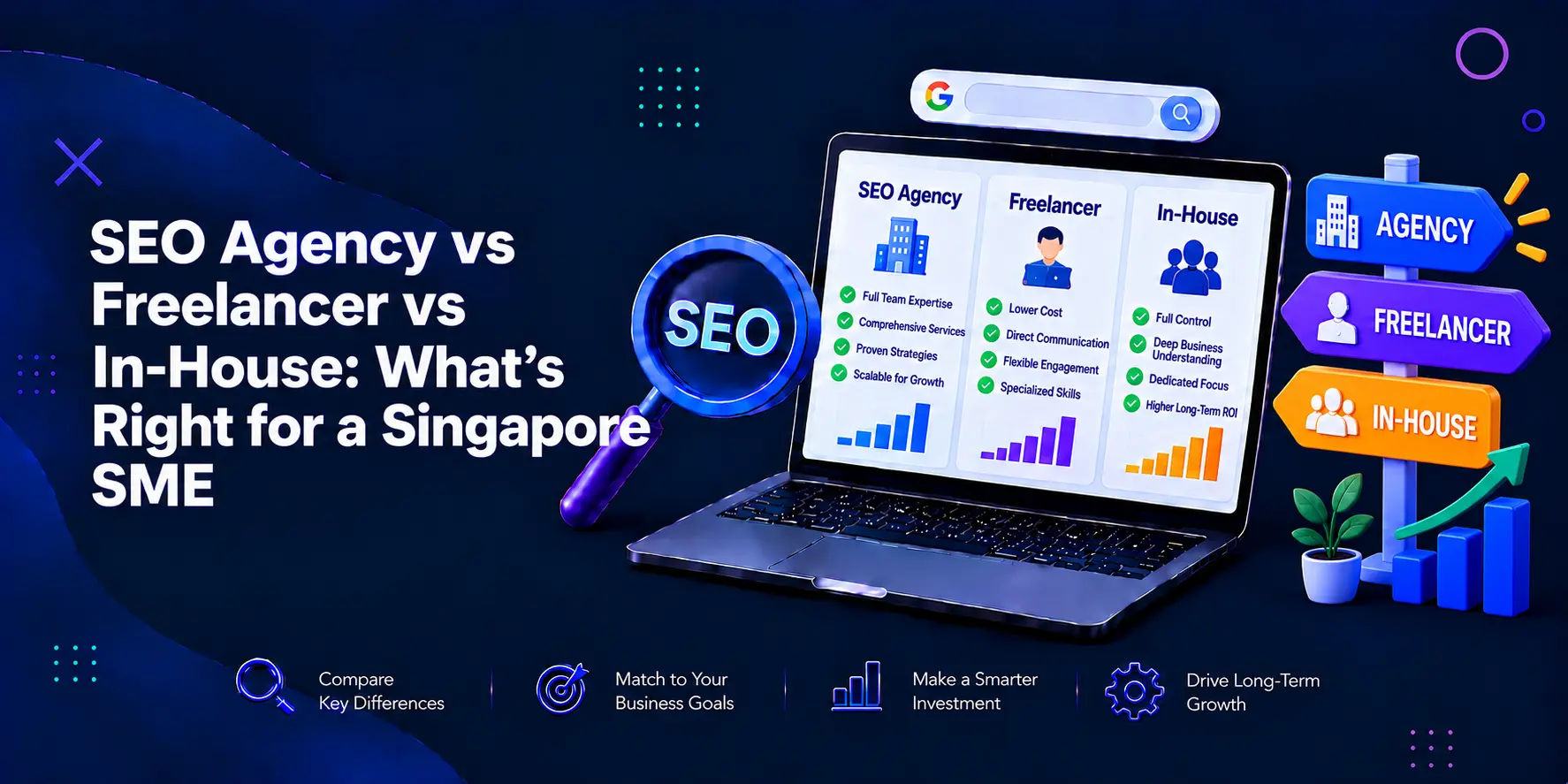
Singapore SMEs face stronger digital competition in 2026. SMEs account for more than 99% of local enterprises, while 95.1% had adopted at least one measured digital area by 2024. Search visibility now supports a wider growth strategy rather than sitting as a separate marketing task. The key question is who should manage it. When comparing an SEO agency vs. a freelancer in Singapore, SME owners must also consider whether building an in-house role makes more sense.
This guide compares the three models by cost, skill range, speed, control, risk, and growth needs, so you can make a choice that fits your SME rather than copy another company’s setup.
Get a free digital marketing consultation from BThrust's Singapore team and find out what's holding your growth back.
Before comparing suppliers, define the job. SEO now covers more than keywords and blog posts. A useful programme can include technical fixes, content planning, local search work, digital PR, internal linking, conversion support, reporting and search experience checks.
Current search guidance stresses helpful, reliable, people-first content, useful page structure, crawl access, mobile support and clear content signals. Guidance for AI-led search features adds weight to original value and first-hand insight instead of recycled summaries.
This wider scope changes the hiring question. One person may handle a focused site. Several services, locations, or content streams may need a broader team.
The choice shapes how fast an SME can turn search insight into website, content, and sales action.
There is no universal winner in the SEO agency vs freelancer in Singapore debate. The right choice depends on your workload, internal capabilities, available resources, and the speed at which your business needs to execute its SEO strategy.
An agency gives you several skill sets under one service relationship. A team may cover technical SEO, content, local search, analytics, and account management.
Choose an agency when your SEO work crosses several disciplines or must support a larger growth plan. This model suits SMEs that need a structured roadmap, fixed reporting cycles, and enough capacity for several tasks.
Key strengths include:
An agency can challenge internal assumptions. That outside view helps when a website stalls or several teams shape the customer journey.
The same structure can add distance. Your contact may not perform every task. Approval chains can slow changes. Some retainers may include services your SME does not need, which directly impacts the overall SEO cost in Singapore.
The key issue is fit, not team size. Ask who will work on your account, what each person owns, how the team sets priorities, and how it links SEO activity to leads or sales.
When comparing the best SEO agencies, focus on process, problem-solving depth, reporting quality, and commercial thinking rather than polished pitch language.
A freelancer gives you direct access to one specialist. This can create fast communication and a clear line between the brief and the work.
A freelancer can suit an SME with a narrow goal, a smaller website, or an internal marketer who can support delivery. The model works for audits, content plans, migration reviews, local SEO work, or technical consultation.
Main strengths include:
For an owner who wants close access to the practitioner, this model can feel simple.
One person has a fixed skill range and capacity. A content specialist may not solve deep technical issues. A technical specialist may not lead editorial work or outreach with the same strength.
Continuity depends on one person. Leave, workload spikes, or a career change can affect delivery.
If you plan to hire an SEO agency or freelancer support, map the full workload first. A freelancer can beat a team on a focused brief. A team can beat one specialist when the brief spreads across many workstreams.
An in-house SEO professional works inside the business. That person learns your products, margins, sales cycle, customer objections, and operational limits.
This route suits SMEs with enough SEO work to fill a role and enough internal support to act on recommendations.
The main gains come from proximity. An internal SEO can work with sales, product, developers, and leadership without a client-service layer. They can feed offer, service, and customer changes into search plans.
In-house teams keep knowledge inside the business. This can strengthen content standards, website governance, and shared SEO habits.
The salary is one cost. You need recruitment time, software, training, management, and access to skills the hire may lack.
One person may need outside help for development, digital PR, design, content, or specialist audits. That can turn one hire into a mixed model.
The in-house SEO vs agency in Singapore choice comes down to work volume and capability. If SEO sits at the centre of your lead engine, an internal owner can make sense. If your needs shift month to month, external breadth may offer more value.
The SEO agency vs freelancer vs in-house pros and cons become clearer when you compare business outcomes, not job titles.
| Factor | Agency | Freelancer | In-House |
|---|---|---|---|
| Skill range | Broad | Specialist-led | Depends on hire |
| Capacity | High | Limited by one person | Fixed by team size |
| Business knowledge | Builds over time | Builds through close contact | Deep internal knowledge |
| Communication | Structured | Direct | Immediate internal access |
| Cost model | Retainer or project | Project or retainer | Salary plus tools and support |
| Continuity | Shared team cover | Person-dependent | Strong if retention stays high |
| Best fit | Multi-skill growth plan | Focused scope | Constant SEO workload |
| Scaling | Easier through team capacity | Needs added support | Needs more hiring |
The table points to one core idea: choose the model that removes your main constraint.
If you lack specialist skills, an agency may solve the gap. If you need a sharp expert for one problem, a freelancer may fit. If slow internal action blocks growth, an in-house owner may unlock progress.
Many SMEs start with this two-way choice because an in-house hire creates a larger commitment. Score the work across five areas.
List what you need across the next six to twelve months: technical fixes, landing pages, content, local pages, link earning, reporting, analytics, and conversion work.
One or two workstreams can suit a freelancer. Several workstreams create a stronger case for an agency.
SEO recommendations create no value if nobody implements them. Ask who can edit the site, approve copy, provide subject knowledge, review leads, and make development changes.
A freelancer can work well when your team supplies strong support. An agency may suit an SME that needs more hands around strategy and delivery.
Some owners want direct specialist access. Others prefer a structured team that manages tasks through one contact.
Neither model is better by default. Choose the communication style that matches your decision process.
A freelancer creates person risk. An agency creates service-system risk. An in-house hire creates recruitment and retention risk.
Your choice should match the cost of delay. A seasonal business or fast-growth SME may need stronger cover and capacity.
Do not judge SEO through rankings alone. Track qualified organic leads, revenue, calls, booked consultations, store visits, or assisted conversions.
Current search guidance notes that SEO changes can take weeks or months to show impact, and not every change produces a visible result. That makes milestones, implementation logs, and review points more useful than promises of instant gains.
Use your business stage as a first filter.
Your SME needs several SEO skills, targets growth across many pages or services, or lacks internal execution capacity. This route can fit businesses that want one partner across strategy, content, technical work, and reporting.
You have a defined problem, smaller scope, or an internal marketer who can handle part of the plan. Seek proof that the freelancer’s strongest skill matches your highest-priority task.
SEO creates steady work and close ties to product, sales, content, and website decisions. The business should have enough budget and management support to develop the role.
Your needs do not fit one box. An in-house marketer can lead priorities while an agency handles technical work. A freelancer can support content while an internal lead owns strategy.
For a broader view of SEO in Singapore, this hybrid path matters because SMEs may need flexibility before a large permanent structure.
The right questions expose how a provider thinks.
Ask how they will diagnose your site before setting priorities. Ask which tasks they will own and which tasks your team must handle. Ask how they measure leads, sales, and search visibility. Ask how they respond when results stall.
Ask how they create content, check technical changes, report completed work, and protect website and data access.
Avoid any pitch that centres on guaranteed rankings, mass page creation, keyword stuffing, or vague “secret” methods. Current search guidance favours useful content and warns against tactics designed to manipulate rankings.
A credible SEO partner should make the work easy to understand and question.
The best SEO setup for a Singapore SME in 2026 depends on business needs, resources, and growth goals. When comparing an SEO agency vs. a freelancer in Singapore, owners should consider expertise, capacity, control, and the level of support required. Agencies offer broader capabilities, freelancers provide focused specialist support, while in-house SEO brings stronger business knowledge and internal coordination.
A hybrid model can combine the strengths of each option. Review your growth targets, website complexity, available resources, and delivery risks before deciding. The right structure should give your SME the skills, ownership, and capacity needed to turn search visibility into qualified leads and sustainable growth.
An agency suits SMEs needing broad skills and greater delivery capacity. A freelancer suits focused projects, tighter budgets, and direct specialist access. Your workload should guide the final business choice.
Hire in-house when SEO creates steady work, shapes core revenue, needs close internal coordination, and has enough budget for salary, tools, training, content support, and specialist help when required most.
List your SEO tasks, internal support, budget, speed needs, and skill gaps. Choose a freelancer for focused expertise. Choose an agency when several workstreams need coordinated delivery and team cover.
Yes. An internal marketer can own strategy while external specialists handle technical SEO, content, links, or audits. This model blends business knowledge with flexible expertise and room to scale delivery.