
Search has changed shape in 2026, but one old signal has not disappeared: links. The question behind “what is link building 2026” is no longer about collecting backlinks at scale. It is about earning trusted references that help search systems, AI answer tools, and people understand why a page deserves attention. For marketing managers, that shift changes budgets, outreach, content planning, and reporting. Link building now sits beside brand authority, digital PR, expert content, and answer engine optimisation. This guide explains what link building means today, what works, what creates risk, and how to build links that support measurable growth.
Get a free digital marketing consultation from BThrust's Singapore team and find out what's holding your growth back.
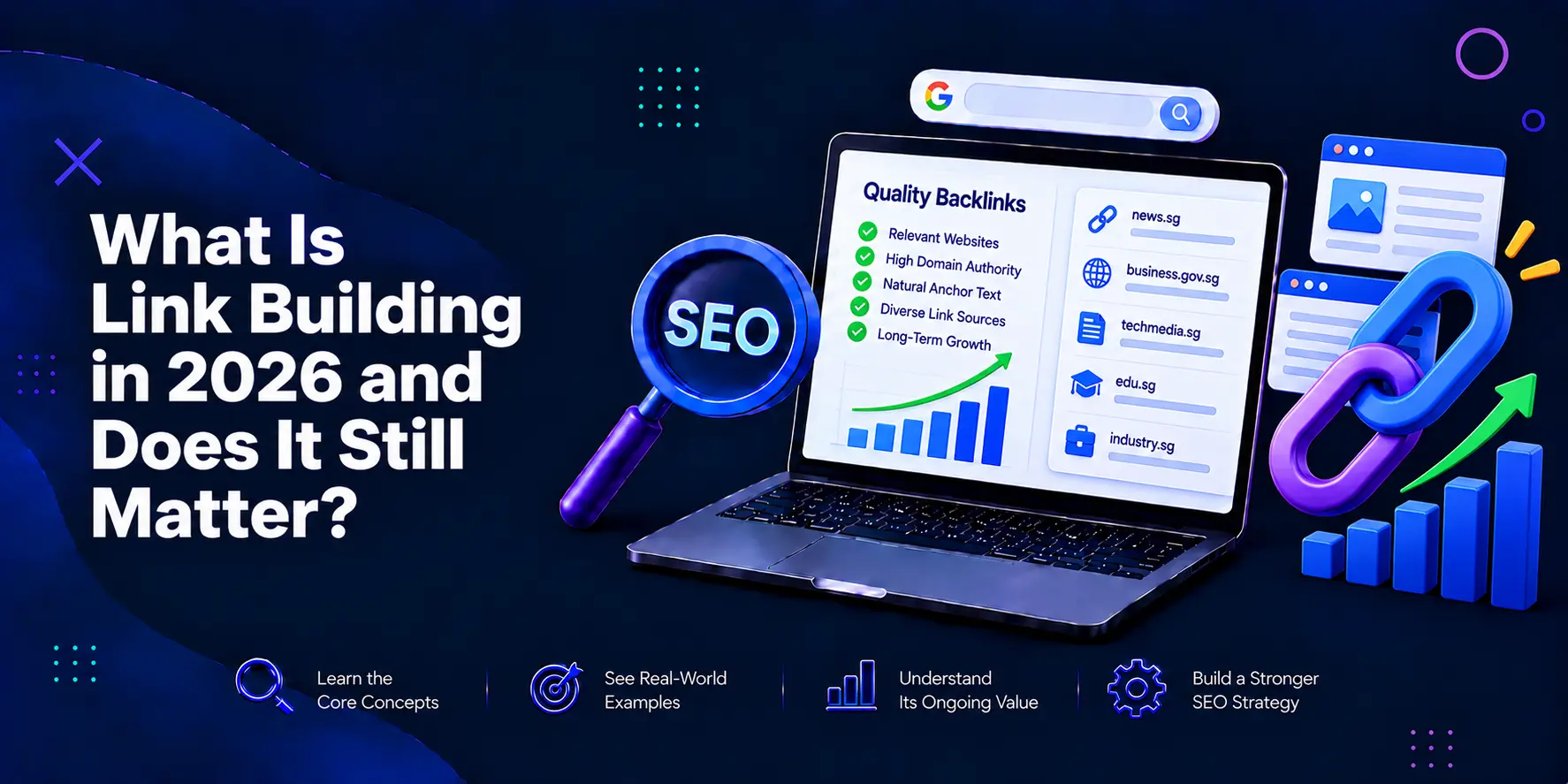
Link building is the process of earning hyperlinks from other websites to pages on your own site. Those links help people move between useful sources and give search systems context about how pages connect across the web.
A backlink from a relevant, trusted page can signal that your content deserves attention. A random directory link can add little value, while a manipulative link can create risk. Current search guidance confirms that link analysis remains part of core ranking systems, while spam systems target links created to influence rankings rather than help users.
For marketing managers, link building explained in one line is simple: earn credible third-party references to useful assets. The goal is not a large backlink report. The goal is stronger discovery, trust, referral traffic, and search visibility.
A useful link tends to share several traits:
Yes, but the answer needs context.
Search systems continue to use links to understand pages and their relationships. Official ranking documentation states that link analysis remains part of core ranking systems. It also says those systems use many signals, so links do not act as a single ranking switch.
A link can support a page, but it cannot rescue weak content, poor intent matching, crawl problems, or a bad user experience. A strong SEO programme joins links with technical health, useful content, clear site structure and evidence of expertise.
This is why the question “does link building still work” needs a better frame. Link building works when links arise from relevance and editorial value. Link schemes, bulk exchanges, automated placements, and paid links that pass ranking credit can breach spam policies.
Links can help search systems discover pages, judge relationships between sources, and assess useful resources. They can also send referral visits and expose a brand to new audiences.
The role now reaches beyond rankings. A valuable link can support:
AI-led search still depends on web content for retrieval, grounding, evidence, and citations.
Current guidance for generative search states that established SEO practices remain relevant because AI search features draw from core ranking and quality systems. Retrieval-augmented generation can use indexed pages to ground answers with current web information.
This creates a bridge between SEO in Singapore and link building for AI search. Links can help establish relationships around a page, while earned mentions can place a source inside third-party material that answer systems may retrieve.
Research published in 2025 found a strong preference for earned media sources across several AI search environments. The finding does not prove that backlinks cause AI citations, but it supports one sound principle: build authority beyond your own website.
Research from 2026 adds another lesson. AI citation systems can favour pages with strong structure, semantic fit, evidence, definitions, numbers, comparisons, and procedural content. Link acquisition should point towards pages that an answer engine can understand and use.
Answer engine optimisation aims to make content easy for answer systems to find, interpret, trust, and cite. Link building can support that process through third-party validation and stronger discovery paths.
The overlap works best when a campaign starts with a source-worthy asset, such as original research, benchmark data, expert commentary, calculators, templates, glossaries, or practical guides.
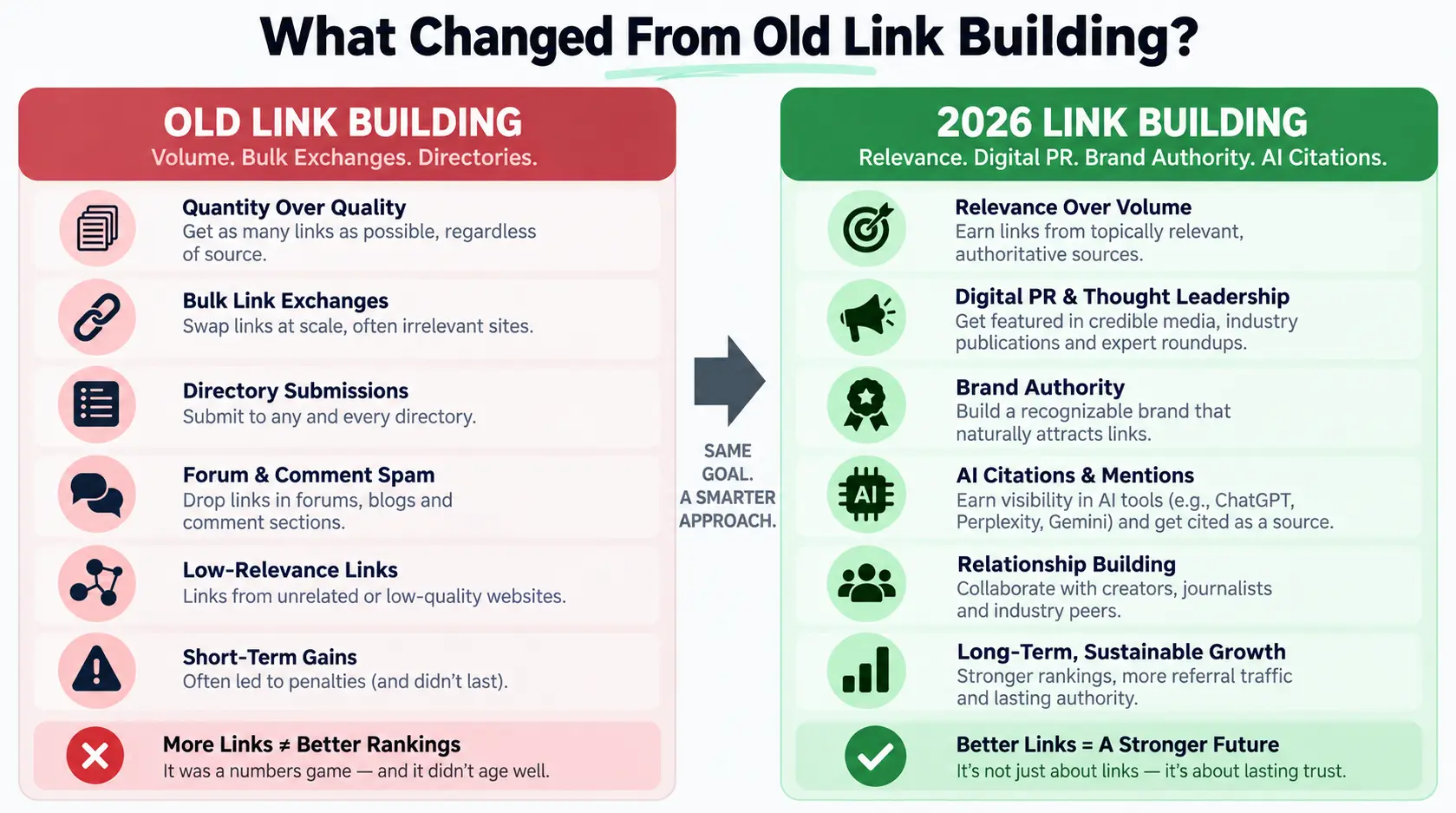
Old link building often treated every backlink as a unit. Modern link building judges why the link exists.
Search spam policies call out tactics such as buying ranking links, excessive link exchanges, automated link creation, low-quality directory links, keyword-rich links in distributed content, and low-value pages created for link manipulation.
One link from a respected site in your market can carry more strategic value than many links from unrelated pages. Topic fit gives the link meaning.
Journalists, editors, bloggers, and resource owners need a reason to cite you. A useful dataset, strong guide, or clear expert view gives outreach substance.
AI search can surface information from third-party sources without following the path of a classic results page. This raises the value of earned coverage, citations, expert references, and reputation signals.
A backlink count says little about pipeline. Marketing managers need to connect link work with ranking gains, qualified traffic, conversions, branded demand, and AI visibility.
Map link building to topics that matter to revenue. Start with service areas, product categories, high-intent guides, and strategic thought leadership.
For a regional search plan, content around AI SEO in Singapore or SEO in Singapore can connect to wider resources on search strategy, measurement, and AI discovery. Use internal links where the reader gains a clear next step.
Create something other sites can use as evidence. Strong options include:
The asset should answer a real question and give another writer a reason to cite it.
Find publishers, newsletters, resource pages, trade bodies, educators, and creators that cover the same problem. Read the target page and identify what its audience needs.
Lead with the story, data point, expert insight, or missing resource. A good pitch gives the editor a useful angle. The backlink becomes a natural reference rather than the purpose.
Improve the target page as new questions emerge. Add clear definitions, evidence, examples, author details, and links to supporting pages.
This matters for link building for AI search because answer systems need content they can parse and cite. Research shows that page structure and extractable evidence can influence citation use after retrieval.
The best tactics create value before they ask for attention.
Publish research, surveys, trend analysis, or expert commentary that supports a newsworthy claim. Pitch the finding to writers who cover the subject.
Find pages that list tools, guides, statistics, definitions, or educational resources. Offer a resource that fills a gap or updates an old reference.
Provide useful quotes, data interpretation, or practical insight to writers who need specialist input. Keep the contribution specific and evidence-led.
Find useful pages that point to removed or outdated resources. Offer a strong replacement when your page matches the lost source.
When a site mentions your brand, research, or resource without a link, ask whether a source link would help readers find the original material.
The largest risk in 2026 is confusing activity with impact.
Large link packages can create a report full of URLs without creating durable authority. Excessive exchanges can produce engineered patterns. Thin guest posts can place links on pages with no real readership. Automated campaigns can trade relevance for scale.
Current spam guidance warns against links created to manipulate search rankings and notes that search systems can neutralise the effect of spammy links. Lost ranking credit from neutralised links may not return.
Marketing managers should question any campaign that promises a fixed number of links without discussing audience fit, editorial context, target pages, or business goals.
A useful test asks: would we still want this mention if the link passed no ranking value? If the answer is yes because the placement brings trust, traffic, or reach, the opportunity has stronger foundations.
Link reports need layers. Start with acquisition data, then connect it to search and business results.
Track relevant referring domains, link quality, anchor text patterns, and links earned to priority assets. Then examine target-page impressions, rankings, organic visits, referral sessions, leads, and assisted conversions.
For AI visibility, track whether target pages appear as cited or supporting sources across answer experiences that matter to your audience. Treat this data as directional because citation behaviour can change across prompts and platforms. A 2026 research review found major variation across generative systems and warned against treating one optimisation method as a universal rule.
The strongest KPI set answers three questions:
That keeps link building tied to marketing outcomes rather than vanity metrics.
Link building in 2026 has not vanished; it has matured. The winning approach focuses on earning references that make sense to readers, publishers, search systems, and AI answer tools. Marketing managers should invest in assets worth citing, outreach built on relevance, and reporting tied to business results.
Avoid shortcuts that chase volume without context. Strong links now work as part of a wider authority system that includes expert content, digital PR, technical SEO and answer engine optimisation. When each part supports the same topic and audience, link building in Singapore can strengthen search visibility, trust, referral demand and AI-era discoverability.
Yes. Search systems still use links to understand relationships, relevance, and authority. Strong editorial links can support rankings, referral traffic, brand trust, and visibility across AI-led search experiences in 2026.
No. Quality carries more weight than volume. A few relevant links from trusted, topic-aligned pages can create more value than hundreds of weak links from unrelated or low-quality websites today.
AI search can use indexed web sources to ground answers. Earned mentions and authoritative links can strengthen discovery, credibility, and source relationships that may support citation and recommendation opportunities online.
Track referring domains, link relevance, target-page rankings, qualified referral visits, assisted conversions, branded search demand, and AI citations. Measure business impact, not backlink totals, because volume alone hides link quality.