
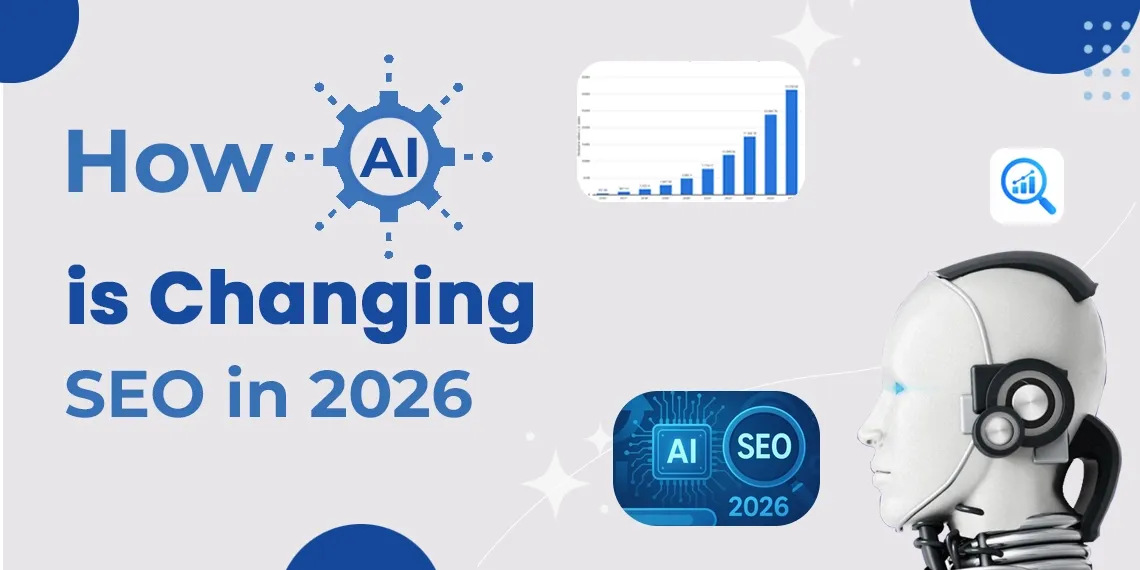
How AI is Changing SEO in 2026

AI SEO is changing the way SEO is handled in 2026 by shifting the focus from keyword rankings to direct answers, user intent, and content that search systems can select and summarise.

This shift has pushed AI-oriented SEO into the centre of digital strategy. Businesses can no longer rely on old methods like keyword stuffing or simple link building. Instead, success depends on how well the content answers real questions and fits user intent.

This blog explains how search has changed using AI, how optimisation has evolved, and what you can do to stay visible.

How AI Is Transforming Search Engines?

Search engines no longer match exact keywords. They analyse intent, context and meaning, then select and display direct answers instead of just listing links.

Search Is Now Answer-Driven

Search results now often show a direct response at the top of the page. This response is built by selecting and combining information from different sources.

That changes the goal of AI and SEO, so you are not only trying to rank but also trying to be included in that answer.

To increase your chances:

  • State the answer in the first lines of a section
  • Use clear headings that match common questions
  • Keep sentences short and factual

If the system cannot extract a clear answer, it will skip your content.

Queries Are More Natural

People now search in full sentences. They ask questions the way they would ask a person.

Example:

  • Old: “best running shoes.”
  • New: “What are the best running shoes for flat feet in 2026?”

This directly affects AI for SEO.

What works now:

  • Use question-based headings
  • Answer the question in one or two sentences first
  • Add detail after the answer

If your content delays the answer, it is less likely to be used.

Context Matters More Than Keywords

Search results now depend on context, not just keywords.

Systems adjust results based on:

  • Past searches
  • Location
  • Device
  • Search intent

This means one keyword does not have one fixed result.

For AI-based SEO, this leads to a clear shift:

  • Do not rely on one keyword per page
  • Cover the full topic
  • Include related questions and scenarios

Content that covers a topic fully is more likely to match different contexts.

In short, search engines now select content that is clear, direct, and easy to extract. If your content does not provide that, it will not be chosen, even if it is accurate.

How AI Is Redefining SEO Into More Advanced?

SEO is no longer just about keywords and links. It now depends on content quality, site structure, and user interaction with your pages. In fact, AI is changing SEO by shifting the focus from simple optimisation tactics to a more holistic, user-first approach.

From Keywords to Topics

Search systems no longer rank pages based on one keyword. They assess how well a site covers a full topic.

AI-enabled SEO now requires:

  • One main page that explains the core topic
  • Supporting pages that cover related questions
  • Internal links that connect all pages

This structure helps search systems recognise depth and authority.

Content Must Show Real Value

Publishing more content does not improve rankings. Pages must provide clear and useful information.

Strong content should:

  • Answer the question in the first lines
  • Use simple and direct language
  • Include real examples or clear explanations
  • Follow a logical structure

Generative AI SEO is effective only when content is edited and refined to add clarity and usefulness.

User Experience Is Now a Ranking Factor

Search systems measure how users respond to a page.

They track:

  • Time on page
  • Scroll behaviour
  • Whether users return to search results

If users leave quickly, the page loses visibility.

For SEO with generative AI, this means:

  • Keep content easy to read
  • Use clear headings
  • Break text into short sections

Pages that are easy to scan and understand perform better.

How AI Actually Chooses Content

Search systems do not pick content at random. They select pages that are clear, direct, and easy to extract. Understanding this is key for SEO and AI.

Clear Structure Wins

Content must be easy to scan. This includes:

  • Headings
  • Short paragraphs
  • Lists where needed

Search systems prefer content that is easy to extract and summarise.

Direct Answers Matter

Each section should answer a specific question. Avoid long introductions before getting to the point.

For example:

  • Start with the answer
  • Then explain it

This improves your chances in GEO SEO, where systems generate responses from multiple sources.

Authority Signals Are Strong

Search systems favour sites that show consistent expertise. Key signals:

  • Consistent publishing
  • Topical depth
  • Strong internal linking

This is where AI-powered SEO becomes important. It focuses on building authority over time, not quick wins.

Original Insight Stands Out

Content that repeats common points is often ignored.

To stand out:

  • Add a clear point of view
  • Include practical examples
  • Cover angles others miss

Search systems prioritise content that adds new value, not content that repeats what already exists.

Where SEO Traffic Comes From Now

These shifts show one clear pattern as traffic now depends on visibility across answers, platforms, location, and intent, not just rankings.

Zero-Click Searches Are Rising

Many users get answers without clicking any link, which reduces traffic but increases visibility. This is a key change in AI SEO because success is not only about clicks, but it’s also about:

  • Brand exposure
  • Being cited as a source

Multiple Platforms Matter

Search now happens across:

  • Search engines
  • Video platforms
  • Forums
  • Social platforms

Your strategy must include more than one channel.

Local Search Is Growing

Traffic no longer comes only from search result clicks. It now comes from answers, mentions, and multiple platforms.

Businesses must:

  • Optimise for local queries
  • Provide clear location signals
  • Create local content

Long-Tail Queries Drive Traffic

Specific queries bring better traffic. These users often have a clear intent.

Targeting long-tail queries helps:

  • Improve conversions
  • Reduce competition

How to Get Your Content Cited by AI Systems

Getting cited is now the main goal in SEO AI. Content must be clear, structured, and useful enough to be selected as a source.

Write Clear and Direct Content

Start with the answer, keep sentences short and simple. Each section should address one question.

This makes it easier for systems to extract and use your content.

Use Strong Structure

Break content into sections:

  • H1 for main title
  • H2 for key sections
  • H3 for subpoints

This helps both users and systems.

Focus on Depth, Not Length

Length alone does not improve performance, so content must provide value.

Include:

  • Examples
  • Comparisons
  • Step-by-step explanations

This supports AI-based SEO.

Build Topic Authority

Create multiple pieces around one topic and link them together.

This signals expertise and improves visibility.

Keep Content Updated

Outdated content loses value, so regular updates show relevance.

This is key in fast-changing areas like gen AI SEO and improves selection chances.

Improve Internal Linking

Link related pages within your site. This helps:

  • Navigation
  • Content discovery
  • Authority flow

It also supports AI SEO tools that analyse site structure.

Conclusion

Overall, Search engines have developed past their basic function of showing website rankings. The search process now requires users to receive accurate answers that must appear within their specific context while maintaining user confidence.

AI SEO in Singapore exists as a permanent development that goes beyond being a short-term market trend. Digital visibility now depends on this new digital structure, which forms its essential base.

To succeed in 2026:

  • Your content needs to deliver specific information that users will find useful.
  • Your business requires you to build authority in your industry sector.
  • Create simple content structures that users can easily read and comprehend.
  • The evaluation process should reach past search rank positions.

SEO AI will serve as an operational system that users can access through simple interfaces to perform their required tasks.
What is AI SEO? (Complete Guide)

AI SEO is the process of optimising content so that AI systems can understand, extract, and show it in search results, including AI-generated answers and conversational interfaces.

Because search is no longer just about ranking web pages, but it’s about delivering direct, AI-generated answers. With trending tools like Google AI Overviews, ChatGPT, and Bing Copilot, users are increasingly getting information without clicking through multiple links.

This evolution of AI SEO brought a new system that draws its influence from how artificial intelligence processes information and organises data for operational purposes. Businesses must now develop their content for extraction processes, which will generate summary data and citation reference systems instead of focusing exclusively on keyword optimisation and search engine ranking performance.

In this guide, you’ll learn how AI and SEO are evolving together, how AI-driven search works, and how to optimise your content to stay visible in this new landscape.

Why AI SEO Matters in Modern Search

AI SEO matters because users now get answers directly from search engines instead of clicking websites. This shift is happening quickly, with AI adoption nearly doubling from 14% to 29.2% in just six months in 2025, highlighting how rapidly users are moving toward AI-powered search experiences (HigherVisibility, 2025).

Let’s understand how AI SEO helps in modern search below:

The Rise of Zero-Click Search

Zero-click search refers to searches where users get their answer directly on the search results page without clicking on any website. It is one of the key reasons why AI SEO is important.

This behaviour is already visible in user trends, where around 75% of AI-driven search sessions end without users visiting external websites, reinforcing the importance of appearing directly in AI-generated answers.

Searches now end without a click because AI-generated answers, featured snippets and knowledge panels have become standard in search results. The trend continues to gain speed because AI Overviews deliver quick summary answers through their platforms.

This indicates that businesses need to move from the traditional way of simple website traffic generation to an AI-powered SEO strategy because search engines now display their content within direct answer boxes. AI systems prefer content that presents its information through organised structures and shows reliable information that users can understand without difficulty.

More reasons why AI for SEO is important:

  • Growth of AI-generated results
  • Increased reliance on conversational queries
  • Need for accurate and structured content

As a result, SEO and AI are no longer separate; they are actually deeply integrated in modern search.

What is the Difference Between AI SEO and traditional SEO?

AI SEO and traditional SEO share the same foundation, but they differ in focus and execution. Let’s explore below:

Aspect Traditional SEO AI SEO
Primary Focus Ranking web pages in search results Being cited in AI-generated answers
Optimisation Approach Keyword-focused optimisation Meaning, entities, and context-driven optimisation
Goal Drive clicks and website traffic Build visibility, even without clicks
Search Behavior Users click on links Users get direct answers from AI
Content Strategy Optimise for search engines Optimise for AI understanding and extraction

How AI SEO Works

AI SEO works by helping search engines understand content at a deeper, semantic level rather than relying only on keywords. The process involves three main stages:

1. Content Understanding

AI systems analyse language, context, and relationships between concepts using NLP.

2. Content Retrieval

Relevant content is selected based on clarity, structure, and authority.

3. Answer Generation

AI combines information from multiple sources to generate a final response.

This is where generative AI SEO comes into play, as content must be structured in a way that AI can easily extract and reuse.

As user behaviour evolves, this shift is becoming more significant—around 3 in 4 users now rely on AI tools weekly for tasks like quick answers, research, and decision-making, making structured content more important than ever.

Where AI SEO Impacts Search Visibility

AI SEO in Singapore impacts visibility across multiple AI-driven platforms, not just traditional search engines. As search evolves, content is increasingly surfaced in AI-generated answers and conversational interfaces rather than only in ranked lists of links.

Google AI Overviews

Google AI Overviews generate summarised answers directly in search results by combining information from multiple sources.

The system selects information from sources that deliver content combining well-organised and expert-verified data.

Bing Copilot

Bing Copilot uses AI to deliver chat-based answers that appear together with standard search results.

The system extracts data from multiple sources to create an easy-to-understand presentation that users can access without difficulty.

ChatGPT

AI assistants like ChatGPT deliver direct answers based on structured and reliable content.

The creation of information that users can quickly understand and reuse for their dialogue responses serves as the main optimisation strategy for these platforms.

AI-driven platforms are growing rapidly, with ChatGPT alone accounting for nearly 20% of search-related traffic globally, highlighting the increasing importance of optimising content beyond traditional search engines.

Perplexity AI

Perplexity AI provides users with correct answers that include proper source documentation.

The system shows its sources, which forces organisations to maintain clear communication while delivering trustworthy information to obtain better visibility.

Voice Search Systems

Voice assistants such as Alexa, Siri, and Google Assistant rely on concise, direct answers. As content optimised for voice search must be clear, conversational, and easy to extract.

What are the Pillars of AI SEO?

AI SEO is built on a set of core pillars that determine how effectively content can be understood, extracted, and cited by AI-driven search systems. These pillars go beyond traditional optimisation and focus on how information is structured and interpreted.

1. Entity Clarity

Entity clarity ensures that AI systems can accurately identify and understand the key topics, brands, and concepts within your content.

Search engines depend on entities together with their linked relationships instead of depending on keywords alone. You need to establish clear definitions for these aspects:

  • Who (brand, person, organisation)
  • What (product, service, concept)
  • How are they related

The text should start with a specific sentence that defines the main topic instead of using general statements. The knowledge graph system needs AI content to contain uniform names and understandable descriptions, which enable it to link your information to its established knowledge base.

The system will correctly identify your content and generate citations when you provide precise entity definitions.

2. Structured Content

Structured content makes it easier for AI systems to extract and reuse specific pieces of information.

AI models need content that meets the following requirements:

  • Organised with clear headings (H1, H2, H3)
  • The text structure requires brief segments that concentrate on specific subjects.
  • The information needs to appear through lists, tables and step-by-step presentations.

A section that begins with a direct answer and then shows bullet points makes it easier to extract information than a lengthy block of text.

Well-organised content will help you get better results when AI systems generate their answers and summaries.

3. Topical Authority

Topical authority measures the complete subject coverage that you deliver through your consistent content development. AI SEO needs content development that builds depth through complete topic coverage instead of creating individual web pages. This includes:

  • The process involves a detailed exploration of all relevant subtopics.
  • The method requires developers to establish content links that form topic clusters.
  • The organisation needs to keep its terminology and messaging consistent throughout all its operations.

The website, which creates various high-quality AI SEO articles about strategy, tools and comparisons, establishes more authority than a single web page does.

The deeper your coverage, the more trustworthy your content appears to AI systems.

4. Technical SEO

Technical SEO ensures that your content is accessible, crawlable, and correctly interpreted by both search engines and AI systems.

Key elements include:

  • Fast page load speed
  • Mobile-friendly design
  • Clean site architecture
  • Proper internal linking
  • Use of structured data (schema markup)

Even the best content won’t perform if it cannot be efficiently crawled or rendered.

Technical health provides the foundation that allows AI systems to access and process your content.

5. Content Accuracy

Content accuracy is critical for building trust and increasing the likelihood of being cited in AI-generated responses.

AI systems prioritise content that is:

  • Factually correct
  • Up-to-date
  • Supported by credible sources
  • Consistent across pages

Inaccurate or outdated content is less likely to be used and may reduce your overall visibility. So, high-quality, reliable information increases your chances of being selected as a trusted source.

How to Optimise for AI SEO

Optimising for AI SEO means creating content that is easy for AI systems to understand and reuse.

Below are the key steps:

  1. Write clear, direct answers to user questions
  2. Use structured headings (H1, H2, H3)
  3. Focus on topics rather than just keywords
  4. Add schema markup for better context
  5. Build content clusters for authority
  6. Keep content updated and accurate

Using the right AI SEO tools can also help analyse structure, gaps, and optimisation opportunities.

When you want to rank your content in AI tools or an overview, then you need to optimise your content in such a manner so that it follows all the standards that help content to rank. Let’s explore some of the best practices below:

AI-optimised content should be clear, structured, and self-contained.

Structured content (headings, lists, FAQs) is the most effective format for AI search.

Follow these best practices:

  • Start sections with direct answers
  • Use lists, tables, and comparisons
  • Keep paragraphs short and focused
  • Avoid vague or generic statements
  • Reinforce key concepts consistently

These practices improve both readability and performance in GEO SEO (Generative Engine Optimisation) environments.

What is the Future of AI SEO

AI SEO will continue to evolve as generative AI becomes central to search experiences.

Key trends to watch:

  • Increased use of AI-generated answers
  • Greater emphasis on content accuracy and trust
  • Growth of multimodal search (text, image, video)
  • More personalised search experiences

As AI and SEO continue to merge, businesses that focus on clarity, authority, and structure will have a competitive advantage.

Top AI SEO Tools Every Marketer Should Use in 2026

People today conduct different search activities because they now enter entire questions into search engines, while they want fast responses, and they need trustworthy information. Businesses need to use different SEO methods because of this new market approach.

Businesses must select AI SEO tools that help them work effectively against their competitors. These tools help you understand what your audience wants, plan better content, and improve performance without wasting time.

But using AI tools for SEO operations demands more than basic time efficiency because it needs strategic decision-making and specific task execution. Organisations need to create an unambiguous strategic plan that unites beneficial content with the actual purposes of users.

This guide shows you the operational aspects of modern SEO and reveals the position of these tools within your professional process and their correct application during 2026.

What Are AI SEO Tools?

AI SEO tools are platforms that help you plan, create, and improve content using data and automation. They reduce manual work and give insights that would take hours to find on your own.

Instead of guessing what to write, you can:

  • Understand what people are searching for
  • Group topics into clear themes
  • Improve content structure
  • Track performance across search and answer-based platforms

In simple terms, they help you make better decisions faster.

Why AI Tools in SEO Matter More Than Ever

Search behaviour has changed in three key ways:

1. People Ask Questions, Not Just Search Keywords

Users now type full questions instead of short phrases. This means your content must match intent, not just keywords.

2. Answers Matter More Than Rankings

It is no longer about being number one on a page. It is about being part of the answer.

3. Content Volume Has Increased

More content is published every day. Without the right tools, it is hard to stay competitive.

This is why AI tools in SEO are no longer optional. They help you keep up without burning time or resources.

Also Read: How Google AI Mode Is Reshaping SEO: What Marketers Need to Know

Top AI SEO Tools Organisations Should Use

For growing teams, choosing the right AI SEO tools is not about features. It is about building a system that supports research, content, and tracking in one flow. The AI SEO tools help teams move faster while staying consistent. Let’s explore some of the best AI SEO tools below:

Semrush One

This works as a central system for many organisations. It combines research, competitor insights, and tracking in one place.

Teams use it to plan campaigns and measure results. It also supports visibility across search and answer platforms, which is now key in artificial intelligence search engine optimisation.

SurferSEO

This tool focuses on content quality. It helps teams structure pages based on what already performs well. Writers use it to improve headings, coverage, and flow.

It is one of the most practical AI tools for SEO when refining content before publishing.

Wellows

This tool tracks how often your brand appears in answers. It shows which queries trigger your content and where competitors are stronger.

This makes it useful for teams focused on AI tools in SEO that go beyond rankings.

Keyword Insights

This supports planning and structure. It groups keywords into topics and helps teams avoid overlap. It is often used to build content clusters, which are essential for long-term growth.

Writesonic

This helps teams create first drafts quickly. It is useful when scaling content production. Still, it works best when combined with editing and strategy, as most SEO AI tools require human input for quality.

Together, these tools form a complete workflow. They support planning, creation, and performance, which is what modern SEO demands.

How to Use AI SEO Tools in Your Workflow

To get real value from AI SEO optimization tools, you need a clear and simple process. It starts with research and moves through planning, creation, optimisation, and ongoing improvement. Whether you manage content on your own or work with an SEO service, having a structured workflow helps you stay consistent and effective.

Step 1: Start With Research

Start your research process by finding out which search terms people use and which areas contain unexploited market possibilities.

The process allows you to analyse user questions together with current popular subjects and your competitor’s best-performing market segments. So, you will find your actual market demand through this step, which helps you build your path to success.

Step 2: Build Topic Clusters

You need to group together related keywords into themes after you finish your research process.

The themes need to contain a primary topic that should connect to multiple related subjects. The structure enables search engines to identify your content, and your website authority will increase over time.

Step 3: Create Structured Content

Now, start writing content that is clear and easy to follow. Your content should answer questions directly, so use simple language and follow a logical structure.

The writer needs to consider readers when writing and avoid inserting keywords into every sentence.

Step 4: Optimise Before Publishing

You need to evaluate your content thoroughly before you start the publishing process. The process requires you to check your headings while tracking deep subject matter coverage and adding internal links when necessary.

The process produces higher-quality results, which enable your website pages to develop links that connect them together.

Step 5: Track and Improve

After publishing, monitor how your content performs. Identify pages that need improvement and update them. Expand content that performs well.

With AI tools for SEO, this process becomes more efficient, but it still requires regular attention. As SEO is an ongoing process, consistent updates lead to better results over time.

Common Mistakes to Avoid

Many marketers use the best AI SEO tools but still struggle. Below are the main reasons why.

1. Relying Too Much on Automation

Tools can help, but they cannot replace strategy.

If you publish content without review, it will lack depth.

2. Ignoring Search Intent

It is not enough to target keywords. You must understand why people search.

Are they:

  • Looking for information?
  • Comparing options?
  • Ready to buy?

Your content must match that intent.

3. Over-Optimising Content

Too many suggestions can lead to:

  • Repetitive wording
  • Unnatural structure

Keep your writing clear and natural.

4. Skipping Internal Linking

Internal links help users and search engines navigate your site.

They also:

  • Improve engagement
  • Boost rankings

Do not overlook this step.

How AI-Powered SEO Is Changing Strategy

AI-powered SEO is not just about using new tools. It changes how you plan, create, and present content. Instead of chasing rankings, the focus is now on building useful content that answers real questions and earns trust.

Focus on Topics, Not Just Keywords

The method now requires businesses to cover entire topics instead of focusing on particular keywords. Search systems achieve a better understanding of your website through content that follows a main theme and includes additional related ideas.

This method lets you achieve better search engine rankings for multiple related queries instead of depending on one keyword.

Create Content That Answers Questions

Content requires present solutions to existing problems, which must be presented through direct and understandable communication.

Users need fast answers, so you should write content that readers can understand easily through an organised presentation.

The system will select your content for answer-based results when your content successfully provides answers to questions.

Build Trust Through Content

Trust functions as the primary element that affects AI SEO performance. Search systems now value content that is accurate, clear, and genuinely helpful. You need to focus on delivering trustworthy content that readers can easily understand. Quality content that people trust will enhance your search results, and users will stay longer on your website.

Choosing the Best AI Tools for SEO

With so many options available, how do you choose the best AI tools for SEO?

Focus on these factors:

1. Ease of Use

If a tool is hard to use, your team will not adopt it.

Choose tools with simple workflows.

2. Data Accuracy

Reliable data is critical. Poor data leads to poor decisions.

3. Integration

Your tools should work well with your existing systems.

This saves time and reduces manual work.

4. Scalability

As your business grows, your tools should grow with you.

5. Real Impact

The best SEO AI tools do not just provide data. They help you take action.

The Future of AI SEO Tools

Looking ahead, AI SEO tools will continue to evolve as search behaviour changes. The focus is shifting from simple rankings to how well your content answers questions and delivers value. To stay competitive, marketers need to adapt to these changes and refine their approach.

More Focus on Answer-Based Search

The content movement now seeks to deliver short answers instead of creating lengthy explanations. Users want quick and clear responses, so your content must be concise and well-structured. Users will receive better content recommendations when pages offer direct solutions.

Better Content Understanding

Search systems continue to improve their ability to interpret the content they process. These systems now analyse content through context analysis instead of relying on basic keyword searches.

Your content requires both clarity and relevance to match what users search for in their actual needs. Quality will play a bigger role than ever before.

Increased Competition

The deployment of AI tools for SEO purposes by businesses has created a more competitive market, which affects every business sector.

You need to offer something different, which will help you stand out from the competition. The content strategy needs to include either original insights, regular update schedules, or fresh content distribution approaches.

The solution to content quantity problems does not require additional content production. The main objective needs to concentrate on developing superior content that provides genuine worth to readers.

Final Thoughts

Overall, AI SEO tools have reshaped how marketers approach search. The tools enable users to conduct research about topics, while they can also develop content strategies and enhance their operational results. But tools alone are not enough. The real value comes from how you use them within a clear and consistent strategy.

To succeed in artificial intelligence search engine optimisation, focus on understanding your audience, building content around topics, and creating pages that answer real questions. Use AI tools for SEO to support your process, not replace it. The content should present straightforward information that provides value to readers while maintaining a user-friendly arrangement.

Search evolution requires people who adapt to maintain their leadership position. The right approach, together with the AI SEO tools, will help you establish a powerful presence that will enhance your visibility and produce enduring results.

What is AI-Powered SEO? A Beginner’s Guide to Getting Started

Search engine optimisation stands as an important tool for all websites that look to get visitors while achieving top ranking or positions in search engine results. The evolution of SEO practices has brought about advanced methods that allow businesses to save their time while achieving better results.

But nowadays, the most successful way is to use AI-powered SEO to perform data analysis and pattern recognition while automating processes that enable marketers to boost their website visibility and user interactions.

Traditional SEO methods need businesses to try different strategies until they find successful ones, but this approach offers exact data that businesses can apply to select their content, keywords, and links.

In this guide, you will understand everything about AI-powered SEO operations and their search ranking benefits while showing how businesses of all sizes can use these methods to build their online market strength.

What is AI-powered SEO?

The main function of AI-enabled SEO systems operates through advanced software, which performs search engine optimisation to boost website visibility. The system operates by strengthening human skills instead of taking over their professional responsibilities.

The system processes large amounts of data to help marketers make better choices about their content, their keyword selection, and link-building strategies. SEO through AI systems applies algorithm-based predictions to find the best solutions, which boost website rankings instead of depending on human research and guesswork like traditional SEO methods do.

The system generates automated suggestions for subjects while it enhances written material and tracks competing organisations.

The popularity of services of AI SEO has grown because they generate useful information through their fast operational speed. Businesses no longer need to spend weeks analysing data as they can make changes and see improvements faster.

How AI Helps in SEO Ranking?

Search engines rank pages based on relevance, quality, and user engagement. AI-powered SEO tools can analyse these factors more efficiently than manual methods. Below are some ways AI helps to improve ranking:

Keyword Research

The process of SEO depends on finding the correct keywords, which serve as its fundamental base.

The AI system performs search analysis on billions of queries to identify successful keywords that match your business area. The system detects related words that your competitors have failed to identify.

Content Optimisation

AI-driven SEO rewards fresh, up-to-date content. Businesses need to update their articles at regular intervals to keep their content current while preserving their search engine rankings.

By following these steps, your content will be better suited to modern search algorithms and more likely to rank well.

Competitor Analysis

The AI-based SEO tools monitor competitor activities to support their operations. The tools show how users select words in search queries, which websites they link to, and which content topics exist without proper coverage.

Organisations need to modify their business approaches to achieve better results than their market rivals.

User Experience Monitoring

Search engines reward websites that deliver excellent user experiences to their visitors. The AI system evaluates three main metrics, which include page load speed, bounce rate, and navigation patterns, to generate enhancement suggestions.

Predictive Analytics

AI systems use predictive models to determine which content will achieve success through their analysis of current market patterns and user actions online. Marketers can allocate their resources to create content that produces higher search engine rankings and website visitor numbers.

The features enable businesses to establish their SEO strategies through automated processes, which eliminate the need for human involvement.

Difference Between Traditional SEO and AI-powered SEO

While both are used to improve website ranking, there are key differences between traditional SEO and AI-oriented SEO. Let’s understand below:

Aspect Traditional SEO AI-powered SEO
Keyword Research Manual, time-consuming Automated, data-driven
Content Optimisation Based on experience and rules Based on algorithms and analysis
Competitor Analysis Limited to manual tracking Real-time monitoring of competitors
Performance Prediction Hard to forecast Predictive analytics suggest likely outcomes
Efficiency Slow, requires constant updates Fast, continuous optimisation

Traditional SEO relies heavily on trial and error. AI-driven SEO, however, can provide insights that help marketers make informed decisions faster.

What are the Benefits of AI-powered SEO services?

Businesses adopting AI-SEO services enjoy several benefits:

Saves Time

The system uses AI to perform automatic work on repeated tasks, which include keyword research, content audits, and performance tracking operations.

Marketers now have more time to develop their strategic plans because this process takes care of their duties.

Enhances Accuracy

AI systems handle extensive data sets through their analysis process, which produces results free from human-introduced mistakes and prejudices.

The system produces better recommendation results because of this procedure.

Improves Content Quality

AI systems evaluate content through their assessment of readability, relevance, and engagement to match search intent, which results in better user experiences and higher search engine rankings.

Competitive Advantage

AI-driven SEO systems help businesses find untapped market possibilities that their competitors fail to detect.

The system enables businesses to achieve better search engine results than their competitors.

Data-Driven Decisions

Businesses now have the ability to base their decisions on actual data instead of making random choices. The system protects businesses from danger while it generates higher financial returns.

Overall, AI-powered SEO services are designed to make SEO more strategic and efficient, helping businesses achieve better results.

Read Also: How AEO in SEO Enhances User Search Experience

Optimising content for AI-driven SEO requires a slightly different approach than traditional SEO. Below are key strategies:

Use Natural Language

AI systems learn to process human language through their training process. Create content that sounds natural while providing direct answers to user questions. The content should fulfill user search needs instead of using keyword repetition.

Focus on Search Intent

Search terms help me identify user needs when they enter their queries. Try to create content that directly addresses their needs.

Structure Your Content

Use clear headings (H1, H2, H3) to organise content. AI systems can better understand and rank well-structured content.

Optimise Meta Information

Meta titles, together with descriptions, need to offer useful information that contains target keywords through natural language. AI systems will find it simpler to link your content with appropriate search queries.

Include Related Keywords

Use secondary keywords where appropriate. The process helps search engines understand website content through relevant signals, which boost website visibility in search results.

Regular Updates

AI-driven SEO systems provide better performance to websites that publish content that remains current throughout the entire year.

Businesses need to update their articles at regular intervals to keep their content current while preserving their search engine rankings. The following steps will help you create content that search engines recognise for better visibility in search results.

Best Practices to Implement AI-Driven SEO

Adopting AI-oriented SEO successfully requires more than just tools. Below are the best practices for implementation:

Define Clear Goals

You need to establish specific objectives that will direct your SEO work. Your strategy needs direction from specific objectives, which include increasing website visitors, generating superior leads, and boosting user interaction.

Analyse Data Regularly

You should track performance through AI-generated data analysis. You need to monitor which search terms generate website visitors, identify website sections that require improvement, and understand what your competitors do.

Optimise for Mobile

Search engines prioritise websites that offer optimal mobile navigation. Your website needs to load quickly while offering simple navigation and flexible display options for various devices.

Leverage Internal Links

You should use internal links to help visitors navigate through your website. The system provides better user experiences while search engines receive information about how your website content organises itself.

Monitor Results

The AI-based SEO system lets you perform ongoing tracking activities. You should monitor website performance through ranking shifts, user activity, and conversion rates while using data to modify your marketing approaches.

Combine Human Expertise

AI systems enable organizations to analyse data for decision-making, but humans must deliver original concepts and deep comprehension through their intuition.

Create content that your target audience will connect with by using the information you discovered. Your SEO strategy will stay effective and sustainable through the application of these specific practices.

Common Misconceptions About AI SEO

Despite its advantages, there are misconceptions about AI SEO:

AI Replaces Humans

AI does not replace human input, but it enhances it by providing insights and automating repetitive tasks. Human judgment is still crucial for strategy and creativity.

AI Guarantees Instant Results

SEO is a long-term process, but AI can speed up research and analysis; it cannot guarantee immediate ranking improvements.

Only Large Businesses Benefit

AI-enabled SEO services are useful for businesses of all sizes. Small and medium enterprises can gain a competitive advantage by using data-driven insights.

AI Makes Content Mechanical

AI does not mean robotic content. If you use it properly, then it guides writers to produce clear, relevant, and engaging content that meets user needs.

Understanding these misconceptions helps businesses use AI-driven SEO more effectively and realistically.

Conclusion

AI-powered SEO technology produces a fundamental change in how businesses develop their search engine optimisation strategies. Marketers can design improved operational systems through their use of analytics, together with predictive and automated systems.

With AI-SEO, Organisations achieve better results because it helps to improve keyword research, content optimisation, and competitor analysis performance. Those organisations that choose AI SEO service implementation will experience time savings while their website accuracy and overall performance metrics will improve.

The business size does not matter because these strategies will help you achieve better visibility while attracting more visitors, which leads to business growth. The digital world needs AI-oriented SEO because it acts as a strategic requirement that goes beyond being a passing trend.

Best SEO Agencies in Singapore (2026) – Ranked & Reviewed

If you’re searching for the best SEO agency in Singapore, chances are:

  • Your website traffic has plateaued
  • You’re overly dependent on paid ads
  • Competitors outrank you for important keywords
  • Your previous SEO agency underdelivered
  • You don’t understand what you’re paying for

You’re not alone.

Singapore’s digital landscape is one of Southeast Asia’s most competitive areas. Ranking on Page 1 requires much more than “basic SEO.” It requires a deep local understanding, outstanding authority connections, a conversion – focused approach, and technical accuracy.

Finding the best SEO agency in Singapore is usually a difficult task. With hundreds of SEO firms promising #1 rankings, business people need to determine carefully. The right Singapore SEO partner will help your brand get noticed for more recognition.

Regardless of whether you are an enterprise brand, SME, or a startup, partnering with the proper SEO company in Singapore may substantially boost organic visitors, leads, and earnings.

In this guide, we rank the top SEO agencies in Singapore (2026) based on:

  • Proven ranking performance
  • Service scope(technical, local, e-commerce, international)
  • Industry reputation & reviews
  • Transparency & reporting standards
  • Experience in the Singapore market

Quick Comparison – Top SEO Agencies in Singapore

Agency Best For Core Strength Ideal Budget Range Website
BThrust ROI-Focused SMEs Technical + Local SEO $400 to $ 3,000+/ month https://www.bthrust.com/
Impossible Marketing SMEs Local Search Domination from S$1,099/month https://www.impossible.sg/
First Page Digital Enterprise Regional SEO from $840/month https://www.firstpagedigital.sg/
OOm Performance-Driven Brands Data + CRO $1000 to $4,000+ /month https://www.oom.com.sg/
MediaOne Established Firms Brand + SEO From S$1,000 – S$1,500+/month https://mediaonemarketing.com.sg/
Awebstar Startups Web + SEO Bundles From S$2,500-S$3,000+/month https://awebstar.com.sg/
Heroes of Digital Multi-Channel SEO + Paid Integration $1,950/month https://www.heroesofdigital.com/
Digitrio Multi-Channel Regional SEO $200 to $5,000 https://digitrio.com.sg/seo/

Top SEO Agencies in Singapore

1. BThrust – Best Overall SEO Agency

Best For: SMEs & growth-focused brands

BThrust is a Singapore-based digital marketing company offering SEO, SEM, and web services, which has been generating ROI since 2014. The team is praised for its technical ability, prompt response, as well as ROI driven methods which transform visibility into quantifiable improvement, with a client satisfaction score of 4.8 out of 5.

BThrust is a reliable partner for companies desiring to expand their businesses in competitive markets, with its extensive SEO services as well as data-backed campaigns. BThrust also has a strong presence in Malaysia and offers customised SEO services to local customers.

BThrust provides a full range of SEO services, including technical reviews, local SEO, link building, and e-commerce SEO. The agency is best known for its structured strategy planning as well as ROI-focused campaigns.

In Singapore, BThrust offers a complete range of SEO services, including:

Notable Clients / Case Studies

PAL Line Pte Ltd – Enhanced multilingual accessibility and site performance, resulting in a 60% increase in organic traffic and 38% rise in conversions.

Tn Corporate Management Pte Ltd – Strengthened authority and rankings by driving a 70% increase in organic traffic and 62% growth in organic revenue.

Happy Bird – Local SEO optimisation led to top search rankings within four months and a 74% increase in conversion rate.

KXH Flowers – Seasonal SEO campaigns delivered 484% more impressions and 233% higher conversions.

Why They Rank #1

  • Proven Track Record – Case studies reveal remarkable traffic as well as conversion lifts, with a few clients experiencing triple – digit growth.
  • Technical Depth – Strong knowledge in audits, keyword targeting, website pace optimization, as well as multilingual SEO.
  • Tailored Campaigns: Strategies that are tailored for industries such as retail, company solutions, and logistics, ensuring relevance.
  • Client Praise – Reviews point out responsiveness, clear communication, along with stress free interaction.
  • Regional Strength: Delivering local SEO services that are suited to various markets with a presence in both Singapore and Malaysia.

Address (Singapore HQ / Sales Office):

10 Ubi Crescent, #04-50 Lobby C, Ubi Techpark, Singapore 408564

Phone: +65 6834 3026

WhatsApp: +65 8910 8216

Email: sales@bthrust.com

Website: https://www.bthrust.com/

Office Hours:

Typically standard business hours (Mon–Fri, 9:00 AM – 6:00 PM). Exact timings are not explicitly listed, but reviews and contact info suggest weekday availability.

Average SEO Cost in Singapore: Packages range from SGD 400 to SGD 3,000+ per month, depending on scope and service level.

2. First Page Digital – Strong for Data-Driven SEO

Best For: Established brands & competitive industries

First Page Digital is an award winning Digital marketing company that has a good presence in Singapore as well as the Asia Pacific region. The agency is known for aggressive growth strategies in addition to data-driven SEO execution, focused on competitive keyword phrases and revenue scaling.

They deal with structured SEO strategies, assisted by in-house experts throughout technical, content, and paid research teams.

First Page Digital provides a complete range of SEO solutions, such as content strategy, technical optimisation, as well as enterprise SEO solutions.

Services Offered

  • SEO
  • Enterprise SEO
  • Local SEO
  • Content Marketing
  • Google Ads
  • Social Media Advertising

Notable Clients / Case Studies

Many regional and international brands in finance, retail, and education work with them. Their case studies show strong traffic growth and rising revenue in tough, competitive markets.

Why They Rank Highly

  • Regional Authority – Strong presence across APAC markets.
  • Enterprise Experience – Suitable for larger brands with competitive targets.
  • Data-Driven Execution – Emphasis on analytics and ROI tracking.

Average SEO Cost in Singapore: Typically from $840/month (10 keywords), depending on campaign scope.

Website: https://www.firstpagedigital.sg/

3. OOm – Well-Rounded Digital Marketing Agency

Best For: SMEs looking for integrated marketing solutions

OOm is a Singapore-based agency that provides SEO services, together with innovative services and paid media. The agency is noted for its practical approaches tailored to local SMEs as well as government grants.

They’re focused on enhancing organic visibility while aligning with general marketing goals.

Services Offered

  • SEO
  • Local SEO
  • Google Ads
  • Social Media Marketing
  • Website Development

Notable Clients / Case Studies

They have worked with brands like Logitech, the British Council, and more that operate in retail, education, and service industries, with case studies demonstrating consistent traffic and lead growth.

Why They Rank Highly

  • Strong Local Experience – Deep understanding of the Singapore SME landscape.
  • Integrated Approach – Combines SEO with paid campaigns.
  • Government Grant Familiarity – Experience with PSG-supported projects.

Average SEO Cost in Singapore: From $1,588/month

Website: https://www.oom.com.sg/

4. Impossible Marketing – Transparent & Results-Focused

Best For: Businesses seeking straightforward SEO packages

Impossible Marketing is famous for its clear pricing and structured SEO frameworks. The agency’s main focus is on long-term ranking stability as well as white hat SEO methods.


They’re especially popular with SMEs that want clear deliverables and a clear scope.

Services Offered

  • SEO
  • Local SEO
  • Content Marketing
  • Google Ads
  • Social Media Marketing

Notable Clients / Case Studies

They have worked with several clients like Singtel, Vivo, Taobao, and more across retail, F&B, and professional services sectors with measurable ranking improvements.

Why They Rank Highly

  • Clear Deliverables – Structured monthly SEO execution.
  • White-Hat Focus – Emphasis on sustainable ranking growth.
  • SME-Friendly Positioning – Accessible pricing tiers.

Average SEO Cost in Singapore: Entry to mid-level packages.

Website: https://www.impossible.sg/

5. MediaOne – Enterprise-Level SEO Expertise

Best For: Corporations & high-budget campaigns

MediaOne is a digital marketing agency with a specialization in being a top – performing agency in competitive industries. They concentrate on developing solid technical SEO principles and applying conversion – focused strategies.

Their marketing campaigns generally target extremely competitive keywords in the advertising and marketing space.

Services Offered

  • SEO
  • Technical SEO
  • Content Marketing
  • Digital PR
  • Paid Media

Notable Clients / Case Studies

Worked with corporate brands and regulated industries, with case examples highlighting traffic and revenue growth.

Why They Rank Highly

  • Technical Capability – Strong focus on site architecture and optimisation.
  • High-Competition Experience – Suitable for finance, legal, and healthcare sectors.
  • Strategic Campaign Planning – Long-term growth approach.

Average SEO Cost in Singapore: Mid-to-premium tier.

Website: https://mediaonemarketing.com.sg/

6. Heroes of Digital – Performance-Driven Approach

Best For: Businesses seeking full-funnel marketing support

Heroes of digital combine SEO with paid acquisition strategies to produce integrated Digital growth campaigns. The focus of the agency is on measurable lead generation as well as conversion tracking.

They see themselves not just as providers of SEO services, but partners in the marketing process.

Services Offered

  • SEO
  • Google Ads
  • Social Media Marketing
  • Website Development
  • Conversion Optimisation

Notable Clients / Case Studies

They have serve a companies like Mizu, JAPAN AIR FILTER(JAF), and more across legal, B2B, and service industries with steady traffic and lead growth.

Why They Rank Highly

  • Performance Marketing Focus – SEO aligned with paid strategies.
  • Data Reporting – Clear tracking and KPI monitoring.
  • Growth-Oriented Execution – Focus on lead generation.

Average SEO Cost in Singapore: Mid-range packages depending on integration scope. Typically from $1,950/month (30 keywords)

Website: https://www.heroesofdigital.com/

7. Awebstar – Established Local SEO Provider

Best For: Small businesses & startups

Awebstar is a long-standing Singapore web and digital marketing agency offering SEO alongside web development services. The agency focuses on foundational SEO improvements for SMEs and local businesses.

They are often selected by businesses seeking cost-effective SEO entry packages.

Services Offered

  • SEO
  • Local SEO
  • Website Development
  • E-commerce Solutions

Notable Clients / Case Studies

They have offered their services to DISTRICT, B Tennis, NLB, and more projects across sectors, including retail and services, focusing on visibility improvements.

Why They Rank Highly

  • Affordable Entry Packages – Suitable for startups.
  • Web & SEO Combined – Integrated website optimisation.
  • Local Market Experience – Focused on Singapore SMEs.

Average SEO Cost in Singapore: Entry-level to mid-range pricing.

Website: https://awebstar.com.sg/

8. Digitrio – ROI-Focused Boutique Agency

Best For: SMEs seeking focused SEO campaigns

Digitrio is a digital marketing agency focusing on paid marketing as well as SEO in Singapore. The agency promotes data-driven decision-making as well as structured performance tracking.

They primarily concentrate on helping SMEs compete in the mid – level competition markets.

Services Offered

  • SEO
  • Local SEO
  • Content Marketing
  • Google Ads
  • Social Media Advertising

Notable Clients / Case Studies

SME-focused campaigns demonstrating ranking and traffic improvements across service industries.

Why They Rank Highly

  • Structured Strategy Framework – Defined SEO process.
  • SME Specialisation – Focus on practical growth.
  • Performance Tracking – Emphasis on measurable KPIs.

Average SEO Cost in Singapore: Mid-tier SME pricing.

Website: https://digitrio.com.sg/

How Much Does SEO Cost in Singapore?

SEO pricing in Singapore typically varies within the following ranges:

1. SGD 800 – 1,500 per month

(SME & Local Campaigns)

  • Suitable for small businesses focusing on keywords within the lower to mid competition range.
  • These campaigns generally concentrate on basic SEO, basic content improvement, local search optimisation, and limited link building.
  1. SGD 1,500 – 5,000+ per month

(Mid-Sized Businesses & Competitive Niches)

  • Designed for companies operating in more competitive industries.
  • Includes deeper technical optimisation, structured content strategy, stronger link acquisition, and ongoing performance tracking.

Enterprise SEO (Custom Pricing)

  • For multi-market brands, e-commerce platforms, and big sites.
  • The price differs substantially based on the size, the technical complexity, the content production requirements, as well as the global audience.

Note: Prices vary widely based on industry competitiveness and the agency’s expertise, so these benchmarks are guidelines rather than fixed rules.

What Affects SEO Costs?

SEO pricing isn’t fixed — it depends on several measurable factors:

1. Industry Competitiveness

In Singapore, industries such as finance, insurance, legal services, and property often have:

  • Keyword Cost-Per-Click (CPC) ranging from SGD 8 to 40+ per click on Google Ads
  • Multiple established competitors with high domain authority
  • Aggressive link-building and content investment

When competitors are already spending thousands per month on paid ads as well as SEO, ranking organically calls for considerably more resources.

Niche service industries, by comparison, may face much less competition and require less monthly capital.

2. Keyword Difficulty

SEO tools like Ahrefs and SEMrush score keyword difficulty on a 0–100 scale.

  • KD 10–20: Typically achievable with strong on-page SEO
  • KD 30–50: Requires consistent content and quality backlinks
  • KD 60+: Often needs significant authority building and long-term strategy

For example:

  • “Plumber Singapore” (moderate difficulty)
  • “Insurance broker Singapore” (high difficulty, high commercial intent)

Higher keyword difficulty = more backlinks, content depth, and time required.

3. Website Size

The number of indexable pages directly impacts workload:

  • 10–20 pages → Basic optimisation and content expansion
  • 100–300 pages → Structured internal linking, content audits, technical oversight
  • 500+ pages (e-commerce) → Ongoing crawl management, category optimisation, product SEO

A 500-product e-commerce site can require 5–10x more optimisation effort compared to a small brochure website.

4. Technical Issues

Websites often require foundational fixes before ranking improvements happen. Common issues include:

  • Page speed is slower than 3 seconds (Google recommends under 2.5s LCP)
  • Crawl errors and indexing issues in Google Search Console
  • Poor Core Web Vitals scores
  • Duplicate content or broken internal links

Technical clean-up alone can take several weeks, depending on severity.

5. Link-Building Scope

Backlinks remain one of Google’s top ranking signals.

In Singapore’s competitive sectors:

  • Ranking on Page 1 often requires 20–100+ referring domains (varies by niche)
  • High-authority backlinks (DR 40–70+) require outreach, PR, or content assets
  • Quality links can cost significant time and resources to acquire

A campaign targeting low-competition local keywords may require minimal authority building, while national competitive terms demand sustained link acquisition.

6. Bottom Line

SEO costs scale with:

  • Competition level
  • Authority gap between you and your competitors
  • Website complexity
  • Commercial value of target keywords

The higher the revenue potential of a keyword, the more competitive — and resource-intensive — it typically becomes.

How to Choose the Right SEO Agency

Choosing the right SEO partner can feel overwhelming, especially for SMEs, startup founders, and growing brands trying to compete in a fast-moving digital space. So, before selecting any agency, ask these questions before signing:

  • Do they provide transparent reporting?
  • Can they show local Singapore case studies?
  • Do they handle technical SEO in-house?
  • What is their link-building approach?
  • What KPIs do they track?

Avoid those agencies that:

  • Guarantee #1 rankings
  • Avoid sharing reporting access
  • Use unclear link-building tactics

Final Thoughts

There is no “one-size-fits-all” best SEO agency in Singapore. The right choice depends on your:

  • Budget
  • Industry
  • Business stage
  • Growth goals

If you’re an SME looking for structured ROI-focused SEO, agencies like BThrust or Impossible Marketing may suit you.

If you’re an enterprise brand requiring regional scalability, First Page Digital or MediaOne may be more appropriate.

How to Remove Negative Google Reviews from GBP?

Negative reviews can affect your business reputation and visibility in search engines. Whether these reviews are unfair or fake but a single poor review can affect your online presence and push away your important customers.

There is a procedure or a set of processes provided by Google to delete bad reviews if they are against the Google review policy, that why understanding how to remove negative Google reviews is very important.

In this guide, you will go through and be able to find which reviews qualify for removal, how to report them effectively, and what to do if Google does not take any action.

What is GBP?

GBP is a Google Business Profile tool provided by Google to help business owners manage how their business appears across Google Search and Google Maps.

GBP lets you interact with the customer by replying to reviews, answering questions, and posting updates or events.

Why We Need to Remove Negative Google Reviews?

Let’s understand why remove negative reviews from Google Business Profile is important for your business reputation and search rankings.

1. Lost Potential Customer

When important customer see the bad reviews, then they question the quality of the business and move to another business to meet their need. Some studies show that a low overall rating can stop a large number of customers from considering your business.

2. Impact SEO

The number and quality of reviews are ranking factors in local searches on Google. A large number of negative reviews leads to poor customer experience, which leads to a lower ranking in search results.

3. Break Trust

Business reputation is based on trust, so a series of unresolved bad reviews can break that trust, which makes loyal customers go away, even if you have several positive reviews.

How to Delete a Negative Google Review?

Handling negative reviews can be a long process, but with the proper process help you can handle it easily. In this section, you will learn how to remove negative reviews  by steps below as defined:

1. Understand Google Review Policy

Google won’t allow all negative comments to be removed. It allows those removed who violate its review policies, which are:

  • Irrelevant feedback which is not related to your business
  • Fake or spam review
  • Use offensive language or hate speech
  • Conflict of interest (given by competitor or ex-employee)

If the review is not related to any of these factors, then you can’t delete the review.

2. Find Review Who Breaks Rules

Before taking action, have a look at a review, check:

  • Is it false or misleading?
  • Does it look automated or bot-like?
  • Does this come from a competitor or an ex-employee

If any of these reasons apply, then report the review.

3. Flag the Reviews for Google

  • Open Google Business Profile
  • Find the specific review
  • Click on the three vertical dots and choose ‘Report Review’
  • Choose the most accurate reason for the report

4. Report via Google’s Support Form

In addition to flagging, you should also report using the dedicated Google Complaint form. This adds weight to your case, so be clear and include:

  • A link to the review
  • Why does it violate Google policy
  • Supporting evidence(for example, screenshots)

This extra effort leads to quick review and resolution

5. Escalate to Google Business Profile Support

If no action has been taken in a few days, then:

  • Go to the GBP Support page
  • Select ‘Contact Us’
  • Use the chat or email option to follow up

How to Handle Reviews That Can’t Be Deleted?

If the review is not removed, it means it does not violate the review content policy. There are other ways to strengthen your reputation:

  • Reach out to the customer and try to resolve the issue politely. If the issue is resolved, then kindly ask the customer to update or remove the review.
  • A thoughtful, calm reply can show the customer that you take feedback seriously and aim to improve.
  • Ask a happy customer to share their experience to balance out the negative review over time
  • Use review tools and track reviews, new alerts, and feedback requests automatically.

Conclusion

Remove negative reviews on Google Business Profile can be frustrating, but taking with right approach can help to secure reputation and customer trust. While not every review can be deleted due to Google review rules, only those able to remove which violate the review policy.

After reading the whole blog carefully, you will understand how to follow the process for review removal from the reading review policy to handle those reviews which can’t be deleted in well manner.

At BThrust, we deliver data-driven digital marketing solutions for businesses to drive sales, visibility, and maximise ROI. Visit us today and let us help your business grow in digital search.

How to Improve Your Google Maps Ranking in Singapore

Running a business in Singapore means operating in a busy and well-linked market. To grow, you must do more than place your business online. You need to show that you know your local customers and how they search.

To improve your Google Maps ranking, don’t just drop in keywords but stay clear and easy to spot. When you follow how people in Singapore search for services, you help your business stand out and earn trust.

Use names of places people know and shape your website to work on phones. These small steps lift your business higher. If you hope to grab better spots in local searches, use these best practices made for businesses in Singapore.

Why Google Maps Ranking Matters

People use Google Maps to find nearby services. They search for things like “florist near me” or “coffee shop in Singapore”. If your business shows up first, more people will click on you.

If you’re not in the top results, you might be losing out. That’s why your Google Maps ranking matters.

Common Mistakes That Affect Your Google Maps Ranking

Many businesses make small mistakes that affect how they show up on Google Maps. These can lower your position without you even knowing.

Wrong Business Category

Choosing the wrong category can confuse Google. Be specific and select the one that best matches your main service.

Missing or Outdated Information

Old phone numbers, wrong addresses, or missing opening hours make your listing look unreliable, so keep everything updated.

Inconsistent Details Online

If your name, address, or phone number is different on other sites, Google may not trust your listing.

No Replies to Reviews

Not replying to reviews, either good or bad, shows poor customer care. This affects your trust level.

Overusing Keywords

Stuffing too many keywords into your profile makes it look fake. Use keywords naturally and only where they fit.

Steps to Improve Your Google Maps Ranking in Singapore

Let’s walk through the exact steps that help your business appear higher in local search results. These best practices are simple to follow and make a real impact when done right.

Start with the basics and build from there as each step plays a part in boosting your Google Maps ranking and supporting your local SEO.

Step 1: Set Up Your Google Business Profile Right

Your Google Business Profile (used to be called Google My Business) is where you manage your Maps listing.

Make sure you include:

  • Your correct business name
  • Your full address
  • Your phone number
  • Opening hours
  • A website link
  • A short business description
  • Photos of your location and team

Choose the right business category. For example, if you run a dental clinic, pick “Dentist”, not “Medical centre”. This is the first step in Google My Business optimisation.

Step 2: Keep Your Details the Same Everywhere

Your name, address, and phone number (also called NAP) must match across your website, social media, and listings.

If Google sees different versions of your contact info, it may get confused and show you less often.

This step helps with both local SEO and your Google Maps ranking.

Step 3: Use Local Keywords

Think about what your customers type into Google. It’s usually something like:

  • “Bakery in Katong”
  • “Auto repair Singapore”
  • “Hair salon near Orchard”

Use simple terms like these in your:

This is part of SEO in Singapore, and it helps your listing appear in local search results.

Don’t overdo it. Use keywords where they fit in naturally.

Step 4: Ask for Customer Reviews

Reviews help your Google Maps ranking. They also build trust with new customers.

Ask your happy customers to leave a short review. You can ask them in person, by text, or by email after a job is done.

Reply to reviews as well. Say thank you when someone posts a good one. If someone posts a bad one, respond calmly and try to solve the issue.

The more reviews you have, the stronger your profile becomes.

Step 5: Add Location Pages or Local Content

If you serve more than one area, create a page for each location on your website. For example:

  • “Plumber in Bedok”
  • “Cleaning services in Woodlands”

You can also write short blog posts that mention areas you serve.

This helps Google know that your business is active in different parts of Singapore. It supports your local SEO and builds trust.

Step 6: Add Fresh Photos and Posts

Google likes active profiles. Keep your listing fresh by adding:

  • New photos
  • Business updates
  • Special offers

Show real photos of your products, office, or work. You don’t need perfect images as just real ones.

This makes your listing more useful to customers, and it helps improve your SEO Google Maps ranking.

Step 7: Make It Easy for People to Reach You

When people see your listing, they might call, visit your site, or ask for directions. These actions tell Google that your business is helpful.

Make sure your phone number works. Add a link to your site. Check that your location is easy to find.

The more people engage with your listing, the more visible it becomes.

How to Track Your Google Maps Ranking Progress

To know if your efforts are working, you need to track your progress. This helps you see what’s improving and what needs work.

Search Manually

Open an incognito browser and search for your service plus your location. For example, “electrician in Punggol”. See where your business appears in the results.

Check Listing Actions

Watch for changes in how many people:

  • Click for directions
  • Call your number
  • Visit your website

These are signs that more people are finding you.

Watch Review Activity

More reviews and replies show that your listing is active, which can lead to better rankings.

Track Local Pack Movement

If you were in spot three last month and now you’re first, that’s progress. Keep notes weekly or monthly to see patterns.

Best Practices for Singapore-Based Businesses

If you’re running a business in Singapore, certain local factors can help improve your Google ranking.

Mention Nearby Landmarks

Include well-known places near your business in your profile or website. For example, “next to Bugis MRT” or “near NEX Mall”. This helps people and Google locate you better.

Use Clear English

Singapore is multilingual, but most users search in English. Keep your descriptions simple and clear for everyone to understand.

Include Local Areas in Keywords

Mention areas you serve, like Toa Payoh, Jurong, or Woodlands. This improves your local SEO and attracts the right audience.

Focus on Mobile Users

Most people search on mobile in Singapore. Make sure your site loads fast and your contact buttons work well on phones.

Also Read: Everything You Need to Know About Local SEO in Singapore

Why Choose BThrust?

Choosing the right team to help with your Google Maps ranking makes a big difference. BThrust offers a full range of local SEO services designed for Singapore-based businesses.

Local Expertise You Can Trust

BThrust understands how local searches work in Singapore. They study what users search for and what Google expects from business listings. This gives your business a better chance to appear in the right searches.

Full Google My Business Optimisation

BThrust helps you set up and improve your Google Business Profile. They make sure your listing has the right keywords, business info, photos, and location data — all of which help improve your Google Maps ranking.

Proven SEO Strategies

Their team follows best practices for SEO in Singapore, using methods that support your business growth. From website content to technical fixes, everything works together to boost your online presence.

Results That Matter

With a focus on visibility and customer engagement, BThrust works to bring real results. More clicks, more calls, and better local reach — that’s what they aim for.

Conclusion

Singapore works like no other place. People search in special ways and follow local habits. When you follow the right steps, your business climbs higher on Google Maps. Use place names that locals spot fast.

Write in clear words that everyone understands. Shape your website to fit small screens and tap-friendly buttons. These steps grow trust with people and with Google. They also boost your local SEO and improve your Google Maps ranking over time.

When your business fits what Singapore users need, more people find you, click on you, and visit you. Stay steady, stay local, and stay sharp, as that’s how you shine brighter and bring in more customers.

The Ultimate PPC Optimisation Checklist for Singapore Marketers

Running a pay-per-click campaign without a plan is like throwing money away. Creating a smart PPC strategy is more crucial than ever for marketers in Singapore, where brands are fighting for popularity and the clicks they receive. Whether you create your own ads or team up with a digital marketing agency in Singapore, you need a strong checklist to guide your path.

PPC optimisation isn’t just about getting clicks. It is all about making each click count. You must lead the people to take action, share the inspiring message, and find the right people. The steps to creating a successful PPC campaign are outlined in this guide.

It helps you aim your spending, fasten your results, and save your budget. If you want your ads to carry more weight, this checklist gives you the right start.

Why You Shouldn’t Skip a PPC Audit

If you run ads but don’t check them, things can go wrong. You might think they work, but you could miss big problems. Here’s why you should always run a PPC audit:

Stop Wasting Budget

When you skip audits, you risk throwing money at ads that don’t help. Bad targeting, weak keywords, or dull ads slowly drain your budget.

Improve Campaign Performance

A PPC audit helps you find what’s not working well. It shows if your ad copy, landing page, or keyword match needs a fix. Even small things can affect your results.

Stay in Control

Audits help you steer your campaigns toward your goals. You spot where your money flows, what needs work, and how to grow better results.

PPC in Singapore moves fast. Run audits often to stay ahead, cut waste, and let your PPC service work harder for you.

PPC Optimization Checklist for Singapore Marketers

This checklist can enable you to make your advertisements work harder and boost your budget. Each point provides you with a definite plan of action to keep your campaigns focused as well as effective.

1. Know What You Want to Achieve

Before you launch any PPC campaign, pick clear goals. Do you chase more leads, more sales, or just stronger brand awareness? Your goal steers how you shape your ads, reach your audience, and track success.

Without a clear goal, you only spend time with no path. Stay sharp from the start so your ads deliver the results your business needs.

2. Target the Right People

Reaching the right audience makes all the difference. Always think about who your ideal customer is—age, interests, and where they’re based. If you’re doing PPC in Singapore, focus your reach on local buyers.

There’s no point in spending money showing ads to people who won’t buy. Good targeting helps your ad spend go further and brings better quality clicks.

3. Sort Out Your Keywords

The keywords you choose will decide who sees your ad. PPC keyword optimization is about picking words that match what your customers type when they search.

Avoid generic or broad terms that bring in random traffic. Choose keywords that fit your product or service. This helps you attract users who are more likely to click and take action.

4. Use Negative Keywords

Negative keywords block your ads from popping up in the wrong searches. If you sell premium products, then stop words like “free” or “cheap” from triggering your ads.

These filters help stop clicks from people who won’t buy. Adding strong negative keywords sharpens your PPC budget by guiding the right traffic to your offer.

5. Keep Your Ads Clear and Useful

Write ads that speak clearly and show what you sell. Say what you offer in a way people can understand fast.

Skip fancy words or tricky lines. Point readers to the next step, like “Buy now” or “Get started.” Great ads pull in clicks and show users what to expect when they land on your page.

6. Match the Landing Page to the Ad

If your ad promotes a specific item, your landing page must show it right away. Don’t send users to a general homepage or an unrelated product.

This part of pay-per-click optimization helps people stay on your site and take action. The smoother the journey from ad to page, the better your results will be.

7. Watch Your Budget Closely

Keep track of how much you’re spending and what you’re getting in return. If an ad isn’t bringing results, reduce its budget or stop it. Put more spend behind ads that convert.

Your budget should work toward your business goals, not against them. PPC isn’t just about clicks but it’s about making every dollar count.

8. Test Different Versions

Never rely on just one ad. Test different versions to see which gets better results. Change your headline, message, or offer. One small change can improve clicks or conversions.

Drop the ads that don’t perform. Keep the ones that do. Testing helps you learn what works, so you can improve your PPC campaigns over time.

9. Focus on Mobile Users

Many people use their phones to browse and shop. If your website isn’t mobile-friendly, you’ll lose clicks fast. Make sure your site loads quickly, looks clean on mobile, and is easy to use.

Poor mobile experience leads to high bounce rates and wasted spend. Make mobile users a priority in every PPC campaign you run.

10. Review Often

PPC is not set-and-forget. You need to check your campaigns often. See what works, what wastes money, and what you can make better. Make updates, test new ideas, and remove anything that doesn’t help.

Regular reviews are key to optimising PPC campaigns. They help you stay ahead, stay lean, and get better results over time.

Also Read: How to Choose the Best PPC Agency in Singapore

When Is the Right Time to Do a PPC Audit?

Timing matters. If you run a PPC audit too late, you could lose leads and waste money. Here are the right times to check your campaigns and stay ahead:

After Performance Drops

If your clicks, conversions, or ROI start to drop, it’s a clear sign that something needs fixing. A PPC audit can uncover the root cause quickly.

Before Key Sales Periods

Want to run big ads during holidays or busy times? Check your account first. Make sure everything works well before you spend more.”

After Major Changes

If you’ve changed your website, product line, or business goals, it’s time to check if your PPC strategy still fits.

Quarterly Works Best

For most businesses in Singapore, auditing every three months keeps your PPC campaigns sharp. You’ll stay ahead of the curve and avoid costly mistakes.

Why Work with BThrust?

Choosing the right partner for your PPC campaigns can make a big difference. If you want support that’s local, experienced, and focused on real growth, BThrust is worth considering. Here’s why:

Local Knowledge, Real Results

BThrust understands the Singapore market. Our team knows what works here and how to connect with your target audience.

Complete PPC Services

From keyword planning to ad creation and budget control, BThrust offers end-to-end solutions. They don’t just run your ads, but they help you grow.

A Trusted Digital Marketing Partner

As a leading digital marketing agency in Singapore, BThrust has helped many businesses improve their PPC campaigns with proven strategies.

Choosing BThrust means working with experts who care about your success. If you want more from your PPC service, like more leads, more sales, more value, then we’re ready to help.

Conclusion

Pay – per – click campaigns can bring about excellent results, but only if you guide them with care. With all the correct steps, you pull in much better leads, increase conversions, and stretch out your finances even more. Each point in this checklist helps you grab control, whether you sharpen keywords, shape your ad copy, or check what’s working.

If you run PPC in Singapore, stay sharp, aim local, and speak clearly. A strong PPC service won’t just push traffic, but it draws the right kind of traffic. When you follow this checklist and check your work often, you plant strong roots for long-term success.

You do not have to have huge teams or big tools. Fix what’s broken, stick with the basics, and continue on steadily, which is actually the path to success for PPC.

How Server Response Time Impacts SEO in Singapore

Speed is everything online. When someone clicks on your site, they expect it to show up right away. If it doesn’t, they won’t wait and search engines choose other sites. That’s where server response time steps in. It plays a big role in how your site works especially if you’re focused on SEO in Singapore.

A slow site can harm your SEO efforts as Singapore has a large user base and quick internet speeds. It will affect the manner in which people find your site, how much time they spend on your website, the amount of trust they have in your brand and how well it ranks in the various search engines.

Server speed is a crucial element for any organisation that provides digital marketing or technical SEO services. In this blog, we’ll break down how Server Response Time affects SEO and what you can do to reduce it and improve your site’s performance.

What Is Server Response Time?

Server Response Time is the time your web server takes to respond when someone opens your site. When a user clicks a link or types in your URL, their browser sends a request.

The server’s job is to reply with the content. The faster this happens, the quicker your site loads.

A slow server means your site takes longer to appear. Nowadays, people won’t wait. They’ll leave and visit another site instead.

In simple terms, server response time is the delay between a user’s click and the first sign of your website loading.

If you want a good user experience and strong performance, keeping this time low is key. It plays a direct role in how your website performs.

Why It Matters for SEO in Singapore

Your website’s speed does more than just load pages because it shapes how people and search engines see your business. Let’s look at why it matters so much for SEO in Singapore.

User Experience Drives Results

In Singapore, people use fast internet and expect websites to load right away.

If your site crawls instead, visitors tap away before they even see your content. This jump in bounce rate lowers your spot on search engines.

Search Engines Notice Speed

Search engines choose the best sites for their users. When your site loads fast, people stay, click and explore more.

If your server drags, search engines may tag your site as weak. That drops your spot in search, even if your content shines.

Technical SEO Depends on It

Technical SEO holds the tools that help search engines scan your site. Server speed powers that process.

A slow server blocks search bots and shuts them out. If they can’t reach your content, your pages won’t land in search results. Good SEO in Singapore starts with a fast and responsive website.

Impact on Mobile SEO in Singapore

Most people in Singapore use mobile devices to browse websites. If your site loads slowly on mobile, users won’t wait. They’ll close the tab and move on. This affects your mobile SEO and your ability to rank well in local search.

Search engines look at mobile speed as part of their ranking process. A slow mobile site means lower visibility. It also means fewer leads and sales.

Server Response Time plays a big role here. A fast server helps your mobile pages load faster. That improves the experience and keeps users engaged. If you want strong SEO, your mobile site must be fast, clean, and simple.

A slow server on mobile hurts your reach. A fast one gives your business a better chance to stand out in a busy local market.

How Slow Servers Hurt You

A slow server doesn’t just slow things down but it blocks visitors, drops your rankings and pulls your site behind. Here’s how it drags your website down:

1. People Leave Quickly

If your site takes too long to load, visitors won’t wait. They’ll go to a faster site. This increases your bounce rate. A high bounce rate tells search engines your site is not useful.

2. Search Engines Skip Your Pages

Search engines need time to scan your site. A slow server slows them down. They may not see all your pages. That means less of your content shows up in search results.

3. Your Work Goes to Waste

You may have spent time on content, links, and design. But if your server is slow, that work won’t help. Speed is a key part of good digital marketing services.

Simple Ways to Reduce Server Response Times

You don’t need to be a developer to fix this. Start with small steps.

Choose Better Hosting

Cheap hosting may slow down as traffic grows. Make sure your host matches your site’s needs.

Cut Down on Extra Files

Too many images, videos, or scripts can slow things down. Use only what you need.

Use Smaller Files

Large files take longer to load. Compress images and remove heavy content.

Clean Up Code

Remove old or broken parts of your site. Keep it tidy and simple. Clean sites load faster.

Limit Requests

Each extra feature (like a chat box or pop-up) adds load time. Use fewer of them.

These steps help you reduce Server Response Times and improve your site’s speed.

How to Prioritise Server Speed in Your SEO Strategy

Server speed should be one of the first things you review when working on technical SEO. It affects how people and search engines interact with your site. If your server is slow, even the best content and design may not help.

Start by looking at your hosting. Make sure it fits your traffic levels and business size. Clean up your code and remove things that slow your site down. This includes extra files, large media, and unnecessary features.

Check the website speed frequently as a part of your general SEO strategy. Make sure it comes first, consider it a crucial component of your digital marketing plan. Each second saved in load time increases user experience as well as search visibility.

If you’re targeting SEO in Singapore, where competition is high, even small speed improvements can help you move ahead. Prioritising server speed shows that you care about both users and performance.

Also Read: Role of Core Web Vitals in SEO for Singapore Businesses

Conclusion

Your website’s speed lifts or breaks your SEO results. A slow server pushes people away and hides your site in search results. A fast, sharp site pulls people in and helps you reach your goals.

Whether you run a small local site or guide clients through marketing services, make server speed your focus. Because speed shapes how people move through your site. It helps search engines crawl pages and boosts your full SEO plan. In Singapore, where many sites compete, speed gives you an edge.

When you reduce Server Response Times, you raise your chances of ranking better and earn trust. If you want strong SEO, then don’t ignore server speed.

At BThrust, you get expert support to speed up your website and improve your search rankings. As a leading provider of SEO in Singapore, they focus on strong technical SEO and smart digital marketing services. If you’re ready to reduce server response times and grow your online presence, BThrust is the team to trust.

The Role of Core Web Vitals in SEO for Singapore Businesses

To rank well on Google, Singapore businesses must go beyond good content and keywords by focusing on overall website performance. Nowadays, site performance is a critical ranking factor, especially how fast your site loads, how quickly it responds to users, and whether its layout stays stable.

These three factors are known as Core Web Vitals, and they directly affect both your SEO and your users’ experience.

Whether you’re running a small cafe, a service provider, or a digital marketing agency in Singapore, slow-loading or unstable pages can drive visitors away.

In this guide, you will explore what Core Web Vitals are, why they matter for SEO in Singapore, and how improving them can boost your visibility and customer engagement.

What Are the Core Web Vitals?

Google utilises Core Web Vitals as one of the key performance indicators to figure out the degree of usability of your site.

They help figure out whether your website provides visitors with a smooth, quick, and steady experience.

These checks are centred on 3 major points, which are loading speed, interaction speed, and layout stability.

Largest Contentful Paint (LCP):

The LCP is used to figure out how fast the largest visible section of your page loads, often a block of text or maybe a picture. It displays whether users are able to see the main content right after clicking.

In order to satisfy Google’s standard format, this content should load in less than 2.5 secs. People might leave your website while they’re reading your message if it takes longer.

First Input Delay (FID):

When somebody clicks on your website, FID measures just how quickly it reacts. This may be pressing a button, clicking a link, or utilising a form.

A delay of over 100 milliseconds could be both annoying and slow. The intention is to provide control to the user just as soon as they attempt to interact with the system.

Cumulative Layout Shift (CLS):

CLS evaluates just how much motion occurs during the loading of your content. If things shift unpredictably, such as a button leaping out of position, it disrupts the user’s experience. A stable layout builds trust with visitors and keeps them on your site longer.

Why Core Web Vitals Matter in SEO?

Core Web Vitals play an important part in the way your site functions in search results. Google no longer looks just at keywords and content – it now thinks about the way your website works for real people.

Your website is going to be able to rank higher if it loads fast, is stable, and has a smooth operation.

This is crucial for every company performing SEO in Singapore, particularly given that there’s a great deal of competition.

Get Better Search Rankings

Google will reward the websites that provide the best experience possible for its visitors.

Websites that are consistent with the core web vitals targets are going to be much more likely to show up on the first page. Your site can fall behind other sites, particularly if it’s unstable or slow.

A Better User Experience

People leave a site if it loads slowly. A fast, stable page keeps users engaged and encourages them to browse, read, or explore your services without frustration.

Get More Conversions

Web Vitals can directly impact results for companies in Singapore offering products, services, or digital marketing.

A well-performing site makes it easier for users to complete actions like filling out forms, making purchases, or booking services.

How Core Web Vitals Help Singapore Businesses

In Singapore, your website is often the first impression people get before visiting your clinic, office, or store.

Whether you run a dental practice or a café, a slow or unresponsive site can drive visitors away, which hurts your brand and sends potential customers to competitors

Many Internet users make use of their mobile phones to browse the Internet. Whenever your mobile website is slow or does not respond properly, users may not be able to return to your website.

Smooth interactions, stable layouts, and fast loading aren’t simply additional features, but they’re essentials. Whenever your website performs well on mobile, it will keep people engaged and also enhance their experience.

Improving your core web vitals, specifically speed, stability, and usability, can enhance local search rankings and decrease bounce rates. This is especially important for businesses offering digital marketing services in Singapore. A well-performing site builds trust and drives conversions.

Simple Ways to Improve Your Site

You don’t need to be a developer to improve how your website works. A few basic changes can help your site meet Google Core Web Vitals standards. The steps are defined below:.

1. Cut Down on Heavy Files

Large images or video files slow down your site. Resize or compress images to reduce load time. Use only what’s needed on each page to keep things fast and clean.

2. Keep Layouts Stable

Make sure your page elements don’t move around while loading. Set fixed sizes for banners, buttons, and images so the layout stays in place. This prevents users from clicking the wrong thing.

3. Respond Fast to Clicks

When someone taps a link or button, your site should react straight away. Delays create a poor user experience. Make sure forms, menus, and calls-to-action work smoothly, especially on mobile.

4. Use Clear Fonts and Simple Design

Fonts affect how fast a page loads. So stick to clean, standard fonts and avoid too many styles. A simple layout with fewer distractions also makes your site easier to use.

5. Limit Pop-ups

Too many pop-ups can block content and mess up the layout. Use fewer, and make sure they load smoothly.

Small improvements like these can make a big difference in your site’s technical SEO and overall performance.

Why This Matters for SEO in Singapore

If you’re doing SEO Singapore, performance is no longer optional. Google expects your website to meet certain standards.

This includes web vitals. Your SEO results depend not just on what you say but also on how your site behaves.

By fixing small issues, you improve your chances of ranking well. You also show users that you care about their time.

Final Thoughts

Today, Core Web Vitals aren’t optional, but important for ensuring your internet visibility and competitiveness. Google now really values just how your site performs just as much as what it claims.

This means that companies in Singapore should pay additional attention to getting fast loading times, healthy layouts, and responsiveness to user input in case they wish to achieve optimum SEO results.

Not only will improving Core Web Vitals enhance the ranking of your website in the online search engine, but it’ll allow it to be a lot easier to keep users and convert more traffic into revenue. Regardless of whether you work in retail, healthcare, or internet marketing, these technological upgrades are powerful and simple.

At BThrust, we specialise in helping Singapore businesses meet Google’s Core Web Vitals standards through expert SEO and web performance optimisation. Let us turn your website into a fast, stable, and high-ranking platform that drives real results.

whatsapp