How Google AI Mode Is Reshaping SEO: What Marketers Need to Know

Search is no longer just about keywords and links. Google AI Mode has changed how people find and use information online. Instead of listing websites, Google now gives full answers right on the results page. This new way of searching means fewer clicks and faster decisions. It also means digital marketers must adjust their approach.

Your website may still appear in results, but users might not visit it. The focus is now on being helpful, clear, and visible in new ways. This guide breaks down what Google AI Mode is, what’s changed in search, and how to stay ahead.

What Is Google AI Mode?

Google AI Mode is a new feature in search. It gives full answers at the top of the page. These answers come from many sources. People get what they need without clicking a link.

This mode also looks at pictures, compares items, and shows personal results. It helps users get clear answers without much effort.

For digital marketers, this means less traffic but more brand exposure. If your content is good, it may still be seen. But you must change how you write and share it.

Key Changes in How Google Shows Search Results

Search has become more direct. Instead of ten links to choose from, people now get one short and helpful answer. Google picks trusted sources and gives users the most useful information straight away.

1. Full Answers on the Page

Google no longer sends users to a list of websites. It collects details from many reliable sources and builds one complete answer right in the search results. Your site could be part of that answer, but users may not click through to visit.

What this means for you: Your content must be clear, useful, and easy to read. It needs to answer common questions directly. If it’s hard to follow or full of filler, it may be skipped.

2. Search by Picture

People don’t need to type anymore. They can take a photo and use it to search. Google then matches the image with products, prices, reviews, and even shop options.

What this means for you: Your pictures must work harder. Use sharp, high-quality images. Label them well, and make sure they link to pages that help users decide what to do next.

3. Actions Not Just Answers

Google no longer stops at giving facts. It now compares products, books tickets, and finds deals. It helps users act faster.

What this means for you: Make your site easy to use. Add step-by-step guides, price info, and clear layouts that support fast decisions.

4. Results Fit the User

Search is now personal. Google learns what users like and changes results to match. The same search may show different answers for different people.

What this means for you: Know who you’re talking to. Use language your audience understands. Keep your content focused, clear, and relevant.

How This Impacts Digital Marketers

The way search works has changed, and so must your strategy. Ranking high on the page is no longer enough. What matters now is being part of the answer that shows up at the top. If your content is included in that summary, your brand gains visibility. If not, even a top spot may not help.

Old SEO Tactics No Longer Work

Long posts packed with keywords won’t perform the way they used to. Instead, focus on short, helpful content. Break your pages into clear sections. Use simple headings and bullet points. Give quick answers to common questions. Keep your language easy to follow and avoid fluff.

Traffic May Drop – But Visibility May Rise

People might not visit your site as often, but they may still see your brand name. That visibility builds trust. Even without the click, your content can leave a mark. Track how often your content appears in results. Measure how long users stay and what actions they take. These metrics now matter more than just traffic numbers.

Pictures Matter More

Images are now a big part of search. A strong photo can appear at the top and lead users to your page. Use sharp, clear images. Name them using simple, descriptive words. Add a short caption or alt text that explains what the image shows. Make sure it links to a useful page.

Search Is Now Personal

Search results are not the same for everyone. Google shows content based on past behaviour. One person might see your brand, while another may not. Know your audience well. Use the words they use. Write in a way that speaks directly to them.

What Google AI Mode Updates Tell Us

When Google first rolled out AI Mode, it brought a major shift in how search results were displayed. But during those early days, there was a tracking issue that confused web analytics.

Visits from AI Mode were being recorded as “direct traffic” instead of “organic search.” This made it hard for marketers to understand where their visitors were coming from and how well their content was performing in search.

The issue came from a bit of code that blocked proper tracking. Google has released fixes as part of recent Google AI Mode updates. As a result, you should start seeing accurate data for visits coming through Google AI Mode in Search. These visits will now appear as organic search traffic in your reports.

More helpful changes are also on the way. According to Google, upcoming Google AI Mode updates will include better reporting in tools like Search Console. These reports will show where your content appears in the search summaries, even if users don’t click through. This gives you a clearer view of your brand’s visibility in today’s changing search results.

Read Also: How to Website Audit After Google’s June 2025 Core Update

What You Should Do Now

With search results changing and users getting answers without clicking, your content must do more with less. It’s no longer just about getting traffic, but it’s about being visible, helpful, and easy to understand at a glance. To keep up, here are four simple ways to improve your content and stay relevant in this new search environment:

1. Make Your Content Clear

Write like you speak. Keep it short. Answer real questions. Use headings and lists. Make it easy to read.

2. Keep Pictures Clean and Useful

Choose images that show what you offer. Name your files well. Use short text with each image.

3. Speak to Real People

Use simple words. Avoid long blocks of text. Talk like a person, not like a business.

4. Focus on Real Results

Stop chasing rankings. Start tracking visibility. See where your content appears and how people respond.

Common Mistakes to Avoid

Avoiding a few key errors can make a big difference in how your content performs. Here’s what to watch for:

1. Writing Long Posts Without Clear Answers

Lengthy content with no direct answers can lose readers. Keep it simple and straight to the point.

2. Overusing Keywords

Stuffing too many keywords into one section makes content hard to read. Use them naturally and where they make sense.

3. Using Complex Language

Avoid technical terms or industry jargon if your audience wouldn’t use them. Speak in their everyday language.

4. Ignoring Page Layout and Speed

A page that loads slowly or looks cluttered will turn users away. Make sure your layout is clean and your site loads fast.

5. Leaving Content Outdated

Old or incorrect information reduces trust. Keep your content fresh and relevant with regular updates.

Conclusion

Google AI Mode has reshaped search in a big way. People want answers, not options, and they get them fast. For digital marketers, this means less focus on traffic and more on visibility, clarity, and trust.

To stay relevant, create content that solves real problems, uses clean design, and speaks to the right people. Keep it simple, well-structured, and direct. Focus on helping users, not just drawing clicks. The brands that adapt will remain strong. The ones that don’t may fade from view.

Now is the time to shift your strategy and meet users where they already are — on the results page.

At BThrust, a trusted digital marketing agency in Singapore, businesses gain access to proven SEO, SEM, and web solutions tailored for growth. Since 2014, we have helped brands increase visibility, drive leads, and scale online success — all with the added benefit of PSG grant support.

A Beginner’s Guide to Meta Tags for SEO in 2025

If you want your website to appear in search results, meta tags matter. They may be small pieces of code, but they help search engines understand your content and show it to the right people.

Whether you’re running a blog, promoting a business, or doing SEO in Singapore, meta tags give your site the edge it needs. They can improve visibility, increase clicks, and help your pages stand out.

This guide covers the basics of meta tags in SEO like what they are, how they work, and why they still play a key role in 2025. If you’re new to website content or search optimisation, this beginner-friendly guide will help you get started with confidence and clarity.

What Are Meta Tags?

Meta tags are bits of code that give search engines a summary of your page. They sit at the back end of your website, not on the visible page.

Search engines use meta tags to decide:

  • What your page is about
  • If your page should show in search results
  • How your page appears in search listings

Why Meta Tags Matter

Understanding the importance of meta tags is key if you want people to find your site. They help search engines and users at the same time.

If your tags are clear, your pages are more likely to:

  • Show up for the right searches
  • Get more clicks from users
  • Load in a way that works for phones and computers

This is true for websites in any country, but SEO in Singapore is extra competitive. Getting the small things right can help you stand out.

Three Meta Tags Every Website Needs

Not all meta tags carry the same weight. Some have more impact on how your site appears in search results and how users respond. If you’re just starting, focus on these three key tags. They are simple to understand and make a real difference when used well:

1. Title Tag

This is the line people see first in search results. It should match what your page is about. A good title tag includes your main topic and gives people a reason to click.

Example: Easy Home Recipes in Singapore | 2025 Edition

Tips:

  • Keep it under 60 characters
  • Add your main keyword
  • Make sure it fits the page

Meta tags in SEO always start with a strong title tag.

2. Meta Description

This present is under the title in the search listings. It gives a short idea of what your page covers. While it doesn’t help with rankings, it helps people choose your site.

Example: Find simple recipes you can cook at home in Singapore. No fancy tools needed.

Tips:

  • Keep it under 160 characters
  • Include your keyword once or twice
  • Show clear value

A clear description can bring more visits to your site, even if you’re not at the top of the page.

3. Robots Meta Tag

This tag tells search engines what to do with your page. Do you want the page to show in search results? Should they follow the links?

Common values:

  • index – let the page show up
  • noindex – block it from the search
  • follow – allow search engines to click links
  • nofollow – do not follow any links

Most pages should use:

<meta name=”robots” content=”index, follow”>

How Meta Tags Support SEO in Singapore

Search traffic in Singapore is high. People look for products, services, and local advice online every day. That’s why meta tags can help.

For example:

  • A bakery in Singapore can use “fresh bread in Singapore” in its meta title
  • A travel blog might use “things to do in Singapore 2025” in its meta-description

Local tags help search engines link your site to people in the area. This builds trust and helps you reach more people nearby.

Writing Good Meta Tags

Writing good meta tags is not about tricks. It’s about being clear, honest, and focused. If you follow a few simple steps, you can help both search engines and visitors understand your page. Here’s how to do it right:

Start with Your Topic

Think about what your page covers. Pick one or two main ideas. Use them to shape your title and description.

Keep It Short and Clear

Search engines cut off long titles. Aim for:

  • 55 to 60 characters for title tags
  • 150 to 160 characters for meta descriptions

Use Your Keyword

Use your main keyword, but only where it fits. Do not repeat it too many times. The key is to write in a way that makes sense to people first.

Write for People

Meta tags are for search engines, but they also talk to real users. Write the way you speak. Avoid long words. Say what your page gives.

Make Every Page Unique

Every page needs its meta tags. Do not copy the same title or description across your site. This can confuse search engines and lower your rankings.

Common Errors to Avoid

  • Leaving meta tags blank
  • Using the same tags on every page
  • Writing titles that do not match the content
  • Adding too many keywords
  • Using vague phrases like “Welcome to our site”

Keep things clear and to the point. That’s what search engines and users both want.

Meta Tags and Mobile Use

There’s one more tag to think about which is the viewport tag. This helps your page show properly on phones and tablets. In places like Singapore, most users are on mobile.

Without the right viewport tag, your page might load wrong. That could push users away before they even start reading.

Read Also: Why is Internal Linking Important in SEO?

Conclusion

Meta tags may sit behind the scenes, but their value is easy to see. Clear, well-written meta tags help search engines index your pages and attract the right audience. By understanding the importance of meta tags, you can improve how your site appears in search results and increase your chances of being found.

Good meta tags help your site show up in search results and build trust with visitors — both are important for a strong website. Whether you’re managing a business site or improving your blog, focusing on meta tags in SEO can bring real results. For those working on SEO in Singapore, it’s a simple but effective way to reach more people and grow your online presence.

At BThrust, we offer tailored digital solutions to improve your online presence. From SEO to web development, our goal is to help your business succeed in a competitive market.

How to Website Audit After Google’s June 2025 Core Update

Google’s June 2025 core update has caused shifts across many websites. Some site owners have seen a drop in rankings or traffic, while others have noticed gains. If your site has been affected, the best step forward is to stay calm and carry out a proper website audit.

A website audit helps you find what may have changed and what you can improve. It’s not about fixing penalties, but it’s about understanding how your site matches what Google values now. Whether you manage your site on your own or use an SEO service, knowing how to audit your pages is key.

This guide will help you through simple, clear steps to check your site and get back on track after this update.

What Is a Google Core Update?

Google releases several core updates each year. These updates change how Google reads and ranks web pages. They are not aimed at one site or one type of content. Instead, they adjust how Google chooses what to show users.

If your site went down in rankings, it doesn’t mean you did anything wrong. It just means Google may now value different things than before.

Why Do a Website Audit After the Update?

A website audit is a full check-up of your website. It helps you understand what’s working and what needs fixing. After a Google core update, an audit is key. It shows where to focus your time and effort.

A proper audit will help you:

  • Find weak spots
  • Improve the user experience
  • Regain lost rankings

Steps to Audit Your Website

1. Look at Your Rankings

Check how your pages rank now. Compare them to how they ranked before the update. Focus on your top pages, like ones that bring in visitors, leads, or sales. Make a simple list:

  • Pages that dropped
  • Pages that stayed the same
  • Pages that improved

This list is your starting point.

2. Review Your Traffic

Check your site’s traffic. Did all pages drop or just some? If traffic dropped only on certain pages, those are the ones to audit first. Look for:

  • Drops in visits
  • Changes in bounce rates
  • Lower time spent on the page

These signs may point to content or layout issues.

3. Check the Quality of Your Content

Google rewards good content. Now is the time to review yours. Ask yourself:

  • Does it answer real questions?
  • Is it clear and easy to follow?
  • Is it accurate and up to date?

Pages should help users. If the content feels thin, old, or unclear, it may need a rewrite.

4. Check Internal Links

Good links inside your website help users move around. They also help Google find your pages. Look for:

  • Pages with no links pointing to them
  • Broken or out-of-date links
  • Missing links to other useful pages

Fixing these makes your site easier to explore and understand.

5. Improve Page Layout

A clean, clear layout keeps people on your site longer. Google sees that as a good sign. Ask:

  • Is the text easy to read?
  • Are headings used well?
  • Can people find the main point quickly?

Avoid clutter. Make the key message clear right away.

6. Check How Fast Pages Load

Page speed matters. If your site takes too long to load, visitors may leave before seeing your content, and Google notices that. A fast-loading site is a key part of any SEO audit. Make sure your pages load quickly on both desktop and mobile.

Keep your layout simple, use small image sizes, and avoid heavy elements that slow things down. Shorten long text blocks to improve clarity. A faster site creates a better user experience and supports stronger rankings.

7. Look at the Depth of Your Content

Short or shallow content can hurt your site. Add depth where needed. Try to:

  • Go beyond surface answers
  • Use examples or clear steps
  • Cover the topic fully

You aim to help, not just fill space.

8. Watch Your Competitors

Search for the same topics your pages cover. Look at the pages now ranking above yours. Ask:

  • What are they doing better?
  • Do they explain things more clearly?
  • Do they cover more ground?

Don’t copy them, just learn from them.

9. Avoid Big, Fast Changes

It’s tempting to fix everything at once. Don’t. Start small. Test one change at a time. See what works.

Track your results. If you use an SEO service, make sure you ask what’s changing and why.

10. Keep Adding Helpful Content

Strong content is the best long-term plan. Keep publishing new posts, guides, or pages that answer what people are searching for. Think about:

  • Common questions
  • New trends
  • Simple how-tos

Stay useful. Stay clear.

Conclusion

A Google core update can feel like a shock, especially if your rankings or traffic change overnight. But it’s not the end. It’s a chance to review your site, improve what matters, and grow stronger. A clear and steady website audit helps you spot weak points, fix them, and build better pages for your visitors.

Focus on clear content, clean layout, helpful links, and trust signals. Avoid rushing into big changes. Instead, take small steps and track what works. Whether you’re doing it yourself or working with an SEO service, the goal is the same, which is to make your website better for users and easier for Google to understand. Keep learning, stay helpful, and your site will recover and thrive.

At BThrust, we help businesses bounce back after a Google core update with clear, results-driven website audits and expert SEO services tailored to your goals. Visit us now to start your journey towards better rankings and results.

What is GMB and How Can It Be Helpful for Businesses?

If you run a local business, your customers are likely searching for your services online. People want quick answers, such as where to go, when you’re open, and how to get in touch. That’s where Google My Business (GMB) helps.

It gives your business a free profile on Google Search and Maps so you can be found easily by people nearby. With GMB, you can share your location, contact details, photos, reviews, and regular updates.

It gives you control over how your business appears online and helps you stand out in a crowded marketplace. In this guide, we’ll explore what GMB is, why it matters, and how it can help your business grow by connecting you with the right customers at the right time.

What is Google My Business (GMB)?

Google My Business (GMB) gives your business a free profile. It shows your name, address, phone number, opening times, and more. It helps people spot where you are, ring you, and decide if they want to visit.

When someone looks for your business or something you do, your GMB profile can pop up in search results. The profile lets you add photos, gather reviews, and share news. GMB helps you to shape how your business looks online so people can learn about you fast.

Why Your Business Needs GMB

Having a strong online presence is crucial for reaching a wider audience of customers. Google My Business gives you that presence and more. Here’s why it’s worth setting up and managing your profile:

Makes You Easy to Find

People use Google to find businesses in their area. When your business has a GMB profile, you show up in those local search results. This makes it easy for customers to discover you.

Without a GMB profile, your business could get missed. Even if someone knows your name, they might not find the right details.

Builds Trust

A complete profile helps people trust your business. When they see your location, reviews, and photos, they feel more confident. If your information is accurate and up to date, it makes a strong impression.

Keeps You in Control

If you don’t set up GMB, someone else can add your business to Google. But you won’t have control over what it says. With a GMB account, you decide what shows up and can update it when needed.

Key Features of GMB

Google My Business offers more than just a basic listing. It comes with helpful features that allow you to share useful details and connect with customers in simple ways. Here’s what your profile can include:

Business Information

Your GMB profile includes your business name, address, contact number, website link, and hours. This is the basic info that customers want to see before they visit.

Photos

You can add photos of your shop, products, team, or services. These give people an idea of what to expect. Bright and clear photos catch the eye and help build interest.

Reviews

Customers can leave reviews on your profile. These appear alongside your listing. Reviews help others to decide if they want to visit you. You can also reply to reviews to thank people or handle feedback.

Updates

You can post updates about offers, events, or new services. These show on your profile and keep your customers informed.

How GMB Helps Your Business

Once your profile is set up, the real value comes from how it supports your business each day. Here are some of the main ways Google My Business can help you grow and stay ahead of the competition:

Brings in More Local Customers

Many people look for services “near me”. If your GMB profile is set up well, your business could appear in the top results. This is where most people click. Showing up there can bring in more customers.

Gives Quick Access to Key Details

With a GMB profile, customers can call you, visit your website, or get directions in one click. It makes it simple for people to choose your business.

Shows You Care

When you update your profile, reply to reviews, and share photos, people see that you care about your business. It shows that you are active and ready to help.

Tips for a Strong GMB Profile

To get the most out of your Google My Business profile, you need to keep it active and well-managed. Here are a few simple tips to help your profile stand out and support your business better:

Use Correct Information

Check your name, address, and contact details. Make sure they are correct. Keep your opening hours updated, especially during holidays or changes.

Add Good Photos

Upload photos that are clear and show what your business offers. Show your team, your location, or your work. Real photos build trust.

Ask for Reviews

Ask happy customers to leave a review. Good reviews help others trust your business. Make it easy for them by showing them where to go.

Respond to Reviews

Reply to your reviews. Thank people for their kind words. If someone had a bad experience, reply politely and offer help. This shows others that you take feedback seriously.

Share Updates

Post about new products, services, or events. Keep your profile fresh. Even short updates help.

Read More: What is a Canonical Issue and How to Resolve It?

Common Mistakes to Avoid

Google My Business can grow your online presence, but you must use it the right way. Many businesses incur losses by making small mistakes that slow them down. Look out for these common problems and fix them early.

Leaving Your Profile Empty

Don’t just create your profile and forget it. Keep it active. Add updates, reply to questions, and check reviews often.

Using Old or Poor-Quality Photos

Avoid dark or blurry photos. Use photos that show your business in a good light.

Ignoring Reviews

Reviews affect your image. Replying to them shows you are listening. Don’t leave negative reviews without a response.

Simple Steps to Get Started

  1. Search your business name online to see if a profile already exists.
  2. If not, create one using your Google account.
  3. Fill in your business name, category, and address.
  4. Add your phone number and website.
  5. Verify your profile with a code sent by post.
  6. Add photos and write a short description.
  7. Start sharing posts and collecting reviews.

Conclusion

Google My Business (GMB) is an easy way to help your business get noticed online. It connects you with local customers who are ready to buy. It gives you control over how your business appears on Google. It also helps you build trust and grow.

With just a little time each week, your GMB profile can become a useful part of your marketing. Keep it clear, updated, and active. Over time, you’ll see the benefits.

At BThrust, we help businesses build a stronger digital presence through tailored SEO, web development, and marketing strategies. Whether you’re starting or scaling up, our team is here to support your growth every step of the way.

What is a Canonical Issue and How to Resolve It?

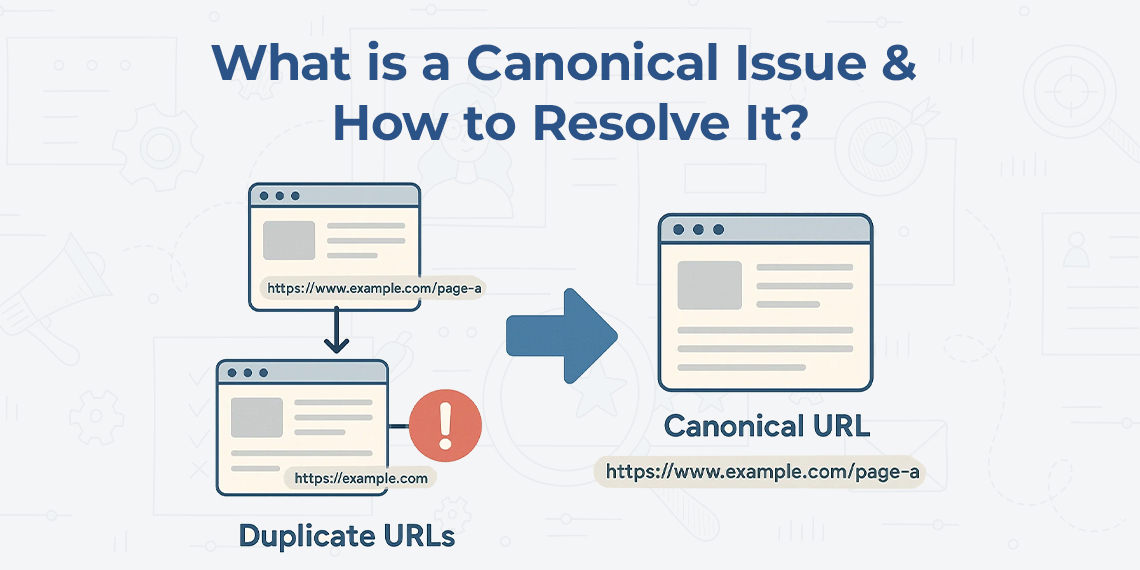
A canonical issue may not sound serious, but it can quietly hurt your website’s search visibility. It happens when the same content appears on more than one URL, and search engines can’t tell which version is the main one.

As a result, they might pick the wrong version to rank or split the value across several links. This can lower your search performance and reduce traffic to your site. The good news is that canonical issues are easy to fix once you know how to find them.

With a few simple checks and steps, you can help search engines understand your content better. This guide will explain what a canonical issue is, why it matters, how to spot it, and what you can do to prevent or fix it.

What is a Canonical Issue?

A canonical issue occurs when identical or very similar content is available on more than one URL. This creates confusion for search engines. They don’t know which version of the content should be listed in search results. Without clear direction, they may index the wrong page or split the value across versions. This can lower your visibility and weaken your page’s ranking.

Let’s look at a simple example. You might have your homepage available through:

  • www.example.com
  • example.com
  • example.com/index.html
  • www.example.com/index.html

To you, these are the same page. But search engines see them as four separate ones. Each has a different web address, which causes a canonical issue.

If you don’t fix it, search engines may treat them as duplicates, pick the wrong one to rank, or reduce your page’s authority. That’s why it’s important to sort it out early.

Why Canonical Issues Matter

Canonical issues may seem minor, but they can have a real impact on your website’s performance. When search engines get mixed signals about your content, it leads to problems like these:

1. Link Value Gets Split

If other websites link to different versions of the same page, those links don’t all help the same page. Your link value spreads out across versions. This reduces the impact on your search rankings.

2. The Wrong Page Might Rank

Search engines will pick one version of your page to show. It may not be the one you want. You might have an old version ranking instead of your main page.

3. Your Site Becomes Harder to Understand

Too many versions of the same content can make your site look messy. It becomes harder for search engines to know which pages matter most.

What Causes Canonical Issues?

Canonical issues often happen without you even realising it. They’re usually the result of how your site handles links or how content is shared. Here are some common causes:

1. Different Versions of URLs

If your site works with and without “www” or both “http” and “https”, you may have a canonical issue. Each version may be treated as a different page.

2. Filters or Sorting

Some websites create new URLs based on search filters or sort options. For example, product pages with filters for colour or size can create extra URLs.

3. Content Copied Across Pages

Sometimes you publish the same blog post or product description on multiple pages. If these copies don’t point to a single page, that causes a canonical issue.

4. Posting the Same Article Elsewhere

If you post your content on other sites without pointing back to your page, search engines may choose the copy instead of the original.

How to Find a Canonical Issue

1. Try Different URLs

Go to your site using different versions:

  • http://example.com
  • https://example.com
  • http://www.example.com
  • https://www.example.com

Do they all lead to one version? If not, you have a canonical issue.

2. Look for Duplicate Content

Check if the same text appears on more than one URL. If so, decide which version is the main one.

How to Fix a Canonical Issue

Fixing a canonical issue is about making things clear. You want to show search engines which version of your content is the main one. Here’s how:

1. Choose a Preferred URL

Decide if you want to use “www” or not, and always use “https” for secure access. Set your website so that all other versions point to the one you choose. This avoids confusion.

2. Add a Canonical Tag

A canonical tag tells search engines which page is the main one. You place it in the code of each page. It looks like this:

<link rel=”canonical” href=”https://www.example.com/page-name”>

This helps search engines index the right page and ignore the copies.

3. Keep Links Consistent

All links on your site should use the same format. Avoid linking to different versions of the same page. This helps search engines stay focused.

4. Ask Others to Point to Your Page

If other sites use your content, ask them to refer back to your page. This tells search engines you are the source.

Best Practices to Avoid Canonical Issues

The best way to deal with canonical issues is to stop them before they start. By following a few simple habits, you can keep your site clean and search-friendly:

1. Use One Version of Each Page

Always use the same structure. Don’t mix “www” and “non-www” or “http” and “https.” Pick one and stick with it.

2. Avoid Unneeded Copies

Don’t publish the same content on many pages. If you need to do that, make sure all copies point to a single main version.

3. Set Canonical Tags as a Habit

Even if your site doesn’t have issues now, adding canonical tags from the start is a smart move. It prevents problems in the future.

4. Review Your Site Often

Sometimes changes happen without notice. It’s a good idea to check your site now and then to make sure everything is working as planned.

Conclusion

A canonical issue is often overlooked but can affect how well your website performs in search results. When the same content appears on different URLs, search engines may get confused. They might show the wrong version of your page or split link value, which weakens your overall rankings.

The solution is to stay clear and consistent. Choose one main version of each page, use canonical tags, and make sure all other versions point to the right one. Keep your internal links clean, avoid duplicate content where possible, and check your site regularly.

By following these steps, you help search engines do their job more easily and that improves your chances of being seen by the right people online. Taking a little time now can save a lot of trouble later.

At Bthrust, you get proven SEO strategies that tackle issues like canonical errors and boost your site’s visibility. Whether you’re aiming for better rankings or cleaner site structure, our expert team helps you achieve lasting digital growth.

Why is Internal Linking Important in SEO?

When building a website, consider creating high-quality content and selecting the right images. But one small tool can make a big difference, which is internal linking. These are the links that connect one page on your website to another.

They help people find more of your content and help search engines understand your site better. If you use them well, they can make your website easier to use, stronger in search results, and more helpful to your visitors.

Internal linking doesn’t need to be tricky. You just need to know what to link, how to do it right, and what to avoid. Let’s learn why internal links matter so much in SEO.

What Is Internal Linking?

Internal linking means making a link from one page on your website to another page on your website.

Let’s say you write about animals. If one page is about lions and another page is about tigers, you can connect them with a link. That way, your readers can jump between them without getting lost.

These links can sit at the top of the page, inside the writing, or even at the bottom. You guide your visitors by showing them where to go next.

Why Does Internal Linking Help SEO?

Search engines like Google crawl your website. That means they move through your pages by following links and collect clues about what your site is about. When you use internal linking in SEO, you hand Google a clear map. This map helps Google understand each page and connect the dots between them.

Shows Google Your Website Plan

Think of your website like a picture book. It has a cover, chapters, and stories on each page. Internal links guide Google through the pages, showing which ones matter most. If you link your important pages to smaller or newer ones, you show Google how they belong together. It’s similar to fitting puzzle pieces into place to reveal the full image. This creates a well-structured site, which search engines can understand and value more effectively.

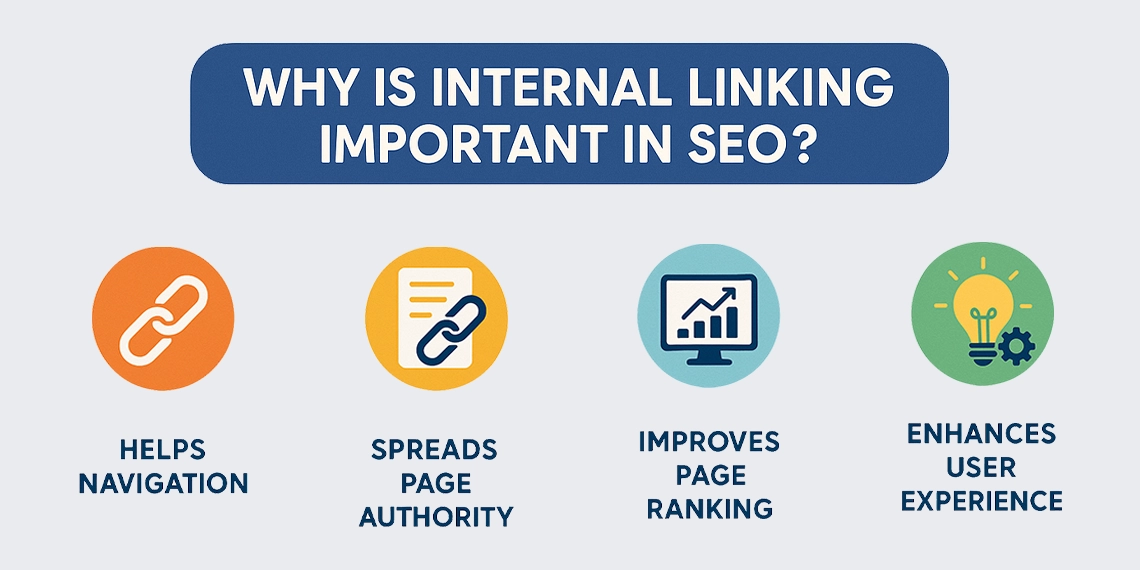
Shares Page Power

Some pages on your site are already strong, like your homepage or a popular post. When you link these to less-visited pages, you share that strength. By using internal linking, you help newer or quieter pages get noticed and grow faster. This keeps your whole site healthy and well-connected.

Helps People Explore Your Site

Good SEO is not only for computers, but it’s also for people. When visitors land on your site, they need to know where to go.

Makes Moving Around Easy

Internal links guide your visitors. If they read a page about bananas, and you link it to a page about apples, they can click and keep learning. They don’t feel stuck.

This makes people stay longer, which helps your site look better to search engines.

Lowers the Chance They Leave

If people only visit one page and then leave, it’s called a “bounce.” That’s not great. When you link to other helpful pages, you give them a reason to stick around. They explore more and leave happier.

Helps You Share Your Ideas

When you write many pages, links tie them together.

Pushes New Pages Forward

New pages don’t always get noticed. But when you link old pages to new ones, Google finds them faster. So, if you have a page that’s just been created, connect it to older pages that already get visitors.

Shows You Know Your Stuff

Let’s say you write about birds. You might have one page on parrots, one on eagles, and one on nests. Linking them helps show that you know a lot about birds. It builds trust and helps people learn more.

And if your website sells things or offers SEO services, this trick helps visitors go from reading to buying.

Now that you know why internal links matter, let’s look at how to use them well.

Pick Good Link Words

The words you click on in a link are called anchor text. These words should explain what the next page is about.

Instead of saying “click here,” try “learn about bananas” or “see our bird guide.” It makes it easier for both people and search engines to understand.

Link to Pages That Matter Most

Some pages are super important. They might bring in the most visitors or help you get new customers. You should connect your other pages to them so they shine even more.

For example, if you offer SEO services, make sure many pages link to your service page.

Don’t Go Link-Crazy

Links are fun, but too many links on one page can confuse readers. Use a few strong links, not tons of weak ones.

Check Your Links Often

Sometimes, pages move or go missing. If a link stops working, people might get frustrated. So, look at your links now and then. Fix the broken ones and update any old ones.

Mistakes to Watch Out For

Even grown-ups sometimes slip up when they add links to their websites. These small mistakes can confuse visitors or make your site harder for search engines to understand. Here are a few common things to stay away from:

Linking Without a Reason

Not every word needs a link. If you add a link just to fill space or because it seems like a good idea, it won’t do much good. Each link should lead to something useful or important.

Before you add a link, ask yourself, “Will this help my readers learn more or do something next?” If the answer is no, skip it.

Using the Same Link Words Again and Again

It’s fine to link to your “SEO services” page more than once, but don’t always use the same words. That gets boring and might look odd to search engines. Mix things up.

Try phrases like “get more traffic” or “improve your search rank.” This keeps your writing natural and helps different readers understand what you offer.

Forgetting Some Pages

Some pages don’t get linked at all. These “orphan” pages feel forgotten. Make sure every page joins the family by linking it from another part of your site. That way, visitors and search engines can find it easily.

Conclusion

Internal linking may look small, but it does big things for your website. It guides people, supports your content, and helps search engines learn about your site. Whether you write blog posts, sell things online, or share stories, internal links can make your site easier to explore and more likely to show up in search results.

Just remember to link for a reason, use different link words, and include every page. These simple steps can make your whole website work better. So next time you write something new, think about where it fits and connect it. A few smart links can take your site a long way.

At BThrust, you get expert SEO services designed to improve your website’s visibility and performance. Our team focuses on smart strategies like internal linking and content optimisation to help your site rank higher and attract more visitors. Let BThrust guide your business towards better online growth.

How AEO in SEO Enhances User Search Experience

As people rely more on voice search, natural questions and quick answers, traditional SEO methods aren’t enough anymore. That’s where Answer Engine Optimisation (AEO) comes in which helps to give clear, direct answers using search engines, voice tools and AI.

AEO in SEO is changing how we create and use content. Instead of only focusing on keywords, it focuses on what users really want. In this blog, we’ll explore how AEO improves the search experience and why it matters in today’s world of AEO and SEO trends.

What is Answer Engine Optimisation (AEO)?

Answer Engine Optimisation is a content strategy focused on crafting responses that directly address user questions, rather than ranking for various loosely related keywords.AEO focuses on matching content to the exact questions users are asking.

Unlike traditional SEO that targets broad visibility, AEO aims to appear in answer boxes like featured snippets, “People Also Ask” panels, and AI-based search results. These placements not only enhance your brand’s authority but also streamline the search experience for users.

To stay competitive, every modern SEO company needs to start using AEO strategies.

Why Search Experience Matters More Than Ever

Modern users expect instant, accurate answers. They don’t want to scroll through ten blue links as they want clarity. AEO is able to meet this expectation by offering:

  • Direct answers in SERPs (no click required)
  • Conversational tone that aligns with voice search
  • Structured content that is machine-readable and user-friendly

By implementing AEO in SEO strategies, businesses can meet the rising demand for seamless, intelligent search experiences.

How AEO Matches Google’s E-E-A-T Principles

Nowadays, just showing up in search results isn’t enough. Your content must earn trust and prove its value. That’s where Google’s E-E-A-T framework comes in—Experience, Expertise, Authoritativeness and Trustworthiness.

Answer Engine Optimisation (AEO) supports all of these qualities. It gives businesses a smart way to stand out online and build long-term trust with their audience.

Show Experience and Expertise by Giving Clear Answers

AEO helps writers give clear answers fast. When you do this, you show what you know and how much experience you have.

If you work at an SEO company writing FAQs or on a software team creating help pages, AEO lets you show your knowledge in a simple way. Google notices when your content helps people and that’s what it wants to see.

Build Authority by Structuring Content Smartly

When you add schema markup, use voice-friendly formatting and credit your sources, you help search engines read your content easily.

AEO helps you lay out your content clearly so Google can grab it for featured snippets or “People Also Ask” results. Showing up in those places often helps your brand to earn authority and become a trusted expert in your field.

Win Trust by Being Clear and Honest

People trust content that’s easy to read, correct, and simple to understand. AEO helps you avoid confusion by giving short, clear answers.

Since AEO and SEO trends now focus more on helping people, building trust matters even more. If your content truly helps and follows Google’s guidelines, it will keep doing well in search results.

Five Ways AEO Enhances the User Search Experience

1. Faster Access to Relevant Information

Users get answers faster when content is set up to respond directly to their questions. AEO helps place that content in featured snippets, answer boxes or voice search, saving users time.

That’s why AEO isn’t just a tech upgrade but it’s a smart, user-focused approach that fits today’s AEO and SEO trends.

2. Better Alignment with Voice and Mobile Search

More than half of all searches now happen on mobile, and many are done by voice. That’s why it’s important to write like people talk. AEO helps you do this by using natural, easy-to-speak language.

With tools like Alexa, Siri, or Google Assistant, AEO makes sure people can find your content quickly.

3. Establishing Trust and Authority

Clear and correct content that answers questions right away helps people trust you. Search engines like this kind of content and often show it in featured snippets, which makes it more visible and trusted. SEO companies that adopt AEO can help clients lead their industries.

4. Enhancing Accessibility and Inclusivity

By optimising content for voice and simplified formats, AEO inherently improves accessibility. Users with disabilities, visual impairments, or limited time can benefit from concise and comprehensible content.

This inclusivity is not just good practice but it also matches Google’s goal to make information easy for everyone to access.

5. Enabling Localized and Personalized Experiences

AEO can be localised using structured data and “near me” modifiers, helping businesses appear in geographically relevant results. This feature is particularly impactful for mobile users seeking services or products nearby.

Local search optimisation is a growing area within AEO and SEO trends, especially for service-based businesses looking to capture high-intent traffic.

AEO Implementation Best Practices

Here’s a checklist for optimising your content with AEO in mind:

  • Conduct intent-driven keyword research (e.g., “how to,” “what is”)
  • Use structured data markup (FAQ, How-To, Q&A schemas)
  • Format content using bullet points, headings, and concise answers
  • Create or update FAQ sections with scannable answers
  • Optimise for voice search with natural-sounding language
  • Regularly review performance in featured snippets and voice platforms

Any modern SEO company offering strategic content services should integrate AEO tactics into content audits and creation processes.

Read Also: What is SEO and Why It Matters?

Conclusion: AEO as the Future of User-Centric SEO

As search evolves toward conversational AI and voice-driven platforms, businesses must adapt. AEO in SEO provides a framework to align content with the way people search today.

It’s more than a ranking tactic—it’s a user experience enhancer. By embracing AEO, marketers not only boost visibility and traffic but also deliver value at the precise moment it’s needed.

In the ever-changing world of AEO and SEO trends, staying ahead means thinking like your users—and answering before they even click.

At BThrust, we help businesses stay ahead by combining smart SEO strategies with powerful AEO techniques. Our team delivers user-focused solutions that improve rankings, build trust, and enhance the overall search experience.

Google Links to Itself in 43% of AI Overviews, New Data Shows

A new study reveals that nearly half of Google’s AI Overviews link back to its own properties, strengthening the company’s “walled garden” effect.

Key Takeaways:

  • 43% of AI Overviews include links to Google’s own search results.
  • 30% of all queries now trigger an AI Overview.
  • Longer queries and niche keywords are more likely to prompt AI-generated answers.

According to research by SE Ranking, Google’s AI Overviews frequently link back to Google itself. Analysing over 100,000 keywords across five U.S. states, the study found that 43% of these AI summaries include 4–6 links that direct users to more Google pages, reinforcing the idea that Google aims to keep users inside its ecosystem.

Google Frequently Cites… Itself

The study spanned Colorado, Texas, California, New York, and Washington, D.C., revealing minimal geographic variation. Regardless of location, Google.com is the most-cited source in AI Overviews—appearing in 44% of cases. That’s well ahead of other major platforms like YouTube, Reddit, Quora, and Wikipedia, which each appear in only about 13% of AI answers.

A Reinforced Walled Garden Strategy

These findings align with a separate analysis by Momentic, which reported that the average Google user now makes 10 clicks within Google before navigating to external sites. This points to a broader strategy: keep users engaged within Google properties for as long as possible.

Additional findings include:

  • AI Overviews appear in 30% of searches
  • 25% of AIOs show up alongside other SERP features, like “People Also Ask”
  • 3 sources are cited on average per AI Overview
  • Mid-difficulty keywords (21–40) are the most likely to trigger AIOs (4%)
  • High-cost keywords ($10+) are least likely to trigger AIOs (3%)
  • Short answers (<600 characters) cite ~5 sources, while long ones (>6,600 characters) cite ~28
  • Industry-wise, Fashion & Beauty has the lowest AI Overview rate (4%), followed by E-Commerce (2.1%) and News/Politics (3.8%)

Google vs ChatGPT: External Traffic

While Google still drives massive traffic—175.5 million visits in March, per Momentic—it trails ChatGPT in sending users off-platform. Google users average just 0.6 external site visits per session, compared to 1.4 from ChatGPT users.

The Bigger Picture

As Google shifts toward a more self-contained search experience, it’s clear that relying solely on organic clicks is riskier than ever. Brands and publishers need to diversify their traffic strategies while still optimising to remain visible within Google’s evolving SERPs.

Other Resource: https://www.searchenginejournal.com/google-links-to-itself-43-of-ai-overviews-point-back-to-google/546574/

Everything You Need to Know About Local SEO in Singapore: Strategies and Agency Selection

Local SEO helps people find your business when they search for something nearby. It’s a smart way for small and medium businesses in Singapore to get noticed by customers who live or work close by. With more people using their phones to search while walking, riding or shopping, showing up in local search results matters more than ever.

Even if your business is small, Local SEO gives you a fair chance to compete with bigger brands. In this guide, you’ll learn what Local Search Engine Optimisation in Singapore is, why it’s important in 2025, the tools and steps you need and how to pick the best agency to help your business grow.

What is Local SEO?

Local SEO helps people spot your business when they search online for things nearby. If someone types “pizza shop near me” or “toy store in Singapore,” local SEO helps your shop rank in the search results, especially on maps.

This kind of SEO focuses on your local area. It helps your shop shine when someone nearby wants what you sell. You can boost your results by making sure your business name, phone number and address always match across websites. You can also collect reviews, write about your city and join local websites to help your shop stand out.

When your local SEO is strong, more people nearby will find your store, call you or visit. It’s a smart way to reach real customers who are close to your business.

Why Does It Matter in 2025?

In 2025, Local SEO matters because people search on phones all the time while they walk, ride or even eat. When someone says “find a bakery near me”, then Google shows local places right away.

Local SEO helps your business appear in local search results. That means more people nearby can find you and choose you instead of a big company. Even if you run a small shop, Local SEO gives you a fair chance to compete. A search engine looks at three big things, which are how close you are, what you offer, and how much people like you. If you earn good reviews, write clear info and talk about your area, then the search engine picks you to show on top.

Without Local SEO, people close to your shop might not find you even if they’re just around the corner. Local SEO makes sure your business gets noticed in local searches and helps you grow step by step.

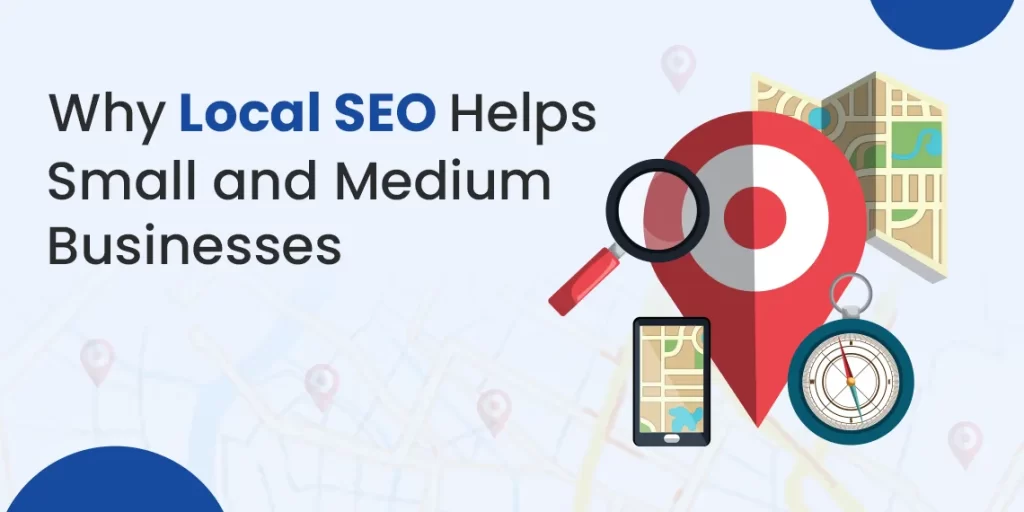
Why Local SEO Helps Small and Medium Businesses
Why Businesses Grow In Singapore

Small and medium businesses in Singapore need simple ways to attract more customers. Local SEO helps people nearby find your shop or service quickly.

Imagine someone types “cake shop near me” or “locksmith in Tanjong Pagar” into Google. Local SEO makes sure your business ranks in the results. This means more people walk into your store, visit your website.

Almost half of all Google searches are from people looking for something nearby. That’s a great chance for small businesses to get noticed and stand out.

Also, Local SEO lets you stand tall next to big companies even if they spend more money. When you use Local SEO well then your business shows up first, and customers can trust you more.

For Singapore SMES, where space and attention are limited, Local SEO services for small businesses offer high returns at a reasonable cost.

Key Components of Local SEO

To do well in local search, having a website isn’t enough. Good Local SEO uses a few important tools to help more people see your business, trust you and become real customers.

1. Google Business Profile Optimisation

Your Google Business Profile is like your shop front on the internet. It’s often the first thing people see when they search for your business. If you set it up well, you make a strong and trusted first impression.

Make sure your profile includes:

  • Accurate NAP (Name, Address, Phone Number)
  • Relevant categories and services
  • Business hours (updated during holidays, too)
  • High-quality images of your location, products, or team
  • Frequent posts and updates to stay active
  • A steady stream of reviews, and more importantly, thoughtful responses to them

2. Citations

Citations are listings of your business on online directories like Yellow Pages, Yelp and SGPBusiness. These listings help Google confirm your business information. The more consistent your details are across platforms, the stronger your local SEO signal becomes.

3. Online Reviews

Customer reviews are digital word-of-mouth. The number of reviews, their quality, and your responses all impact your local search ranking. Encourage happy customers to leave reviews regularly, and respond politely and professionally even to the tough ones.

Getting these three things right helps build a strong base for Local SEO success.

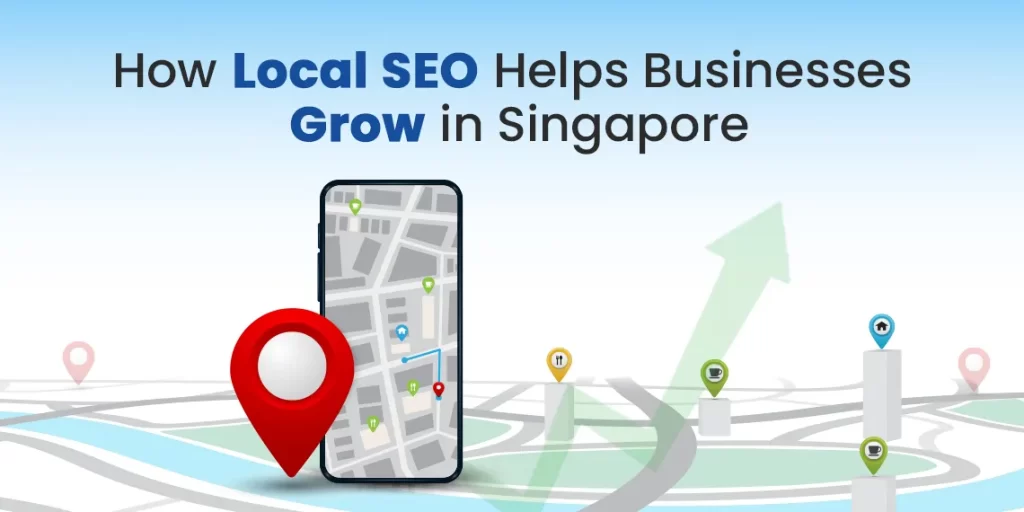
How Local SEO Helps Businesses Grow in Singapore
Businesses Grow In Singapore

Running a business in Singapore can be tough. There are lots of shops, cafes and services. Everyone wants to be noticed. That’s why Local SEO is so helpful. It helps your business stand out, get found and bring in more people who live or work nearby.

People search on their phones every day. They type things like “best chicken rice near me” or “hair salon in Woodlands.” These people aren’t just looking, but they’re ready to call, visit or buy. Local SEO helps your business to show up at the exact time they need you.

Even small shops can shine online with the right Local SEO. You don’t need to spend a lot of money. You just need to be in the right place online. If you own a bakery in Hougang or a hardware store in Toa Payoh, then Local SEO can push you ahead of bigger brands and help you catch more attention.

Local SEO also helps solve common problems. Ads cost a lot, fewer people may walk into your shop, and big companies are tough to beat. But with strong Local SEO, you can:

  • Save money while reaching more people
  • Show up on Google Maps and search results.
  • Earn trust through online reviews and clear information.

When you use the right local SEO tools and services, your business can grow, stay visible and attract the right people at the right time.

Whether you run a tuition centre in Bishan or a cleaning service in Jurong, Local SEO Singapore can help your business grow with every local search.

Local SEO Strategies That Help Your Business Grow

If you want more people in Singapore to find your business online, you need smart and simple Local SEO strategies. These steps help your business show up and attract local customers.

Keep Your Business Info the Same Everywhere (NAP)

Your name, address, and phone number (NAP) should always match across all platforms. That means your Google Business Profile, website and online directories should all show the same info.

If your address or phone number is wrong on any site, it can confuse both Google and your customers. That’s why it’s important to check often and fix any mistakes quickly.

Build Local Links from Nearby Websites

Getting links from other local websites can boost your Local SEO. This is called local link building. When a Singapore blog, news site or local partner shares a link to your business, it shows Google that others trust you.

To do this, you can:

  • Join local business groups
  • Sponsor community events
  • Reach out to local blogs or influencers

Even a small mention can help your business to rank in search results.

Use Location-Based Words (Geo-Targeting)

Using location words is called geo-targeting. These are keywords that include your city, town or area, like “café in Tampines” or “local SEO services Singapore.”

This helps your business to show up when people nearby are searching. Add these words to:

  • Your homepage
  • Your blog posts
  • Your service pages
  • Your image names and descriptions

The more local your content sounds, the easier it is for people to spot you.

Put It All Together

These strategies may look simple, but they work powerfully together. Keep your info clear, earn trust with local links and speak the language of your area. That’s how you can boost local SEO and bring more customers to your door.
Local SEO Tools and Techniques for Better Visibility

Local Seo Tools

Using the right tools can turn a good local SEO strategy into a great one. Whether you’re managing your Google Business Profile, tracking your rankings or fixing inconsistent listings, these local SEO tools make the job faster and easier.

1. Google Business Profile

Google Business Profile (formerly Google My Business) is free and essential. It lets you show your business details (like address, hours, photos, and reviews) right on Google.

Best for: Getting found on Google Search and Maps

Tip: Add posts, respond to reviews and keep your info updated. This boosts your local visibility and customer trust.

2. Semrush Local

Semrush Local helps you push your business info across platforms like Google, Facebook, Yelp and more. It also includes a Map Rank Tracker to see how your business ranks on Google Maps in different areas.

Best for: Managing your online presence in over 150 directories

Use the heatmap to spot where your SEO is working and where it needs help.

3. BrightLocal

BrightLocal helps you track where your business is listed, fix incorrect information and build new citations to improve your ranking. It also includes review tracking and a Google Business Profile audit tool.

Best for: Building and fixing citations (local directory listings)

Their “Citation Tracker” is a great way to make sure your NAP (Name, Address, Phone Number) is 100% consistent.

4. SE Ranking

With SE Ranking, you can see exactly where your business shows up for key local searches. It also shows how well your site performs overall and offers easy suggestions to fix problems.

Best for: Keeping an eye on your keyword rankings

Get a full local audit that checks your profile, reviews, citations, and competitors all in one place.

5. Localo

Localo offers an AI-powered website builder and helps you track Google rankings. It’s easy to use and perfect for small businesses without a lot of tech experience.

Best for: New businesses that need help getting started

Bonus: It suggests ways to improve your visibility using data from real searches.

The Role of Content in Local SEO Success
Content In Seo

In today’s digital world, content is not just words on a page; it’s a powerful way to connect with your local audience, boost your visibility and build trust with potential customers.

For businesses in Singapore, a smart content strategy can help you stand out in local search and turn clicks into visits, calls or sales.

Why Localised Content Matters

When people search for services or shops near them, they want information that feels relevant. That’s where localised content comes in. It helps your business:

  • Speak the local language (literally and culturally)
  • Answer community-specific questions
  • Show up for hyperlocal search terms like “best tuition centre in Bishan” or “budget laptop repair in Tampines”

By using local topics, neighbourhood names and relatable examples, your content becomes more than helpful.

Types of Content That Work for Local SEO

Not all content is created equal. For strong Local SEO Singapore results, focus on content that both search engines and people love:

  • Blog posts about local tips, guides or FAQS
  • Location pages for each outlet or branch
  • Customer stories and testimonials that mention local landmarks or experiences
  • Event announcements or features about local news

These pieces of content help you rank higher and also build community trust.

How to Create Engaging, Local-Focused Content

Building a strong content strategy starts with understanding your audience. Here’s how to shape content that performs:

  • Use local keywords naturally in titles, meta tags, and body text
  • Mention real places in Singapore to improve relevance.
  • Post regularly to show Google that your site is active.
  • Update older posts with fresh info, new reviews, or current offers

Also, remember to use your Google Business Profile. Share posts, updates and answer questions right on your listing. This helps more people to engage with your business and improves your Google Business Profile Optimisation.

Measure What Matters

The success of local content is not just about trafficcbut it’s about action. Track:

  • Click-through rate (CTR) on local blog posts
  • Bounce rate on your landing pages
  • Conversions from local search (calls, form fills, directions)
  • Keywords that bring in traffic from Singapore-based users

The more you analyse and adapt, the more your content will help grow your local SEO optimisation.

How Long Does It Take to See Local SEO Results?
Local Seo Results

You fixed your website. You updated your Google Business Profile. You even added some new content. But now you’re asking when I will see results? Local SEO takes time. It’s not instant. Here’s a simple guide to show what happens over time and how to make it work faster.

1–2 Months: Laying the Foundation

In the first month or two, you’ll focus on the basics:

  • Claim and optimise your Google Business Profile
  • Fix NAP inconsistencies (Name, Address, Phone) across the listing.s
  • Improve your site structure and on-page SEO
  • Start building local citations and collecting reviews.

You might not get many new visitors yet, but these early steps help your business grow later.

3–6 Months: Building Visibility

This is when things start to pick up. You may notice:

  • Higher rankings for local keywords
  • More impressions on Google Maps
  • Increased traffic to your website
  • A few calls or visits from Google searches

These signs mean your local SEO optimisation efforts are working, but you’ll need to stay consistent to keep the momentum going.

6–12 Months: Seeing Significant Results

By now, if you’ve been steady with your efforts, your business should:

  • Show up in the local 3-pack (top local results on Google)
  • Rank well for important keywords in your area.
  • Receive regular calls, messages, or walk-ins from online searches.
  • See better conversion rates from local traffic.

This is when you start seeing real results. Local SEO for small businesses begins to bring in more value.

1 Year and Beyond: Long-Term Growth

Local SEO is not a one-time task, but it’s an ongoing strategy. After a year, your job is to:

  • Monitor and adjust your content, keywords, and listings
  • Keep collecting reviews and updating your GBP
  • Watch competitors and refine your strategy to stay ahead.
  • Use tools like Google Search Console or BrightLocal to track progress

This is when Local SEO services begin to pay off.

How to Choose the Right Local SEO Agency in Singapore
Right Local Seo Agency

Selecting the right Local SEO agency in Singapore is a critical step toward improving your business’s visibility, driving local traffic and generating quality leads. With many digital agencies offering SEO services, it’s important to evaluate them based on their expertise, transparency and understanding of local market dynamics.

Key Qualities to Look for in a Local SEO Partner

A professional and results-driven agency should provide:

  • A strong understanding of local search behaviour in Singapore
  • Tailored strategies based on your industry, location, and goals
  • Expertise in Google Business Profile optimisation, citation management, content and link building
  • Transparent and regular performance reporting
  • A clear focus on long-term return on investment (ROI), not just search rankings.

You’re not just hiring a service provider, but you’re choosing a partner who can help your business to grow locally and sustainably.

Why BThrust is a Trusted Local SEO Agency in Singapore

If you’re looking for a credible and experienced partner, BThrust stands out as a top choice for Local SEO services in Singapore. BThrust is a full-service digital marketing agency that offers specialised SEO solutions, including:

  • Local SEO and Google Business Profile optimisation
  • GMB audits, reviews management, and local citation building
  • Custom SEO strategies aligned with your goals
  • Transparent progress tracking and reporting
  • Access to PSG-approved digital marketing grants, helping SMES reduce costs
  • Google-certified specialists managing your campaigns

BThrust has helped many types of businesses to get more leads, better visibility and real growth. They offer trusted Local SEO services that work.

Make an Informed Decision

Choosing the right agency is not just about price, but it’s about capability, trust, and long-term results. A reputable SEO partner like BThrust can help your business achieve sustainable growth in local search and stay competitive in a digital-first economy. When it comes to SEO Singapore, working with an experienced agency ensures your strategies are tailored to the local market, helping you reach the right audience effectively.

Best Social Media Marketing Agencies – Top List 2025

In today’s fast-changing online world, social media marketing helps businesses to grow and succeed. Whether you’re running a small shop or a big company, working with a top social media marketing agency can help you do better and reach more people.

Singapore shines as a digital star in Asia and gathers many great social media agencies that craft smart, modern plans for today’s online world. This easy-to-follow guide shares the top 20 agencies in 2025 that shine in social media marketing in Singapore.

1. BThrust

BThrust Blog Banner

BThrust is a full-service digital marketing agency based in Singapore. They team up with businesses that want to grow bigger and shine online. BThrust boosts website visits, lifts brand attention and pushes sales higher using smart tools like SEO, SEM and strong marketing tricks. They also build websites and set up online stores like Shopify which makes it easy for businesses to do everything in one place. The team at BThrust listens to customers first, uses their Google Ads skills well and follows data to make smart choices. They focus on real results that help businesses to grow strong and fast.

Key Services:

  • SEO (Local, International, E-commerce, Shopify)
  • SEM (Google Ads, Display, Video Ads, Remarketing)
  • Specialising in Facebook marketing strategy, ORM, Shopify, and email marketing.
  • Content Marketing (Copywriting, Infographics, Blog Creation)
  • Mobile Marketing
  • Email Marketing
  • Web Development & Shopify Solutions
  • E-commerce Development
Website Bthrust
Address 10 Ubi Crescent, #04-50 Lobby C, Ubi Techpark, Singapore 408564
Phone +65 6834 3026
Email sales@bthrust.com

Google Reviews:

  1. ⭐⭐⭐⭐⭐ “BThrust helped us increase our website traffic tremendously through their SEO work. Highly responsive team and professional service.” – Michelle T.
  2. ⭐⭐⭐⭐⭐ “Their SEM team is very experienced. We saw a noticeable rise in quality leads within the first month. Highly recommended for growing businesses.” – Daniel W.

2. Plexxie

Plexxie Banner

Plexxie is a top creative and social media marketing company in Singapore. Their young team doesn’t just follow old ways of doing things. They like to try fun ideas quickly, fix them if needed and keep the ones that work best.

They chase creativity without borders and build smart digital plans that follow what people love right now. Plexxie shapes strong online groups around brands. They shine by using great stories, pictures and smart influencer moves.

With over 1,200 content creators, Plexxie picks fresh ideas quickly and spreads them across social media. Clients who work with Plexxie gain a team that moves fast, listens well and lives inside the digital world.

Key Services:

  • Social Media Management & Strategy
  • Facebook & Instagram Advertising
  • Influencer Marketing
  • Community Engagement & Social Listening
  • Social Media Reporting & Analytics
  • Content Creation (Photo, Video, Copy, Graphic Design)
  • Branding & Creative Direction
  • Event Coverage & Campaign Execution
Website Plexxie
Address 7 Harvey Road, #09-02C, Lebond, Singapore 369613
Phone +65 8786 9380
Email hello@plexxie.com

3. Heroes of Digital 

Heroes Of Digital

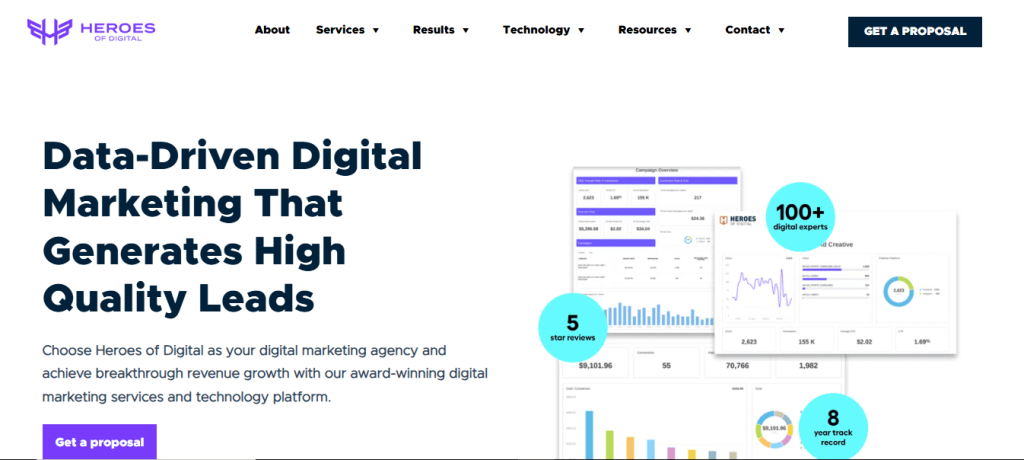
Heroes of Digital (HOD) is a smart and friendly digital marketing company in Singapore. Since the beginning, HOD has worked hard to help small and growing businesses grow faster and stronger. Their team builds special digital plans and uses their own cool technology to make sure every idea works well.

HOD’s team has already brought in over 2.4 million leads and created more than $108 million in sales for their happy clients. They use smart tools powered by AI to watch, check and boost every campaign so it always gets better.

With over 100 expert team members who love what they do, HOD shines because they keep promises, show real results and earn big awards like being a Google Premier Partner Winner for helping companies get more leads in Southeast Asia. Results-oriented social marketing agency using AI-driven lead tracking.

Key Services:

  • SEO (Local, E-commerce, Content Marketing)
  • Google Ads / PPC Management
  • Social Media Marketing (Facebook, Instagram Ads)
  • Programmatic & Geofencing Advertising
  • Website Design & Landing Page Optimisation
  • Conversion Rate Optimisation (CRO)
  • Data Analytics Dashboard & Call Tracking
  • Review Generation & Lead Management
Website Heroes of Digital
Address 1008 Toa Payoh North, #05-01, Singapore 318996
Phone +65 6802 3658

4. One9Ninety

One9ninety Banner

One9Ninety is a multi-award-winning full-service digital and social media marketing agency headquartered in Singapore. Known for its strategic, creative and technology-driven solutions, the agency offers comprehensive digital services with a strong focus on community building and influence activation. They are recognised for managing complex campaigns across Asia-Pacific by specialising in content creation, social media engagement, programmatic media buying and influencer marketing. Their approach is rooted in data, with a commitment to aligning brand strategies with evolving digital trends and platform dynamics.

Key Services:

  • Social Media Strategy & Audit (SWOT, Channel Performance)
  • Content Creation & Marketing
  • Community Management & Moderation
  • Crisis & Reputation Management
  • Influencer Marketing (Macro, Micro, Advocacy)
  • Programmatic Media Buying
  • SEO & SEM
  • Social Listening & Trend Analysis
  • Web & App Development (Mobile & Desktop)
Website One9Ninety
Address 331 North Bridge Rd, #22-01/06 Odeon Towers, Singapore 188720
Phone 65 8805 1990
Email contact@one9ninety.com

5. OOm 

OOM agency

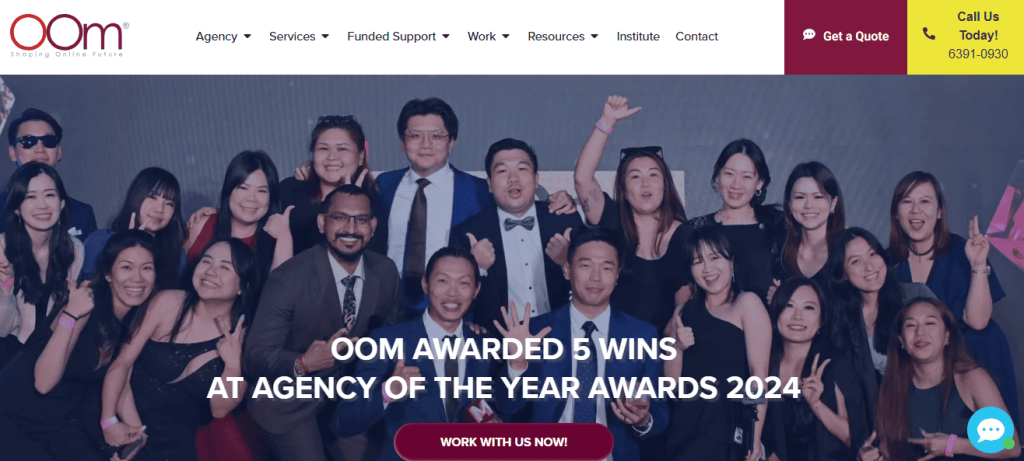
OOm is one of Singapore’s most awarded digital marketing agencies, renowned for its data-driven and transparent approach. The agency positions itself as a performance marketing partner who is committed to aligning digital efforts with the client’s core business objectives. OOm’s team specialises in SEO, SEM, social media marketing, creative development and web services by delivering impactful campaigns across multiple industries from SMEs to large government and enterprise accounts.

With accolades like the Lead Generation Agency of the Year, and partnerships with Google Premier and Meta, OOm consistently demonstrates expertise in helping businesses scale digitally. They’ve built a reputation on transparency, measurable ROI, and strategic growth partnerships with brands aiming for real, sustainable digital performance.

Key Services:

  • SEO (On-page, Off-page, Technical)
  • SEM / Google Ads Campaigns
  • Social Media Marketing (Paid & Organic)
  • Content Creation & Copywriting
  • E-commerce Web Development
  • social media branding
  • Web & Landing Page Design
  • Conversion Rate Optimisation
  • Digital Audits & Strategy
  • PSG Grant-funded Digital Packages
  • Analytics, Reporting & Lead Management
Website OOm Singapore
Address 1 Grange Road, Orchard Building, Level 7, Singapore 239693
Phone +65 6391 0930
Email enquiry.agency@oom.com.sg

6. NinjaPromo

Ninja Marketing Agency

NinjaPromo is a globally recognised digital marketing powerhouse with offices in Singapore, New York, Dubai, London and more. Known for its subscription-based model, NinjaPromo delivers all-in-one marketing solutions across industries like crypto, fintech, SaaS, gaming and B2B. The agency is built for high-growth startups and scale-ups by offering access to over 100 marketing specialists with expertise in SEO, paid media, social, content and development. They are backed by a strong track record with blockchain projects, VC-backed startups and B2B brands. NinjaPromo has earned accolades such as being named the #1 Crypto Marketing Agency from 2021–2023 and featured in Forbes for its innovative service model.

Key Services:

  • Paid Media (Google Ads, Programmatic)
  • Paid Social (Meta, LinkedIn, TikTok, etc.)
  • SEO (Global, Local, Technical)
  • Influencer Marketing
  • PR & Media Outreach
  • Social Media Management
  • Community Management
  • Lead Generation
  • Branding & Identity
  • Video Production & Marketing
  • UI/UX Design & Web/Mobile App Development
  • Blockchain Development
  • Subscription-Based Marketing Packages
Website NinjaPromo
Address 3 Coleman St, #03-24, Singapore 179804
Phone +65 3165 4789
Email hello@ninjapromo.io

7. Hashmeta

Hashmeta Banner

Hashmeta is a Singapore-based digital marketing agency that merges traditional performance marketing with cutting-edge AI-powered solutions. Since its inception in 2012, the agency has grown into one of Southeast Asia’s most integrated marketing ecosystems. Their approach spans consulting, content, social media, influencer strategy, marketing automation and proprietary platforms such as StarNgage, Skoolopedia, ShopperBoard and ShopperCliq. Hashmeta works closely with major brands across education, healthcare, finance, consumer goods and government sectors. Beyond marketing, they also offer training through the Hashmeta Academy and build custom tech tools for digital transformation.

Key Services:

  • Digital Strategy & Consulting
  • AI Marketing & Automation
  • Content & Social Media Marketing
  • Influencer Marketing (via StarNgage)
  • Xiaohongshu (XHS) Marketing & KOL Management
  • Web & Mobile Development
  • CRM Integration (HubSpot, ActiveCampaign, Klaviyo)
  • Community Commerce (via ShopperCliq)
  • Digital Academies & Upskilling
  • Platform-based Marketing (Skoolopedia, ShopperBoard)
Website Hashmeta
Address 30A Kallang Place, #11-08/09, Singapore 339213
Email contact@hashmeta.com

8. MediaOne

Mediaone Banner

MediaOne is an award-winning digital marketing agency based in Singapore, known for leveraging AI-powered performance marketing and data-driven strategies to deliver measurable results. With over 3,000 clients served, from SMEs to Fortune 500 companies. MediaOne has become a go-to partner for end-to-end digital solutions across SEO, paid ads, content, branding and web design. Their proprietary marketing AI platform allows campaigns to scale dynamically based on client goals and budgets, ensuring both efficiency and personalisation. The agency has been recognised by the Netty Awards, MARKies, and the Association of Advertising & Marketing Singapore for excellence in SEO, automation, AI deployment, and campaign performance. Their transparent reporting, elite copywriting team, and enterprise-grade digital stack make them a preferred choice for serious growth-oriented businesses in Southeast Asia.

Key Services:

  • SEM / Paid Media Campaigns (Google, Facebook, LinkedIn, TikTok)
  • Social Media Marketing & Management
  • Performance Marketing & Lead Generation
  • Content Marketing (Journalist-Class Copywriters)
  • Programmatic Media Buying
  • Focus on SEO, paid ads, social media branding and CRO.
  • Branding & Digital Strategy
  • AI-Powered Marketing Automation
  • PSG Grant-Supported Packages for SMEs
Website MediaOne
Address 1 Neil Rd, #03-02, Singapore 088804
Phone +65 6965 7008

9. We Are Social

We Are Social

We Are Social is a global creative agency with deep social media and cultural expertise, with 1,200+ staff across 19 offices on four continents. The Singapore office serves as a Southeast Asian hub for socially driven marketing that shapes pop culture and connects brands to communities through impactful storytelling. The agency focuses on blending strategy, creativity, production and media distribution to craft ideas that drive social conversations and influence culture. Through in-house divisions like We Are Social Studios (for content creation) and We Are Social Gaming, the agency provides future-ready, integrated marketing services with a clear focus on authenticity and audience behaviour.

Key Services:

  • Social Media Strategy & Campaign Development
  • Cultural Research & Trend Forecasting
  • Influencer Marketing (via Kobe AI platform)
  • Creative Content & Storytelling
  • Paid Media & Social Distribution
  • Video Production (Social-First, Reels, TikTok)
  • Gaming & Esports Campaigns
  • Innovation & Virtual Influencer Activation
  • Social Listening & Community Management
Website We Are Social
Address 140 Robinson Rd, #12-00 Tahir Building, Singapore 068907
Phone +65 6911 0818
Email sayhello@wearesocial.sg

10. FirstCom Solutions

FirstCom Solutions

FirstCom Solutions is a full-service digital agency headquartered in Singapore, offering both marketing services and accredited training through its arm, FirstCom Academy. Since its inception, the agency has helped over 48,000 professionals and businesses upskill and transform digitally via hands-on, government-funded WSQ (Workforce Skills Qualifications) courses. The company supports SMEs and entrepreneurs by combining content marketing, website design, and performance advertising with real-world training in platforms like Facebook, Instagram, and TikTok. Their approach is designed to provide immediate ROI and long-term brand growth as all are eligible for subsidies such as SkillsFuture Credits and the 50% PSG Grant. With classroom training centres in Paya Lebar and Tiong Bahru, FirstCom positions itself as both a digital partner and a capacity-building institution for Singapore’s workforce.


Key Services:

  • Facebook & Instagram Ad Campaigns
  • TikTok Marketing & Content Creation
  • SEO & SEM (via internal team)
  • Web Design and eCommerce Solutions
  • WSQ-Certified Courses (Digital Marketing, Content, UX)
  • Government-Supported Grants (PSG, SkillsFuture)
  • On-Site Business Training (Corporate & SME Solutions)
  • Social Media Management
  • Content Production (Graphic, Video, Ad Creatives)
Website FirstCom Solutions
Address 158 Kallang Way, #03-05 Performance Building, Singapore 349245
Phone +65 6653 7552
Email learn@fca.edu.sg

11. IMPACT! Brand Communications

Impact Banner

IMPACT! Brand Communications is a specialised digital marketing agency focusing on B2B, technology, healthcare, and financial services sectors. Their strength lies in the depth of industry knowledge which allows them to deliver faster, more effective outcomes compared to generalist agencies. Rather than a one-size-fits-all approach, IMPACT! tailors strategies around performance-driven metrics and client growth objectives. From branding and demand generation to employer branding and account-based marketing (ABM), the agency operates as both a growth consultant and a full-service digital partner. Their in-house team actively experiments with digital tools and trends, applying lessons learned to client campaigns for a competitive advantage. The agency operates from a creative hub in Singapore’s Chinatown district, serving clients across Asia-Pacific.

Key Services:

  • B2B & Tech-Focused Digital Marketing
  • Web Design & Development (Conversion-Focused)
  • Social Media Marketing (LinkedIn, TikTok)
  • Creative & Branding Campaigns
  • Content Marketing & Video Production
  • Search Engine Optimisation (SEO)
  • MarTech Consultancy
  • Podcast Marketing
  • Public Relations (PR) & Employer Branding
  • Strong focus on performance, social media management service, ABM and PR.
  • Demand Generation Campaigns
Website IMPACT! Brand Communications
Address 195 Pearl’s Hill Terrace, #02-12, Singapore 168976
Email enquiry@impactbc.com.sg

12. Elevan August Media 

Elevan August Banner

Elevan August Media is a fast-growing, Singapore-born digital marketing agency that prides itself on ethical marketing, transparency, and strong ROI delivery. Known for its flexible “no lock-in contract” model, the agency serves a diverse mix of MNCs and SMEs, offering full-suite digital services with a practical, cost-effective mindset. Their work spans creative design, media production, SEO and lead generation. Their performance-oriented approach has earned them over 150 five-star reviews and several client-nominated recognitions as one of the top digital marketing agencies in Singapore. The team operates with a local-first mentality and places emphasis on humanised content and ad strategy tailored for real business outcomes.

Key Services:

  • Lead Generation Campaigns
  • Social Media Management (Facebook, Instagram, LinkedIn)
  • Social Media Ads
  • Google Ads (PPC)
  • SEO (Search Engine Optimisation)
  • Graphic & Website Design
  • Media Productions (Photo, Video)
  • Influencer & TikTok Marketing
Website Elevan August Media
Address 36 Carpenter Street, Singapore 059915
Phone +65 9698 1703
Email hello@elevanaugust.sg

13. Ant Team Social Media Marketing 

Ant Team Banner

Ant Team is a full-service digital and social media marketing agency in Singapore, with over 30 years of experience evolving from a traditional advertising firm to a modern digital powerhouse. As a certified Google Partner, Ant Team supports more than 300 companies in boosting brand awareness, improving social media engagement, and generating leads. Their unique strength lies in blending old-school marketing sensibilities with cutting-edge digital trends. Their 5Cs methodology is Concern, Customise, Commence, Correct, and Conclude which forms the strategic foundation for crafting personalised campaigns. In addition to performance marketing, they are pioneers in Xiaohongshu and WeChat campaigns, making them an ideal choice for businesses targeting Chinese-speaking or Gen Z audiences across Asia.

Key Services:

  • Website Design & Development
  • SEO Marketing & Website Audits
  • Google Ads / PPC
  • Facebook & Instagram Marketing
  • TikTok Marketing
  • YouTube Advertising
  • Xiaohongshu (Little Red Book) Marketing
  • WeChat Marketing
  • Digital Out-of-Home (DOOH) Advertising
  • Strategic Consultation (5Cs Framework)
Website Ant Team Social Media Marketing
Address No. 37, Lorong 23 Geylang
#08-01A Yu Li Industrial Building
Singapore 388371
Phone +65 6841 0667

14. Copyleft

Copy Left Banner

Copyleft is a performance-driven digital marketing agency based in Singapore by offers a wide range of services designed to help brands increase online visibility, generate leads and drive conversions. Positioned as an omnichannel digital powerhouse in Southeast Asia, Copyleft focuses on creating tailored digital marketing strategies for businesses of all sizes. With a strong emphasis on measurable ROI, their team blends creative storytelling with data-driven execution across platforms like SEO, SEM, social media, and influencer marketing. They also stand out by providing specialised services like AR development and UX design, ensuring their clients are equipped with both cutting-edge tools and timeless digital fundamentals. Copyleft serves a wide client base across industries, delivering bespoke strategies, deep local market insight, and innovative content solutions that scale.

Key Services:

  • Social Media Marketing
  • SEO & SEM (Search & Display Ads)
  • Influencer Marketing (Results-Oriented)
  • Web Design & Development
  • E-Commerce Development
  • UX & Design Strategy
  • Video Production & Editorial
  • AR Development
  • Lead Generation Campaigns
  • Content Strategy & Copywriting
  • Email Marketing Campaigns
Website Copyleft

15. TEAM LEWIS

TEAM LEWIS agency

TEAM LEWIS is a global marketing agency with over 25 offices worldwide including a key presence in Singapore. The agency serves both commercial brands and community causes, combining global scale with local cultural expertise. With a unique service blend that includes PR, digital, creative, and strategic consulting, TEAM LEWIS works across diverse sectors such as B2B tech, consumer products, cybersecurity, and lifestyle. Their client list includes global giants like Google, Skyscanner, Blackberry, Pizza Hut, and Schneider Electric which highlight their ability to manage campaigns at both global and regional levels.

Key Services:

  • Public Relations (PR Strategy & Execution)
  • Integrated Digital Marketing
  • Creative Campaign Development
  • Social Media Marketing & Influencer Management
  • Content Creation & Branded Storytelling
  • SEO & PPC Campaigns
  • Marketing Strategy & Consulting
  • Corporate Communications & Crisis Management
  • Marketing Automation
  • Data & Analytics
  • CSR & Cause Marketing via TEAM LEWIS Foundation
  • B2B Lead Generation & Tech Marketing
Website TEAM LEWIS
Address Global agency, with a regional presence in Singapore

16. Digital Business Lab

Digital Business Lab

Digital Business Lab (DBL) is a cross-border social media and influencer marketing agency with offices in Singapore, Hong Kong, and Shenzhen. Known for its Asian market expertise, DBL specialises in blending storytelling with conversion-led strategies tailored to local cultures. Their unique strength lies in driving engagement to commerce, especially via platforms like Little Red Book (Xiaohongshu), TikTok, and WeChat. From luxury and tech to healthcare and finance, DBL helps global brands enter and scale across Asian markets. Their in-house production team, KOL network, and analytics team provide full-stack solutions including video, live streaming, influencer activation, and Web3 experiences (via METAV.RS). DBL is especially popular among brands looking to localise campaigns and maximise ROI in culturally nuanced markets.

Key Services:

  • Social Media Strategy (Owned, Paid, Earned Mix)
  • Influencer & KOL Marketing (China & SEA markets)
  • Social Commerce Campaigns
  • Video Production & Live Streaming
  • WeChat & Little Red Book Campaigns
  • Data Analytics & Social Listening
  • Web3/NFT/Metaverse Integration (via METAV.RS)
  • Cross-border Marketing Consulting
  • Social Media Training Workshops
Website Digital Business Lab
Address 1 George Street, Level 10, Singapore 049145
Phone +65 8426 7850
Email sgteam@db-lab.com

17. Impossible Marketing

Impossible Marketing

Impossible Marketing is one of Singapore’s most recognised homegrown digital marketing agencies. Built “by locals, for locals,” the company has helped over 2,000 brands from SMEs to national icons and grow their digital presence. They are a Google, Meta, and TikTok Partner Agency, backed by certifications and more than $10M in ad spend experience. As a Pre-Approved PSG Vendor under IMDA’s SMEs Go Digital programme, they also help companies access up to 50% grant support. Impossible Marketing is known for its lead generation and content-driven SEO strategies and they offer an all-in-one digital stack, from Google Ads to TikTok marketing. The agency also champions CSR efforts and local talent development, making it stand out as both a business and a brand with purpose.

Key Services:

  • SEO (Search Engine Optimisation)
  • Google Ads / SEM / PPC
  • Social Media Ads (Facebook, Instagram, TikTok)
  • Social Media Management
  • YouTube & Facebook Video Ads
  • Content Marketing & Copywriting
  • Website Development
  • TikTok & Short-Form Content Marketing
  • PSG-Approved Digital Marketing Packages
  • SkillsFuture & SFEC-eligible Solutions
Website Impossible Marketing
Address 14A Yan Kit Road, Level 2 & 3, Singapore 088266
Phone +65 6208 8111 (Call), +65 9278 8111 (WhatsApp)
Email hello@impossible.sg

18. Incepte

Incepte Banner

Incepte is a Singapore-based digital marketing agency by offers full-suite solutions for SEO, SEM, social media, and web development. Their philosophy centres on personalised strategy, data-backed execution, and transparency. The team includes certified specialists across multiple digital channels, backed by proprietary tech and machine learning tools. Incepte has delivered campaigns for a wide spectrum of industries from tech and wellness to education and F&B. Their case studies boast success metrics like 400% organic traffic growth, hundreds of Page 1 keyword rankings and consistent ROI-driven performance.

Key Services:

  • Search Engine Optimisation (SEO)
  • Google Ads / SEM (Search Engine Marketing)
  • Social Media Marketing (Facebook, IG, LinkedIn)
  • Website Design & Development
  • Creative Services (Graphic & Video)
  • SEO Referral Program & E-commerce SEO
  • Digital Strategy Consultation
  • SEO Audit & Competitor Analysis
  • Content Creation for Web & Social
Website Incepte
Address 18 Sin Ming Lane, #06-21 Midview City, Singapore 573960
Phone +65 6513 8528 / 8529
Email enquiry@incepte.com

19. Brew Interactive

Brew Interactive agency

Brew Interactive is a premium digital marketing agency in Singapore, Malaysia, and the U.S. which is built to serve high-growth companies. Known for its strategy-first approach, Brew doesn’t just execute but co-create solutions with clients based on evolving business needs. The agency brings together seasoned marketing strategists (no interns or juniors) who act as an extension of the client’s internal team. With over $25 million spent on digital ads, Brew has deep insights into what works across industries like B2B tech, healthcare, finance, SaaS and education. Their PSG-supported packages and HubSpot partnerships make them an attractive choice for companies seeking scalable lead generation, content marketing, and MarTech transformation

Key Services:

  • Search Engine Optimisation (SEO)
  • Google Ads / SEM
  • Facebook & LinkedIn Advertising
  • Lead Generation & Conversion Optimisation
  • Social Media Marketing
  • Account-Based Marketing (ABM)
  • Content Marketing (Whitepapers, Blogs, Videos)
  • MarTech Setup (HubSpot, Salesforce Integration)
  • Digital Reputation Management
  • Landing Pages, UX Audits & Website Copywriting
  • TikTok Ads & WeChat Campaigns
  • ESG & Sustainability Campaign Marketing
Website Brew Interactive
Address 111 North Bridge Road, #08-11, Singapore 179098
Phone +65 6814 2952
Email info@brewinteractive.com

20. Construct Digital

Construct Digital Banner

Construct Digital is a results-driven B2B digital agency headquartered in Singapore. Known for its data-first philosophy, the agency merges creative brand storytelling with performance metrics like leads, conversions and ROI. Construct works with both global enterprises and local brands which helps them to drive customer engagement, digital transformation and long-term growth. Their campaigns focus on measurable outcomes from boosting SEO rankings in weeks to generating millions of impressions through KOL activations. The agency is especially trusted in sectors like tech, HR, beauty and retail. With an elite team focused on CXO-level engagement, Construct emphasises actionable insights, marketing automation and scalable success through innovation and precision execution.

Key Services:

  • Digital Strategy & Campaign Activation
  • SEO & Performance Marketing
  • UX, Creative & Branded Content
  • Data & Technology Enablement
  • KOL/Influencer Activation
  • AI & Marketing Automation
  • CRM & Analytics Integration
  • B2B Lead Generation
  • CX (Customer Experience) Mapping
  • Marketing Measurement & Optimisation
Website constructdigital
Address 114 Lavender St., #11-85 CT Hub2, Singapore 338729

Conclusion

Choosing the right social media marketing agency in Singapore is critical to succeeding in today’s digital-first economy. Whether you’re seeking deep industry expertise, creative storytelling, influencer reach, or measurable lead generation, the agencies above provide stellar social marketing support across all fronts.

With customised social media content strategies, expert analytics, and cutting-edge digital tools, each of these agencies empowers brands to thrive, scale, and lead in the ever-evolving world of social media marketing in Singapore. Now is the time to partner with a social media expert and unleash your brand’s full potential.

whatsapp