
Don’t Miss Out! The 10 Best Keyword Research Tools for SEO

Are you struggling to get more traffic to your blog? Do you wish that Google would finally notice your efforts? Or do you want to discover topics that are just so exciting that your readers just keep hooked? Well, whatever your situation, it is time to sharpen your keyword research skills.

Back in the early days of our blog, we used to create posts about subjects we thought our readers would like. We never asked them what they wanted to read about, and we didn’t bother with any keyword research.

Now, I know you have a question: Are SEO keywords so crucial! Right?

Yes! SEO keyword research is a game-changer. They are like magnets that bring people to your website without pay. This is what we call free traffic! It helps you create content that people are actively looking for, stuff they want and need. When you pick the right keywords, your content becomes discoverable on Google, Pinterest, YouTube, and more.

So, how do you find these magical keywords? That is what this blog is about! We are going to talk about the best keyword research tools 2023, free and paid.

But wait, there’s more!

We don’t rely on just one tool because each has its unique strengths. So, here are the best keyword research tools 2023 for bloggers.

Top 10 Keyword Research Tools Every Blogger Should Consider

Some of the tools listed below come at no cost, while others require payment:

1. Ahrefs
Ahrefs SEO tool

Ahrefs is like a super tool for people who want their websites to do better in search engines like Google. It has a feature that helps you find good words to use on your website. These words are important because they can bring more people to your site.

One of its best features is the keyword tool. It helps you find words and phrases that people are searching for on Google. This is important because if you use these keywords, you might get more people to your website.

It’s not just about words. Ahrefs also tells you how strong other websites are on the internet. This helps you know who you are up against. So, Ahrefs helps you pick the best keywords, check out your competition, and get more links to your website. It’s like your secret weapon for winning the web!

Pricing:

Ahrefs provides four pricing tiers:

  • Lite at $99/month
  • Standard at $199/month
  • Advanced at $399/month
  • Enterprise at $999/month

2. SEMrush

SEMrush tool

SEMrush is like a super helper for your website! It helps you to find the words people use to search for stuff. Also, it makes us aware of how popular these words are.

Additionally, it checks how your website is compared to others. Every week it notifies that you are working better or not. And if website face any kind of technical issue then this tools will help you and notify the issues and you can fix it before it’s a problem.

It can also look at the links pointing to the site and find really specific keywords that people use. Basically, it’s like a secret weapon for our business! You know, it does cost a bit, but it is a really helpful tool.

Pricing:

  • Semrush generously offers a free trial
  • Pro: $119.95/month
  • Guru: $229.95/month
  • Business: $449.95/month

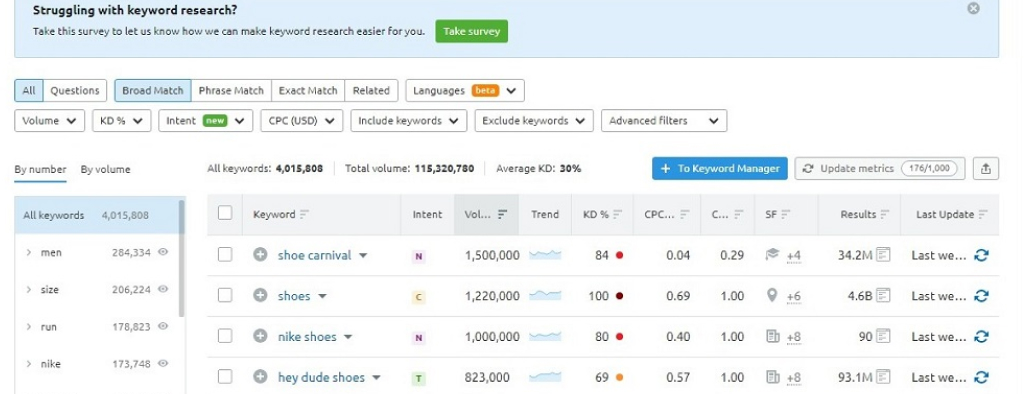
3. Ubersuggest
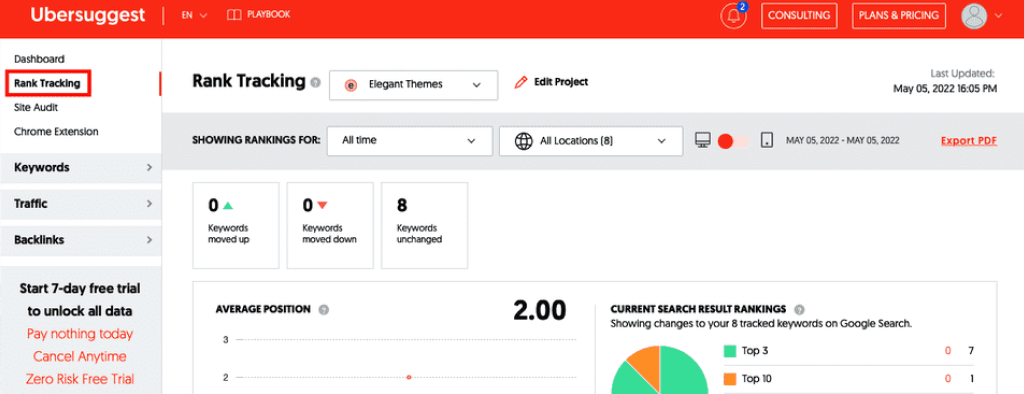
Ubersuggest tool

Ubersuggest is a tool created by Neil Patel, a famous digital marketer. This tool helps you find important words that are in online searches. It shows you how many times these words are searched for each month. Not only this, but also shows you which websites are doing well with these words.

To use it, simply type a word into the box and hit “Search” — Ubersuggest provides a list of related keywords. Sort them by usability. You can also hover over a word to see more about it, like how much it’s searched for, and what its popularity trajectory is. This will give the best words to use when speaking to your target audience online.

Pricing:

  • Free Trial Option is Available
  • Individual at $12.00 per month.
  • Business at $20.00 per month.
  • Enterprise / Agency at $40.00 per month.

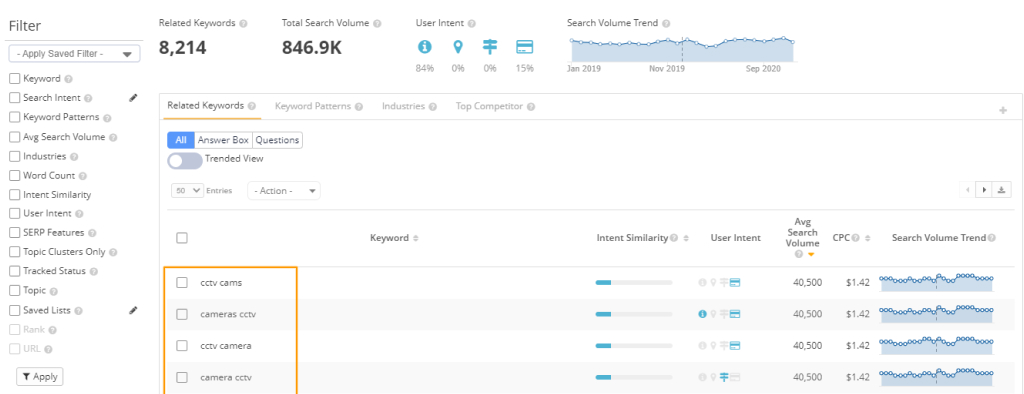
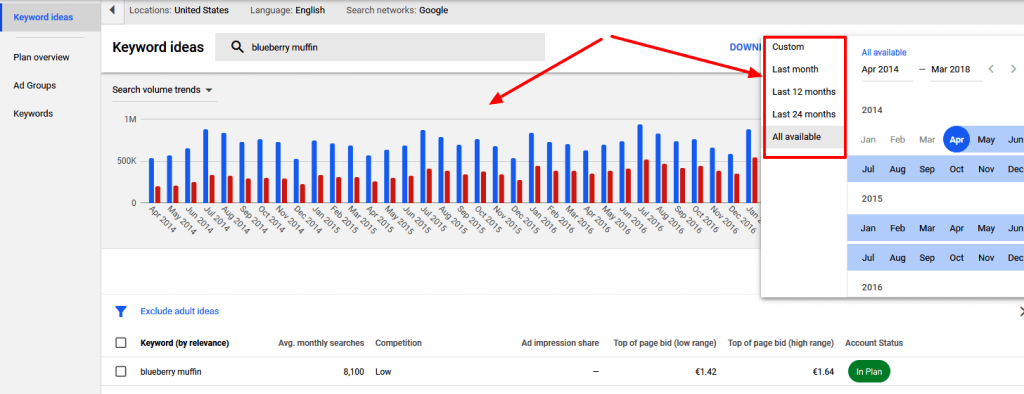
4. Google Keyword Planner
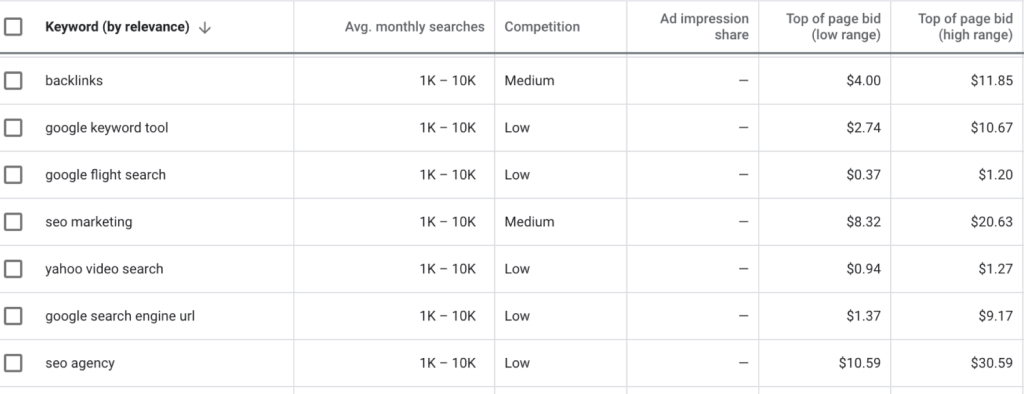
Google Keyword Planner

Google’s Keyword Planner is a great tool to find the search phrases people use on the web. It’s part of Google Ads, which assists firms in selecting the most appropriate keyword for their online presence. The core functionality is known as “Discover New Keywords” in this tool, where you can put in your website-related keywords. Then it presents you with connected word choices. It shows monthly search volumes and how many enterprises are trying to acquire them from you.

This allows you to know what keywords drive traffic without being too competitive or costly. Therefore, it helps you choose the right keywords for your website and business.

Pricing:

Keyword Planner is the best free keyword research tool, but it is a tool that is available only for holders of a Google Ads account.

5. SpyFu
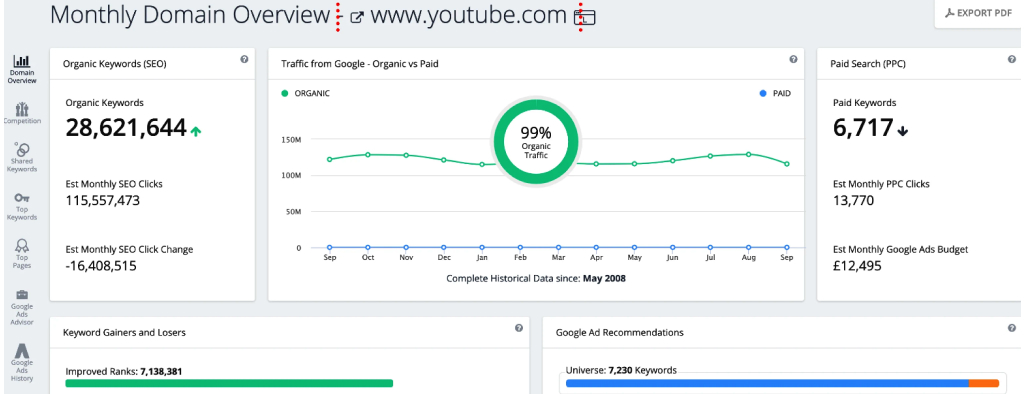
SpyFu tool

With the use of SpyFu you can learn from your competitors and find their best-converting keywords and ads! Try it out for free, without even logging in. Enter any website you want to test for instant results. If you want to look elsewhere, you just sign up for free and login.

The great thing about SpyFu is that it keeps old data. This means you can track how your site or your competitor’s site has changed in rankings for specific keywords over time. You can also compare the working strategies with others in your industry.

If you are keen on studying your competition, SpyFu is one of the best keyword research tools for understanding SEO. It aims to provide businesses insights into their rival’s profitable keywords, PPC strategies, backlinks, and more.

Pricing:

You will get Unlimited Data and Downloads, no matter what plan you choose, you’ll get unlimited access to all the SpyFu data you want.

  • Basic Plan – $33/month
  • Professional Plan – $48/month
  • Unlimited Plan – $68/month

6. AnswerThe Public
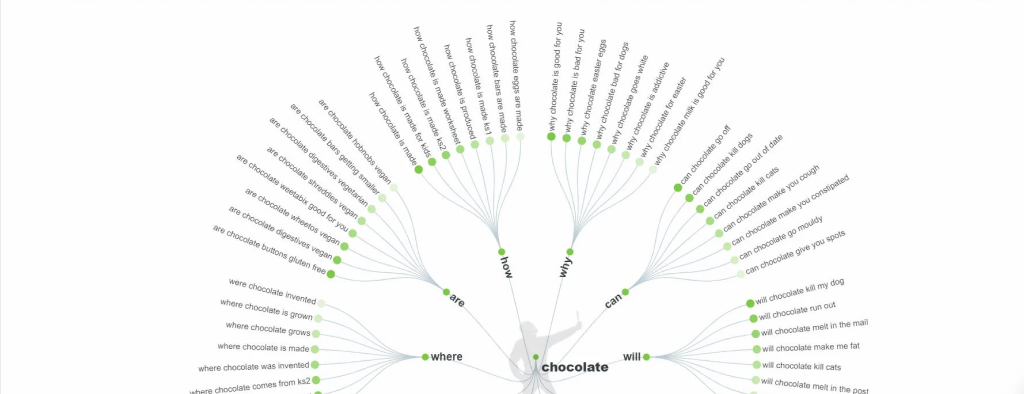
AnswerThePublic tool

AnswerThePublic is a tool that helps you find words related to a topic you are interested in. It’s good for SEO and keywords for new people. You don’t even have to make an account. Just type a topic and it shows you lots of related words in a good visual way. You can also see them in a list or save them to your computer.

These are Google and Bing words, the words that come when you start typing in the search bar. You can click on any of the these to see what Google search results show up. It can also tell you if there are special, highlighted results.

If you are a blogger, you can use the free version. Also, you might consider the paid version.

Pricing:

  • 7-day free trial
  • Individual: $9/month, $99 lifetime
  • Pro: $99/month, $79/month (paid annually)
  • Expert: $199/month, $149/month (paid annually)

7. Long Tail Pro
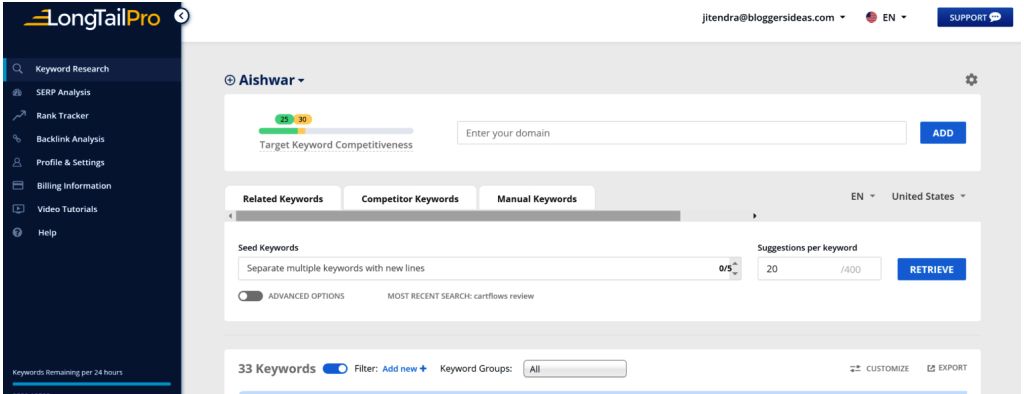
Long Tail Pro

Like other top keyword tools, Long Tail Pro gives you a glance at your keyword. It shows you how you rank against others on the first page of Google.

You can use it to check the top results for your keyword. This will help you understand where you stand against your competitors.

Also, you can give keywords you want it to track, and it will track the performance of your content for those keywords over time. Thus, it allows you to keep track of your position and see whether you’re going up or down on the scoreboard.

Pricing:

  • Starter plan: $37/month (800 daily keyword lookups)
  • Pro plan: $67/month (2500 daily keyword lookups)
  • Annual plans also available.
  • Free 10-day trial.

8. Soovle

Soovle keyword tool

Soovle is like the Swiss Army knife of keyword search tools. It searches for many search engines like Google, Bing, Wikipedia, Amazon, eBay, and YouTube — and grabs the suggestions that people make when they enter a query.

It’s the best free keyword research tool and also easy to use. You enter your word and it gives you suggestions from all these areas. Clicking on a recommendation will reveal what others are searching for. Also, you can change the search engine using the right arrow key.

Pricing:

  • Free to Use

9. seoClarity

SEO clarity analysis

seoClarity is the another one best keyword research tools 2023 which ultimate super helpful to make your website more awesome on the internet! It’s over half of all search engine queries typed in the world with roughly 30 Billion words. And adds one billion words every month!

One of its cool features helps you find special words that Google doesn’t show you. These words can make your website more popular. Additionally, seoClarity uses Google’s word suggestions, so you know you’re getting top-notch word suggestions to use on your website.

Pricing:

  • seoClarity is a paid subscription tool, with pricing at $3,000 per month.
  • Profession Plan start at $4,500/month
  • Custom pricing based on number of keyword search queries

10. Keywords Everywhere
Google Keyword Planner

Keywords Everywhere is a Chrome browser add-on. It looks like a super helper for people who want to make their websites more popular on the search engines.

With Google trends Keywords Everywhere, you can find the best words to use on your website. It also tells you what words your competitors are using. As you browse the internet, Keywords Everywhere displays related keywords alongside your search results. Moreover, it offers real-time data on Google and YouTube trending topics.

If you have a business that advertises on YouTube, Keywords Everywhere is perfect. It helps you see what videos are popular on YouTube and what words to use in your videos. This way, you can make videos that more people will like.

Pricing:

  • Keywords Everywhere is a freemium online marketing research browser extension, available for Chrome and Firefox
  • Starting Price: $1.2/month 100,000 credits/years
  • Silver Plan: $4/month 400,000 credits/years
  • Gold Plan: $20/month 2 million credits/years
  • Platinum Plan: $40/month 8 million credits/years

Winding It Up!

We understand that not everyone has the time to look for the right words. It is difficult to find the best keyword research tools on their own. These all tools have expertise to take care of your online marketing and make sure your company shows up at the top of Google.
September 2023 Google Helpful Content Update Rolls out

Google rolled out its new content update named “helpful content update” on 14th September 2023 to refine the search experience in profound ways. It will take approximately 2 weeks for it to be fully implemented. The update has rolled out to enhance the quality of search results by spotlighting content that is both helpful and informative. The big thing to know about this update is, it is not a core update.

Google’s Helpful Content Algorithm Update is more than a minor adjustment; it’s a fundamental shift. It aims to reward content that offers genuine value, so aligning with Google’s updated criteria is no longer an option—it’s a necessity.

Quick Facts About September 2023 Google Helpful Content Update

  • Goal: The primary goal of this update is to improve the quality of search results. Google aims to prioritize content that offers genuine value to users, as opposed to content that’s been optimized solely for search engine ranking.
  • Timing: 14 September, 4:20 pm ET
  • Effect: It affects not only Google Search but also Google Discover.
  • Impact on Website: The entire site will be impacted by this upgrade because it is a site-wide algorithm.
  • For all Languages: The Google September update is not limited to English-language websites. It has a global reach, affecting content in all languages. This is crucial information for international websites and multi-language platforms.
  • What’s New: One standout feature of this update is the ‘improved classifier.’ This tool helps Google better identify and subsequently reward or penalize the content based on its quality.
  • Who Will Be More Affected: Google has specifically mentioned that certain sectors would feel the brunt of this update more than others. These sectors include online educational materials, entertainment content, shopping sites, and tech-related articles. However, Google declined to provide the quantity of queries or searches affected by this update.

Official Guidelines and Advice from Google


Google Search Central

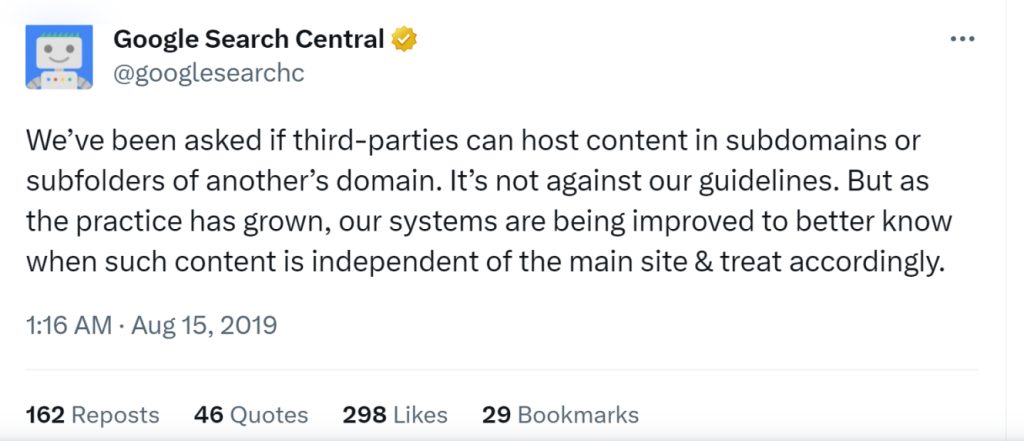
Third-Party Content: Google has explicitly warned against hosting third-party content that lacks close supervision. If your website is engaged in this practice, it’s high time to re-evaluate this strategy.

Ignoring this warning could lead to a significant drop in your website’s overall ranking.  The Google content update is designed to consider the “helpfulness” of the entire website, including any third-party content it hosts.

Additional Guidelines: Google has updated the help page with additional information about deleting content or modifying dates on how to produce dependable, useful material that puts the needs of people first.

Self-Assessment: To assist you in coping with these changes, Google recommends a self-assessment of your content. Make sure it aligns with their fresh criteria; otherwise, consider updating it.

Impact on Content Creation and Management

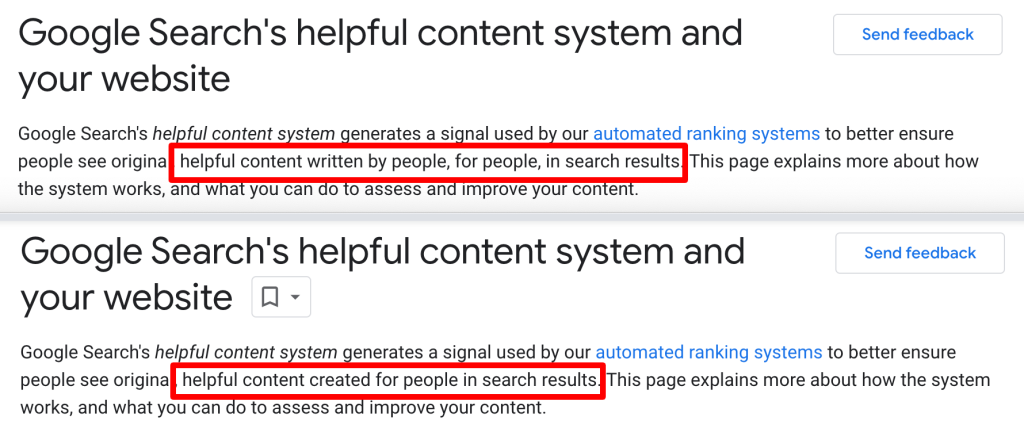
Role of AI and Expertise: Written By People: There’s more, though. In the previous version, Google stated that this approach was designed to “better ensure people see original, helpful content written by people, for people, in search results.” Google changed the phrase “written by people” to simply “helpful content created for people in search results.” So, perhaps, artificial intelligence or machines can create the relevant information.

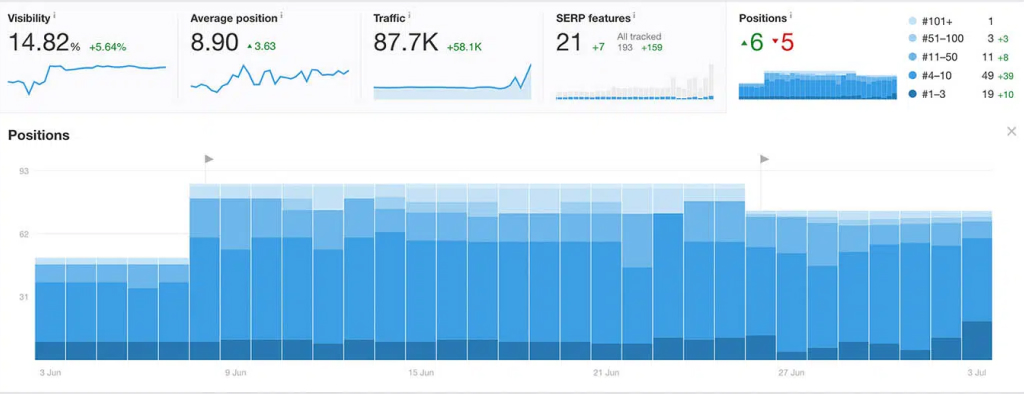
Here is Google After and Before Screen Shots

SEO performance comparison

Penalties and Recoveries: Although the word ‘penalty’ hasn’t been explicitly used by Google, the Google content update certainly seems like one to the sites that have content generated to rank higher only.

Websites that fail to align with Google’s quality benchmarks may see a decline in their rankings. If your website gets affected by this helpful content algorithm update, you should review your content to improve it as per the guidelines provided by Google.
What to Do If You’re Affected

Initial Steps: If you find that your website’s ranking has dropped, the first step is not to panic. Google has provided a set of guidelines and a roadmap for recovery. Start by thoroughly auditing your current content.

Google changes the rankings often, however, there are timeout and validation periods, and it might take some time to recover from the Google September update.

Recovery Timeline: Google changes the rankings often, however, there are timeout and validation periods, and it might take some time to recover from an update. Patience, along with a focused strategy, will be your allies here.

Prepare and Adapt

Best Practices: To align with the Google helpful content update, the focus should be on creating content that is genuinely helpful and informative. Utilize your unique expertise and experience to offer value to your audience.

Monitoring and Analysis: Regularly monitor your website’s performance metrics and make data-driven adjustments to your content strategy. This proactive approach will help you stay ahead of any future updates.

Read More – Instructions to Deal with Duplicate Content

Future Implications

Google’s helpful content update is a part of Google’s ongoing efforts to improve search quality. This change opens up new possibilities for content strategies, especially for businesses and platforms that leverage AI for content creation. However, the focus should remain on generating valuable, user-centric content, whether it’s created by humans or machines. Future updates are likely, and staying informed will be key to ongoing online success.

Mastering Local SEO: Strategies to Boost Your Visibility and Connect with Customers in Singapore

Understanding the Importance of Local SEO

How Does Local SEO Work?

SEO for local businesses is a gem in the world of digital marketing. Local SEO Singapore is the art of optimizing your website to increase visibility in local search results. The cool thing about local SEO is that it lets businesses promote their products and services to local customers and prospects. It focuses on specific towns, cities, regions, and even states, making it incredibly targeted.

Your local ranking on Google is determined by several criteria, including prominence (how well-known a business is), distance (how far away each possible result is from the searcher’s location), and relevancy (how well your business fits what customers are looking for).

It’s like being in a popularity contest in high school, but this time, you’re armed with powerful SEO tools and strategies to win.

Differences Between Local SEO & Organic SEO

Now, you might be wondering, what’s the difference between local SEO and organic SEO? Here’s a table that highlights the key differences between Local SEO and Organic SEO:

Local SEO Organic SEO
Focus Primarily concerned with improving visibility in a specific geographical area. Aims at improving visibility on a national or global scale.
Target Audience Target potential customers who are physically located in the same geographical area as the business. Targets a broader audience, regardless of their location.
Key Ranking Factors Proximity to the searcher, relevance to the search query, and local reputation. Google My Business profile, online reviews, and local citations are also crucial. Relevance of the content to the search query, quality of the content, domain authority, backlink profile, and user experience.
Keywords Keywords are typically location-specific, like “Indian restaurant in Taman Sutera.” Keywords are generally not location-specific, like “best Indian restaurant.”
Results Displayed In Local SEO results often appear in the “local pack” or “map pack” which shows a map with local businesses, their reviews, and contact information. Organic SEO results appear in the list of results right below the ads and local pack.
Goals Local SEO aims to drive foot traffic from local customers and promote visibility in local search results. Organic SEO aims to drive website traffic from a broad audience and improve overall website visibility in search results.

Improve SEO of Website With These Effective Strategies

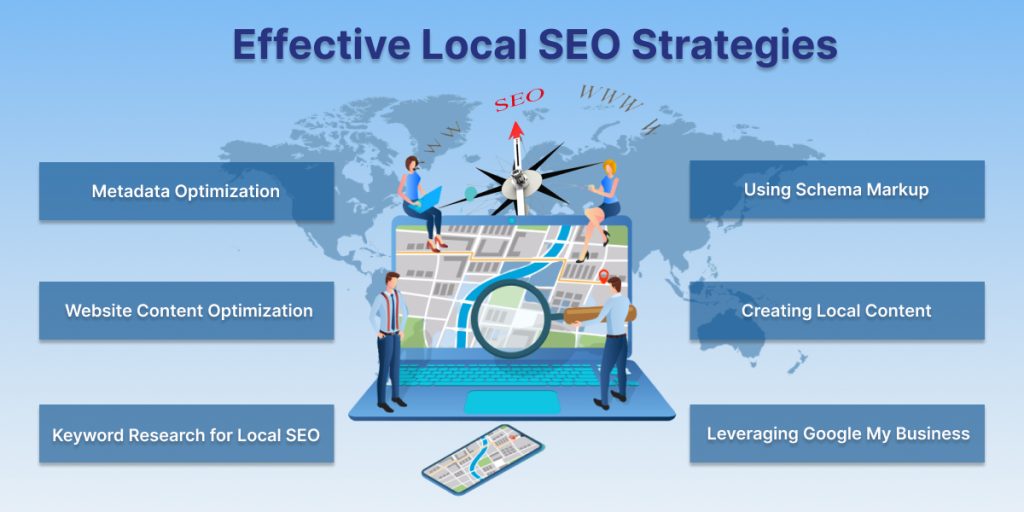
Local SEO strategy

1

Keyword Research for Local SEO

The first thing you need to do when working on your local SEO strategy is good keyword research. Remember, though, it’s not just about finding any keywords; it’s about finding the right ones.

Let’s assume, you run a boutique bakery in Singapore. It’s not enough to optimize your website for “best bakery.” You’ll be competing against every other bakery in the world! Instead, aim for “best bakery in Singapore” or “artisanal bread in Bugis.” Think local, and you’ll find your niche.

2

Optimizing Website Content for Local Searches

Next up is optimizing your website content for local searches. Incorporate those location-specific keywords you’ve researched into your web pages, blog posts, meta tags, and headings. The idea is to make it incredibly easy for Google to recognize where you are and what you offer.

Also, create content that resonates with your local audience. If you’re a Singaporean business, consider incorporating Singlish or discussing local issues. Show your love for the city, and it will love you back!

3

Leveraging Google My Business (GMB)

Ever noticed those businesses that pop up when you search for something like a “café near me” on Google? That’s Google My Business at Work! It’s free to use and incredibly useful for businesses aiming to boost their online visibility. After setting up your GMB profile, ensure it’s complete, accurate, and optimized. That includes adding your name, address, and phone number (NAP), your business hours, and a captivating description.

Note – Google itself provides valuable insights and guidelines on how to improve your local ranking through GMB on Google search and maps

4

Creating Local Content

Local content can seriously boost your efforts of SEO for local businesses. This could be blogs about local events, news, or other relevant local information. It’s all about building authority in your community. By creating content that’s genuinely useful for your local audience, you show that you’re not just in the community – you’re a part of it.

5

Using Schema Mark-up

Structured data, often known as schema markup, is an effective SEO strategy. It aids with the comprehension of your website’s content by search engines. Schema markup functions similarly to providing Google with a tour of your website, pointing out all the key areas.

There’s a specific Schema for local businesses, which includes information like your business type, opening hours, and location. It’s a bit techy, so you might need a developer to help out. But believe me, it’s worth it!

6

Optimizing Your Metadata

Metadata may be invisible to visitors, but it’s all too visible to search engines. It includes title tags, meta descriptions, and image alt tags, all of which need to be optimized with location-specific keywords. This aids with the comprehension and accurate ranking of your content by search engines.

Winning Strategies for Local SEO Success in Singapore

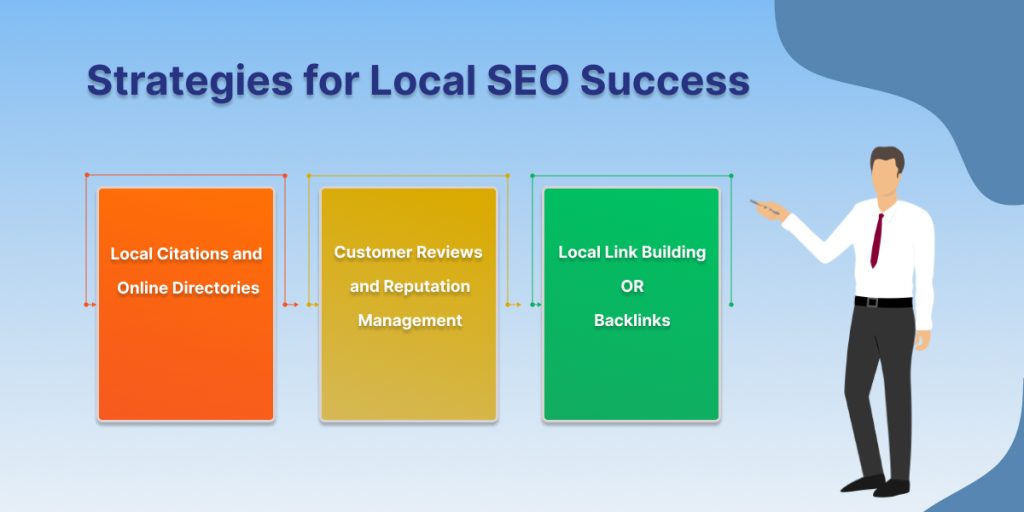
Local SEO strategies

Local Citations and Online Directories

Think of local citations as digital word-of-mouth. They’re online mentions of your business that help improve local search engine rankings. Local citations come from a variety of sources, including local business directories, websites, and social platforms. Make sure your NAP is consistent across all platforms because consistency is key.

Customer Reviews and Reputation Management

Customer reviews are critical for local SEO. They foster confidence among potential clients by providing social proof. Plus, they provide fresh, user-generated content for search engines to crawl. Encourage your customers to leave reviews, respond to them promptly, and manage your online reputation like a hawk.

Note – According to the local SEO expert Mike Blumenthal, the business is responsible for how the review platform works, as well as the SEO and reputation management firms’ behaviors. So, Review suppression doesn’t work. Customers can see the difference between your site and the Google reviews.

You do not have to publish offensive or inappropriate review content. Ensure you have a clear TOS published on your site explaining the FTC guidelines, and publish everything that meets those guidelines.

Read More – Impact of Reviews on Building Google’s Trust in Your Brand

Local Link Building

Building local backlinks is another effective strategy for improving your local SEO. Backlinks from high-quality, local websites not only drive relevant traffic but also signal to search engines that you’re a trustworthy site. Consider collaborating with local bloggers, influencers, and businesses to boost your local backlink profile.

Below are off-page factors that you will need to pay more attention to:

  • Link to your local company listings online by using a consistent NAP.
  • Together all of your regional partners, suppliers, and distributors. Look through their website to find the particular pages where a link to you would be beneficial, then email them to ask for the link.
  • Visiting local websites for a guest post.
  • Participate in social media and share information that includes a link to your website.

  • Write press releases for your business and submit them to local news sites.

Mobile Optimization and Local SEO

Mobile-Friendly Website Design

With so many of us glued to our phones, it’s no surprise that a mobile-friendly website is a must. Especially for local searches, which often happen on the go. Make sure your site loads quickly, is easy to navigate and looks just as good on a mobile screen as it does on a desktop.

Voice Search and Local SEO

As we advance into the digital era, voice search is becoming increasingly popular. Concentrate on long-tail keywords and natural language when optimising for voice search. Where is the closest hawker centre, Google? Then just “hawker centre,” which is more likely to be a voice search inquiry.

Conclusion

There you have it, then! An extensive manual for maximising Local SEO in Singapore. It is becoming a must rather than only a choice. You can get a tonne of local search traffic and create new business prospects with the appropriate techniques.

Whether you’re a hawker stall at a local market or a multi-million-dollar enterprise, local SEO is a tool that can help you connect with your target audience like never before. Remember, SEO isn’t about reaching a global audience; it’s about reaching the right audience. And sometimes, that audience is right in your backyard.

BTHRUST can help you to make an effective strategy for local SEO in Singapore and get the right audience for you. BTHRUST is considered a provider of the best SEO in Singapore. They are a reliable and affordable solution for all your digital marketing needs. You can contact them and enjoy the online growth of your business.

Google Analytics 4 Segments Builder Guide

If your website is connected with digital marketing, you must use Google Analytics because data is an essential component of knowing what your website visitors are doing.

Google Analytics Segments are the best way that helps your data to be sliced and diced to gain better insights. You should go deep into your reports to detect patterns and identify the most important users rather than looking at aggregated numbers (such as total users or all conversions).

What are Segments?

A segment is a subset (or “a portion”) of the data that can be examined. You can choose to assess how all users compare to the traffic originating from Singapore rather than analysing the data from all users.

How does that help? You may recognise that Singapore traffic is more important and accounts for the majority of your revenue for your company. As a result, if you aren’t already doing so, you should focus your SEO Service marketing efforts on that group.

Mobile traffic, desktop traffic, and segmentation based on gender, age, amount of engagement, etc., are other examples of segments.

Why are Segments Important?

Your website’s overall traffic (whether it be sessions or page views) or conversions will only provide you with a high-level view of its success.

Assume you receive 200 conversions each week. Great! But more importantly, how do you raise these numbers? What course of action can you follow?

You will require answers to the following key questions:

  • What are the top traffic-bringing channels?
  • What region are your users in?
  • Is there a single type of device converting more users?
  • What pages engage users more than others?
  • Which page do they arrive at and then navigate to before or after converting?

These are some examples since the answers to these questions depend on the sort of business as well as any additional factors, such as seasonal fluctuations, etc. Using segments in your study is essential since they enable you to find solutions to problems like these.

Google Analytics 4 Segments Type

Universal Analytics already has User and Session scoped segments, but finally, GA4 also has event-scoped segments. Let’s quickly review what they involve!

Read More: How to Set-up Google Analytics (GA4)

User Segments

User segments are subsets of users who have interacted with your website or app, such as those who have made previous purchases or those who have added products to their shopping carts but haven’t finished the transaction.

Event Segments

Event segments are subsets of events that were triggered on your website or mobile application. For instance, all purchase events made in a specified location or app_exception events that happened on a particular operating system are examples of event segments.

Session Segments

Session segments are subsets of the sessions that occurred on your website or mobile application, such as all the sessions that were the result of a specific marketing campaign.

How to Create a Segment in GA4?

Step 1

Customer segments data

Go to Google Analytics and log in.

Step 2

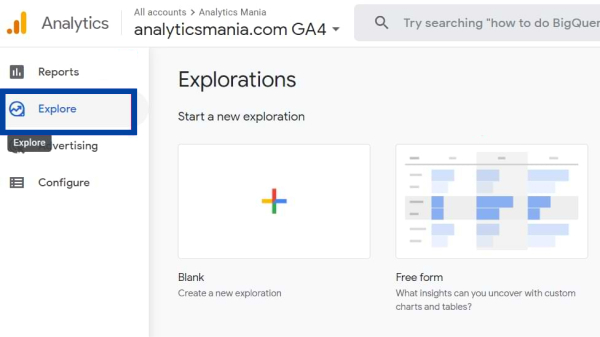
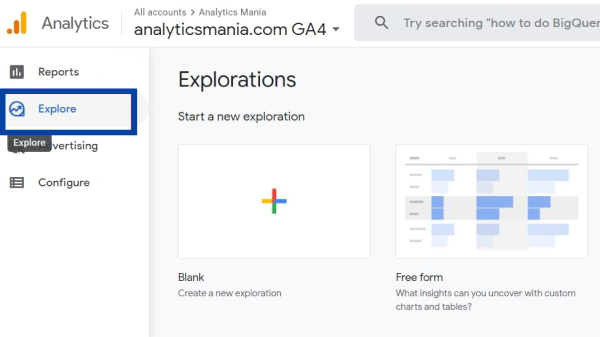
Click Explore on the left.

Audience segments data

Step 3

Choose an existing exploration or start one from scratch. Tell me how.

Customer segments data

Step 4

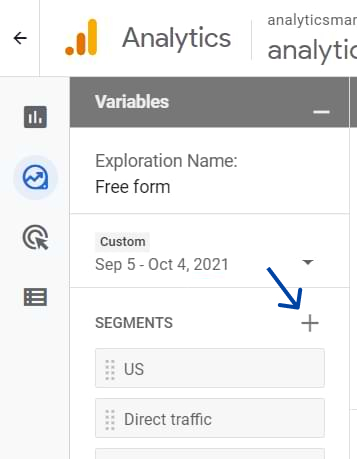
Click the + sign in the Segments section of the Tab Settings tab on the left.

There are three ways to start a new segment:

  • By setting each parameter individually, you can create a custom segment.
  • You can start with a suggested segment. These can be customised and tailored to meet your unique needs because they are based on common use cases.
  • To create a segment from a selection in your context menu, right-click a data point in your visualisation.

Step 5

Choose the type of segment you want to make.

Audience segments data

Create Custom Segment

Step 1

Choose the segment type you want to create in the top panel (user, event, or session).

Step 2

Give the segment a name and a description. This enables you to locate the segment in Analytics.

Step 3

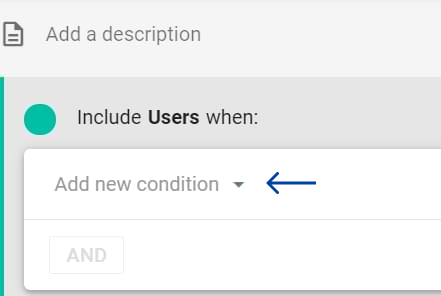
To define the selection criteria for this segment, click Add new condition. Conditions that assess dimensions or events can be made. For instance:

  • Age is between 18 and 24 or 25 and 34
  • App exception

Step 4

You can build segments based on the user’s actions.

Step 5

Click SAVE in the upper right corner.

Segment Builder in GA4

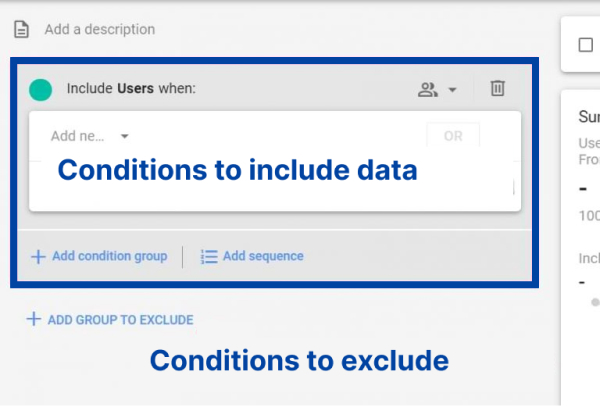
You can set up conditions in the segment builder to only include specific users, sessions, or events. A set of conditions can also be added to exclude specific data.

Marketing segments data

New conditions can be paired with AND, OR, or condition groups when they are added.

After clicking Add new condition, you may start exploring for the dimensions you’re interested in adding additional conditions to.

Marketing segments data

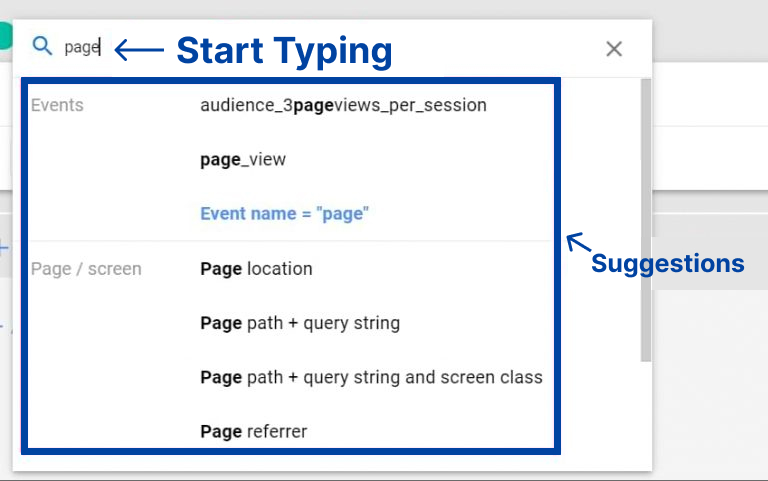
Simply begin typing what you’re looking for, and the search will then present organised results based on the type of result.

Marketing segments data

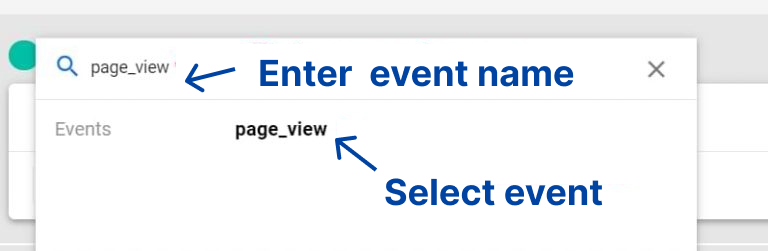
Want to add users who have participated in a specific event? Simply type the event name.

Marketing segments data

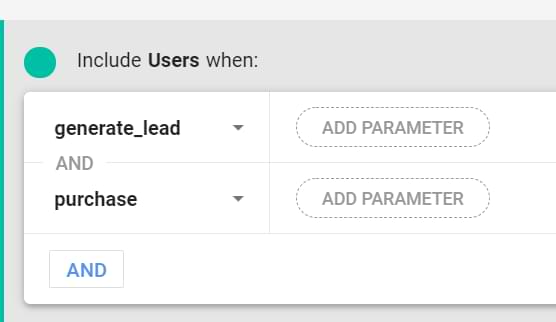
Are you looking for users who have finished two events (in any order)? Then, by selecting the AND option, include an additional condition.

Customer segments data

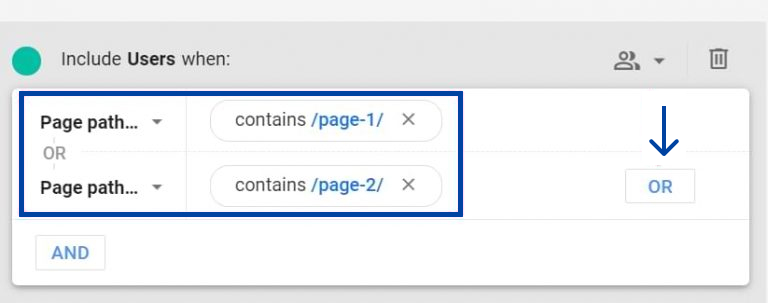
You’ve just learnt how to use AND to combine two conditions. input the first condition, click OR, and then input the second condition to find users who have visited either one page or both.

Audience segmentation data

You have now added the OR operator.

How about the condition groupings? What differentiates the use of condition groups from the AND?

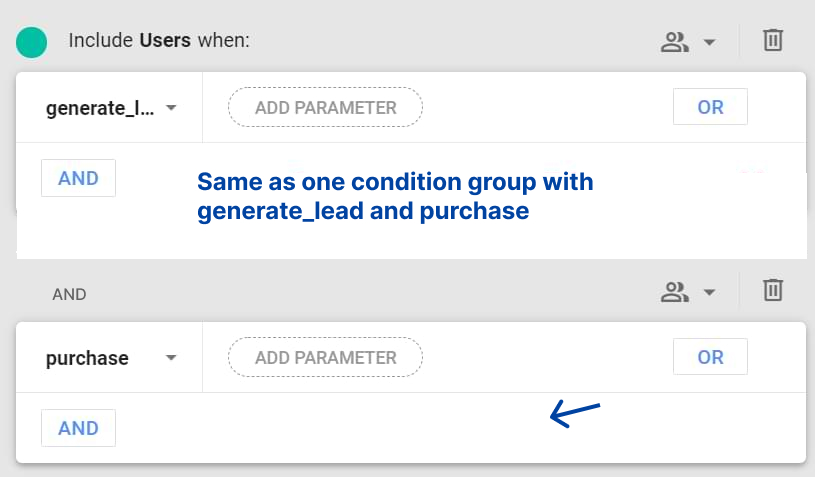
They resemble one another in many ways. It is the same as having two independent condition groups with just one condition if you have one condition group with two conditions and connect them using AND.

Customer segments data

Condition groups are helpful if you wish to have various scopes in different condition groups.

Condition Scoping

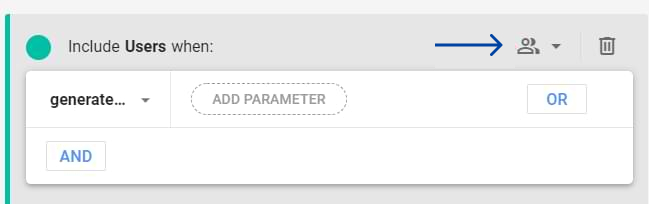
You can set several scopes in various condition groups using condition scoping. Additionally, it is manageable by selecting this icon from each condition group.

Audience segments data

Depending on the segment type you’ve selected, different options will be accessible here. Possible choices include:

  • Within the Same Event: Every requirement must be satisfied within the same event.
  • Within the Same Session: The requirements must all be satisfied at the same session.
  • Across All Sessions: All requirements must be satisfied during the user’s lifetime, across all sessions. Find out more about the calculation of sessions.

Sequence Segments in GA4

If you are familiar with advanced Universal Segment Data Analytics, you probably already recall the option to include users or sessions where events take place in a specific order.

In GA4, the same thing is also possible. Only in user segments (whereas in UA, sequences may also be used in session segments).

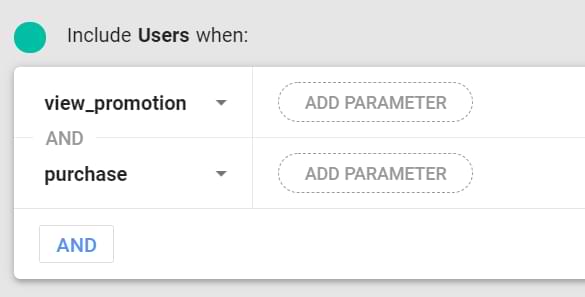
If your segment looks something like this (view, promotion and purchase), all users who have seen at least one promotion and completed a purchase will have their data displayed. But in this case, the sequence is irrelevant. This group would still include a user who made a purchase initially and then later watched an offer.

Customer segments insights

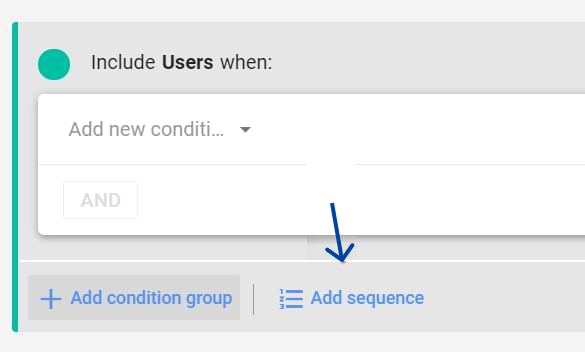
We can clearly tell GA4 through the sequence segment that we are only interested in making a purchase if it occurs after the view promotion. Click Add sequence in the condition group to accomplish that.

Customer segments data

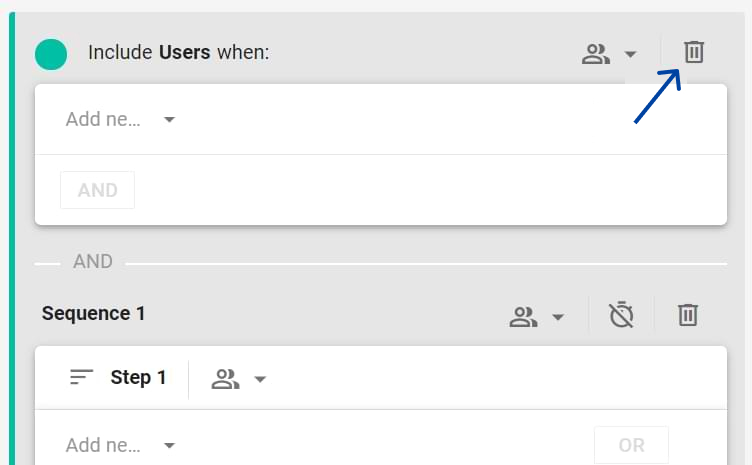
Delete the initial Condition group if the segment simply contains sequence. Press the trash symbol.

Audience segments insights

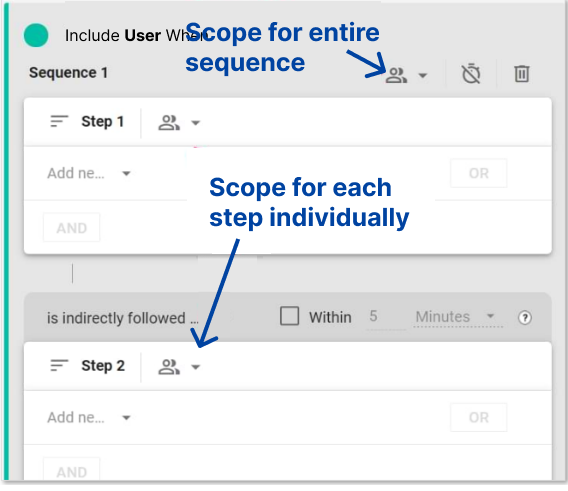
Now complete each step. The scope of the entire sequence can be set. Also, if it makes sense to you, you can set different scopes for each stage of the sequence.

Audience segments data

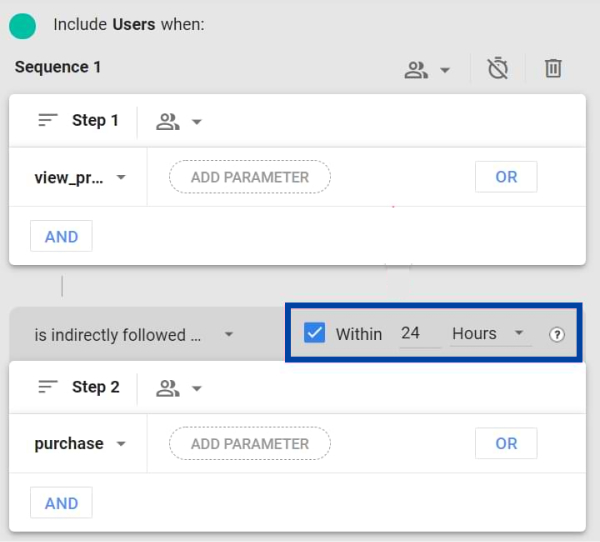
You can include time constraints in your sequences. This is a new addition which is not available in UA.

Audience segments insights

Excluding Data in Segments

The users you wish to exclude from your Segment Data Analytics if they meet certain conditions are another crucial aspect when creating segments.

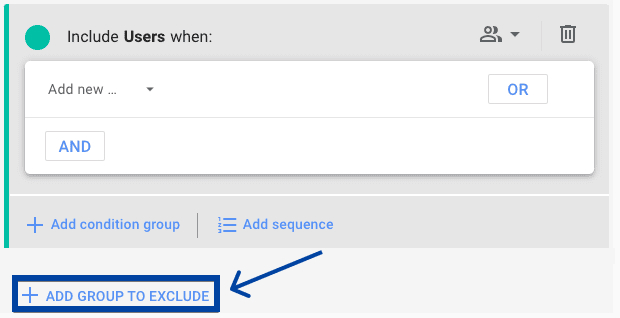
Start with exclusions by clicking the +Add Group to Exclude button.

Audience segments data

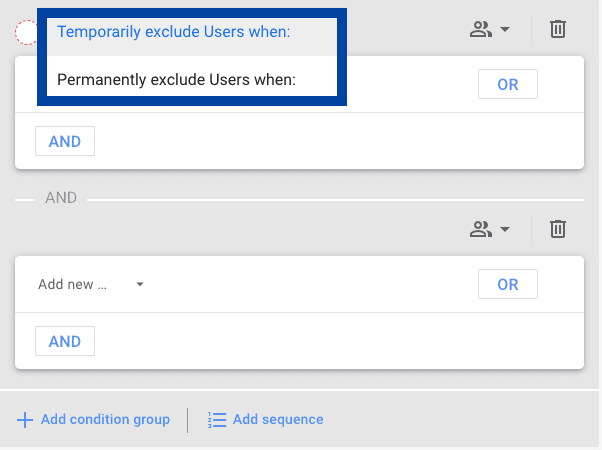
If you want to permanently or temporarily exclude users, you can do so after you see the exclusion group added in red. When new condition groups or sequences are added, this setting is then applied to the entire group. What is the difference between temporarily and permanently excluding users?

Audience segments insights

However, it seems to be more helpful when you’re creating audiences from your Google Analytics Segments because then it will only temporarily exclude the users from your audience. Permanently removing those users like they never be part of your audience.

From Clicks to Conversions: How Effective SEO and User Experience Drive E-commerce Business Success

Today’s digital age has made ecommerce a crucial aspect of our lives. Online shopping has greatly improved the comfort and convenience of our lives, enabling us to purchase everything from clothing to electronics to food to services.

But simply having an ecommerce website is insufficient; it must be optimised for both users and search engines. Guess the most crucial element for providing superior goods and services and excellent user experience in the e-commerce business. This is where people take advantage of Ecommerce SEO!

Why do People Use E-Commerce SEO?

Driving traffic to your website is the first obstacle to attracting new clients, and SEO for ecommerce handles this issue. Some fascinating facts:

  • The top five results receive over two-thirds of all SERP clicks.
  • 70% of marketing professionals concur that SEO produces superior outcomes over PPC.
  • Internet surfers disregard paid advertisements to a degree of 70–80%.

What is SEO and User Experience (UX)?

SEO (Search Engine Optimisation) is the process of making changes to a website’s content and architecture in order to improve its position in search engine results pages (SERPs) for targeted keywords. On the other hand, user experience (UX) describes the total impression a person has after interacting with a website or digital product.

While UX focuses on developing a smooth, user-friendly experience that engages and satisfies consumers, SEO places more of an emphasis on technical optimisation and content production to increase exposure and draw organic traffic.

Read More: Top Search Marketing Trends for Business Growth

Why is User Experience Crucial for Ecommerce Business?

Ecommerce user experience

User experience is one of the most important factors in e-commerce success. With so many alternatives available to customers, a website that is poorly designed or incomprehensible can cause dissatisfaction and abandonment very fast.

On the other side, a well-designed e-commerce website can support the development of trust, promote purchases, and boost client loyalty. Clear navigation, logical product categories, efficient checkout procedures, and responsive design that functions well across all devices are all components of good UX.

Effective Tips to Boost Your Traffic and Sales

There are four effective tips for your e-commerce website to increase traffic and sales by optimising SEO and user experience (UX).

Make a Strong Site Taxonomy

Ecommerce SEO strategy

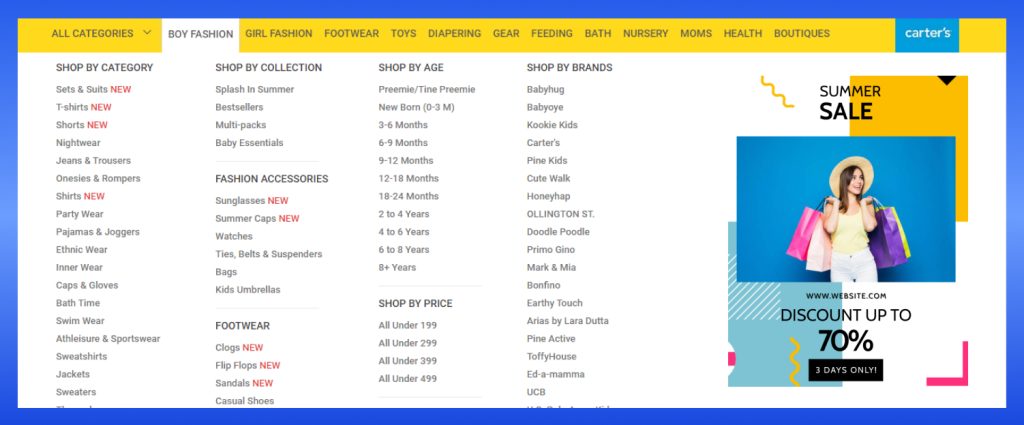
The architecture of a website is important since it influences both the user experience and search engine rankings. The primary categories should be displayed in the main navigation. Building a strong site taxonomy is essential, and observing your competition can help you do this. Check the depth and importance of their organic keyword presence with a SEMrush audit to discover if their SEO efforts are successful.

For example, some e-commerce websites provide a vast range of products; they have intuitively divided these into what they view as their primary categories. Any of these categories’ subcategories are visible when you click on one of them. A wonderful user experience is delivered by this method of e-commerce site organisation, which benefits search engine rankings.

Research Use Cases for Product Cases

After building a solid main and sub-navigation structure, you may investigate the various use cases and search patterns that users may adopt for these goods. Do people look for things by pricing or by style? Perhaps brand searches are popular. When you incorporate this into your site architecture and content strategies, your website visitors will benefit from a better user experience (material that is appropriate for the searcher’s intent). Additionally, your organic ranks will have automatically increased.

For instance, if you simply have one category page for “Furniture”, you focus on a keyword with high monthly search traffic (588,000 searches per month). It is also a very competitive term. Therefore, your chances of placing at the top are lower. However, if you keep looking further, you’ll find chances that are pertinent. Think about “targeted” keywords with a low search volume but an acceptable level of competition. Instead of just listing your things on one page, you package your goods considerably better this way.

Benefit of Shopping Deals & Seasonal Promotions

Ecommerce SEO strategy

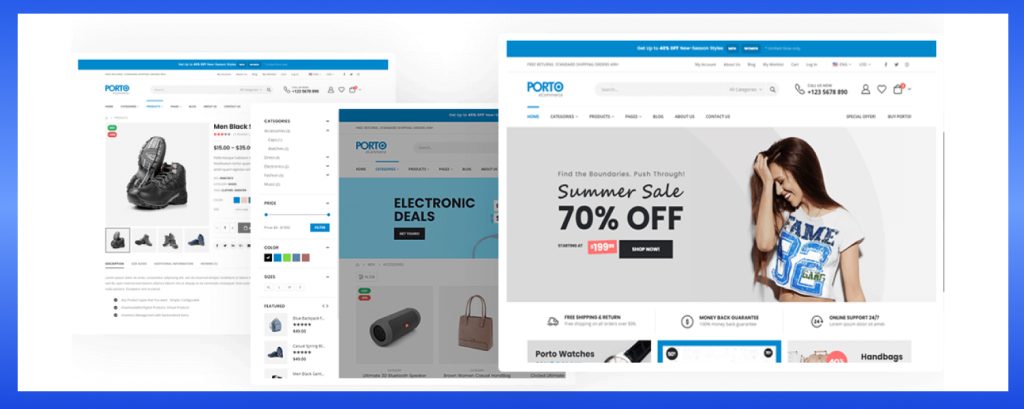
Retailers can use seasonal promotions and shopping specials in e-commerce to draw customers. For example, many e-commerce sites advertise Black Friday “Deals for Days”. The primary navigation, promotional banner, and primary header elements all appear above the fold with these promos.

By providing such discounts, merchants can raise the perceived value of their goods, which may persuade buyers to buy. Seasonal promotions can also contribute to a sense of urgency since customers may feel pressured to act quickly to take advantage of the offer’s brief window of opportunity. As a result, using seasonal promotions and shopping specials can be a successful merchandising strategy for both offline and online stores.

Promote Your Products

Product promotion strategy

Merchandising in ecommerce provides many opportunities for product promotion.

Here, we listed essential tips on how you can merchandise your products in a way that will help you drive sales and grow your ecommerce business.

  • On your product page, you have other products from the same brand.
  • Other products people also bought
  • Products commonly purchased together
  • Or similar products from competing brands

When you merchandise your products better to improve the user-friendly experience, users find what they’re looking for, and you are gaining relevant visitors who are more likely to convert. By using this method, you can expand your keyword breadth, which is always good for SEO as you’ll have several other opportunities to maintain your organic traffic.

SEO data insights

Remember, effective ecommerce merchandising involves understanding your target audience, analyzing their purchasing behavior, and implementing strategies that provide a seamless and personalized shopping experience.

Let’s consider an example related to furniture. If someone is interested in buying a bed, it would be intuitive to cross-sell related products like a mattress pad, bedsheets, or pillows. By incorporating these cross-selling opportunities and ensuring a seamless user experience, you can increase the chances of customers adding these items to their purchase.

Conclusion

The tips mentioned above are necessary for organising an ecommerce site and promoting products. You may improve the user experience and your search engine rankings with the help of these tips.

BThrust is the leading SEO agency in Singapore that provide effective ecommerce SEO services to help enhance your website’s traffic and online sales. Our ecommerce SEO company experts can assist you in search engine optimisation and increase your website’s visibility online.

A complete guide On – How to Set-up Google Analytics (GA4)

For many years, Google Analytics has been an essential tool for website and app owners. This tool provides valuable insights to businesses which helps them to make informed decisions about their online presence. But everything will be changed soon!

Yes! Google has introduced the next generation of analytics, which is known as Google Analytics 4 or GA4. This next generation of analytics was announced by Google in the year 2022. It will come into existence by 1 July 2023.

What is Actually Google Analytics 4?

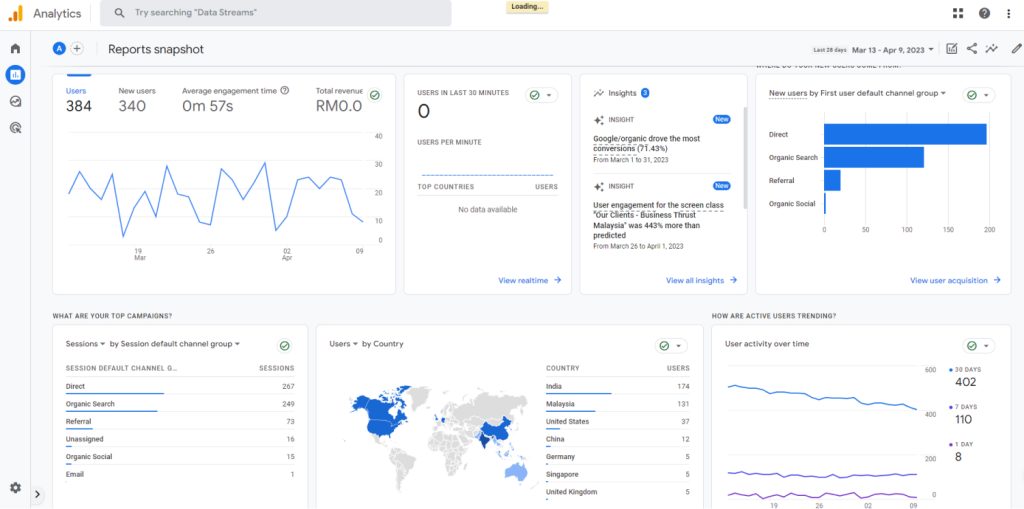
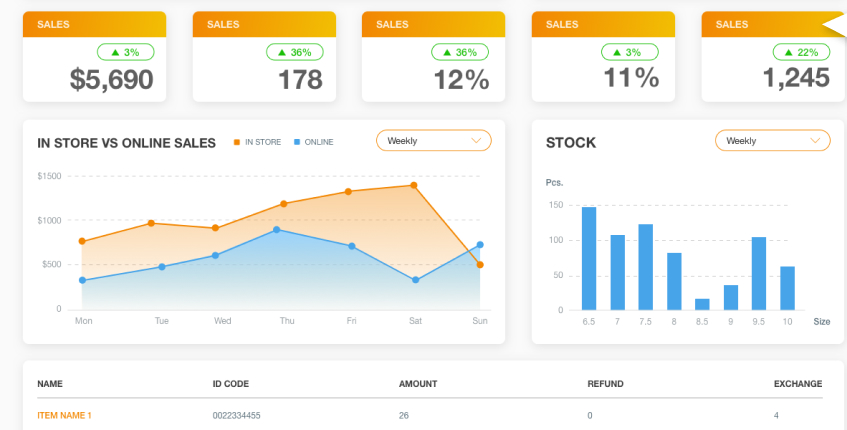
SEO analytics dashboard

Google Analytics 4 is a new kind of property for the advance measurement. It collects data on the basis of events from both websites or apps to understand the customer journey better. Due to event based data, it can track individual actions taken by users on your website or app. This will provide a comprehensive understanding of user behaviour. Not only this, but you can track customer journeys on multiple devices and platforms.

GA4 has privacy control like cookieless measurement, behavioural, and conversion modelling. This means the consumers’ privacy is safe while providing useful information to the website and app. Businesses may more easily make informed decisions about their online presence because of the predictive capabilities of GA4, which provide assistance without the use of complicated models.

Another feature of GA4 is direct platform integrations. This implies that businesses can utilise GA4 data to make decisions on how to improve user engagement or target advertisements on their website or mobile app.

How to Change Google Analytics 4 from Universal Analytics?

Many businesses are facing the challenge of transitioning to the new Google Analytics 4 platform. As we know, transitioning is a daunting task from the old to the new platform for website and business owners. So, our SEO Company professionals provide all the necessary steps required to make the transition smooth and successful.

Below, we are mentioning the migration checklist curated by our SEO Agency experts that will help you in a successful migration. Let’s have a look!

Step 1

New Property Creation in Google Analytics Account

Google Analytics 4 (GA4) uses a new tracking model as compared to the older versions. If you want to set up GA4, you need to add a new property to your Google Analytics account. In the admin area of your account, click New Property, and then follow the setup instructions.

Steps to set up GA 4 from Universal:

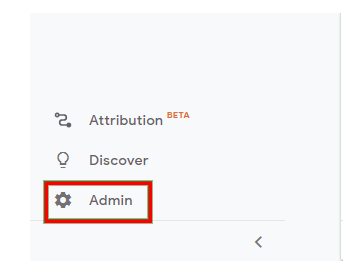
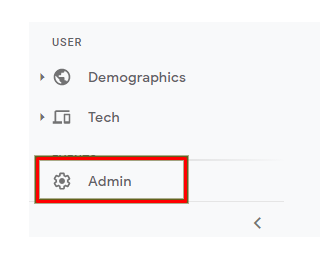
Step 1.1: Click “Admin” as shown below.

SEO setup step

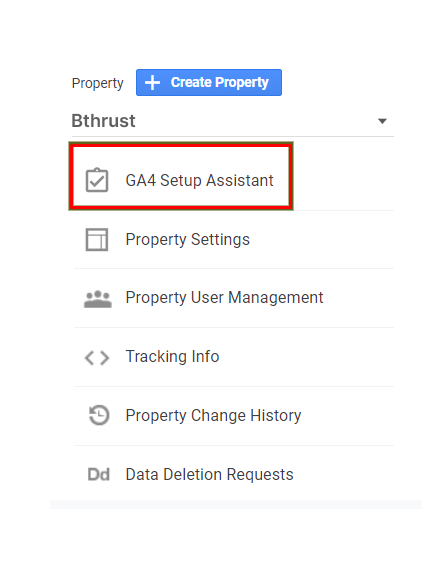
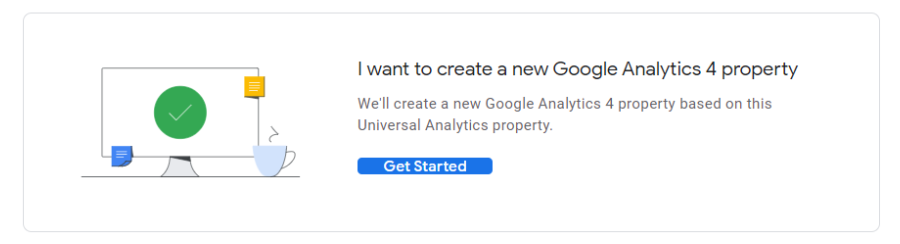
Step 1.2: Then Go to GA4 Setup Assistant

SEO setup step

Step 1.3: The “Google Analytics 4 Property Setup Assistance” screen will show up once you accomplish this. Now choose “Get Started.”

Note: Make sure the account you have chosen in the account column is the correct one.

SEO setup step

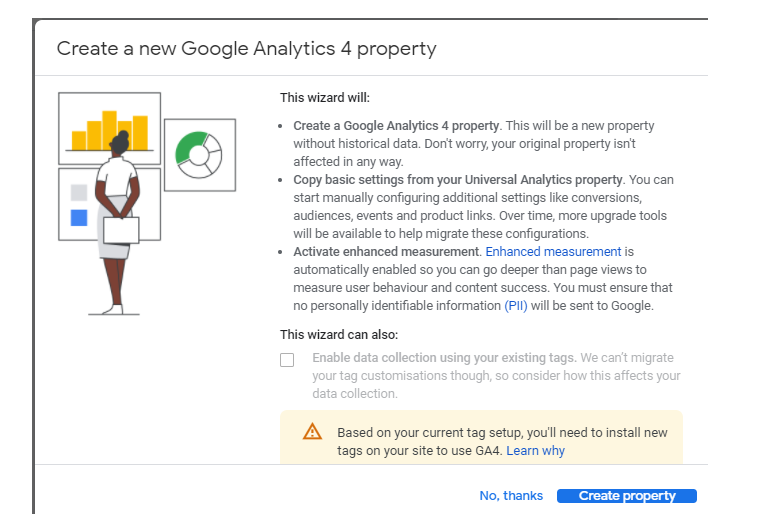
Step 1.4: After you click “Get Started,” this pop-up will appear on your screen. Choose “Create Property”.

SEO setup step

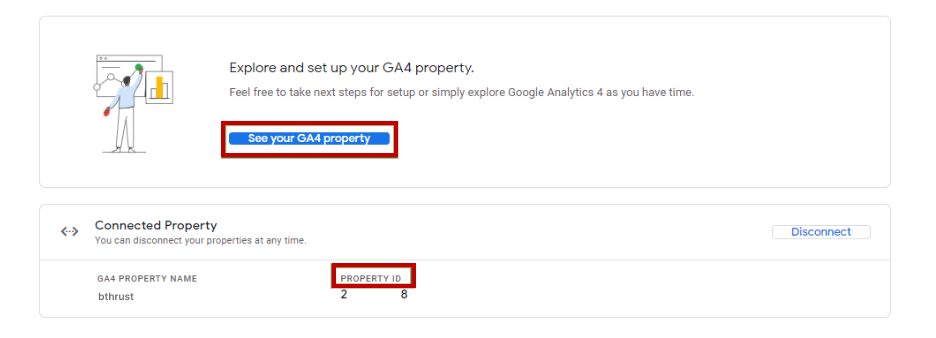
Step 1.5: The connected property message and property ID can be shown on the following screen after clicking this

SEO process step

Step 2

Install GA4 Tracking Code on Your Website

You can add web & app data streams after creating a Google Analytics 4 property. The Google Analytics 4 tracking code (gtag.js) must be included at this point in your website.

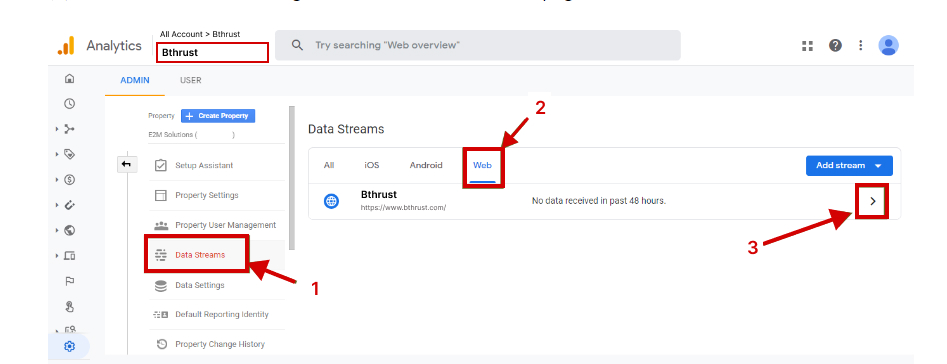
Step 2.1 To access “Web Stream Details,” click the arrow (>) next to “Data Stream” once you have reached that screen.

SEO process step

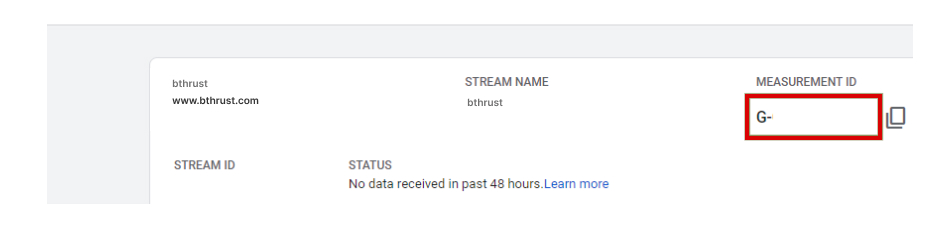
Step 2.2: Measurement ID for GA4 property is located in the top right corner of the “Web Stream Details” page

SEO process step

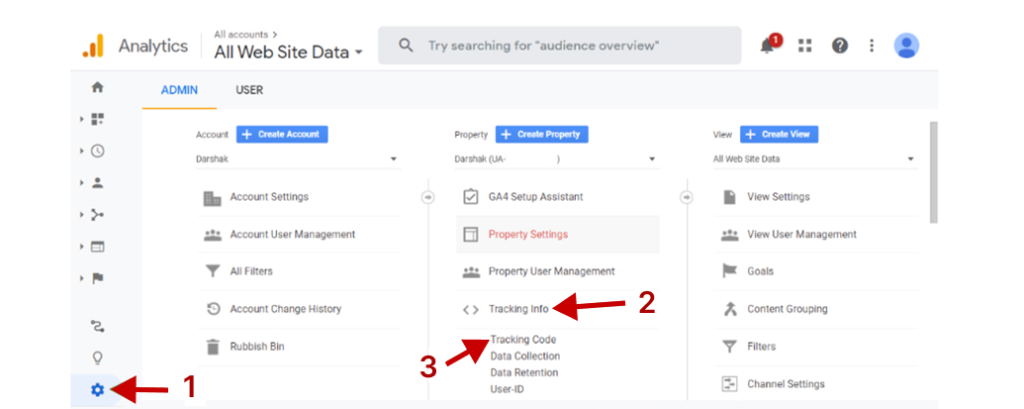
To add the code to the head area of your website, go to Admin > Property > Tracking Info > Global Site Tag.

If Google Tag Manager is already installed on your computer, you can skip this step and set up GA4 using GTM.

Step 3

Verify the Tracking of Google Analytics 4

Now, it’s time to do some inspections. Let’s verify that the new Google Analytics 4 setup is working properly before moving on. There are various methods for doing that. If you want to check the GA4 tracking configuration on your website, you can install a Google Tag Assistant or Google Analytics Debugger.

Step 3.1: Click on the “Admin” button in the bottom left corner.

SEO process step

Step 3.2: Choose “Web” under “Data Streams”. You will be taken to the “Web Stream Details” page when you click the arrow (>) next to “Data Stream.”

SEO process step

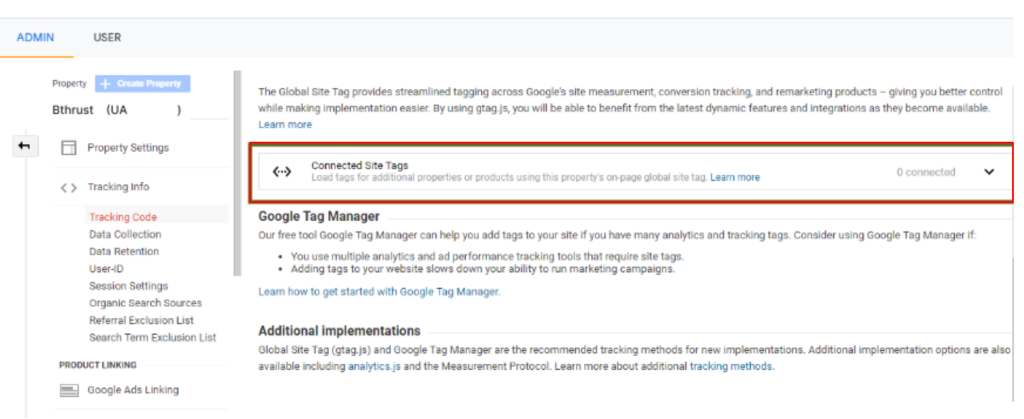
Step 3.3: Go to your current Universal Analytics Property, then click on Admin, Tracking info, and Tracking code.

SEO data analysis

>> Admin >> Tracking info >>Tracking code

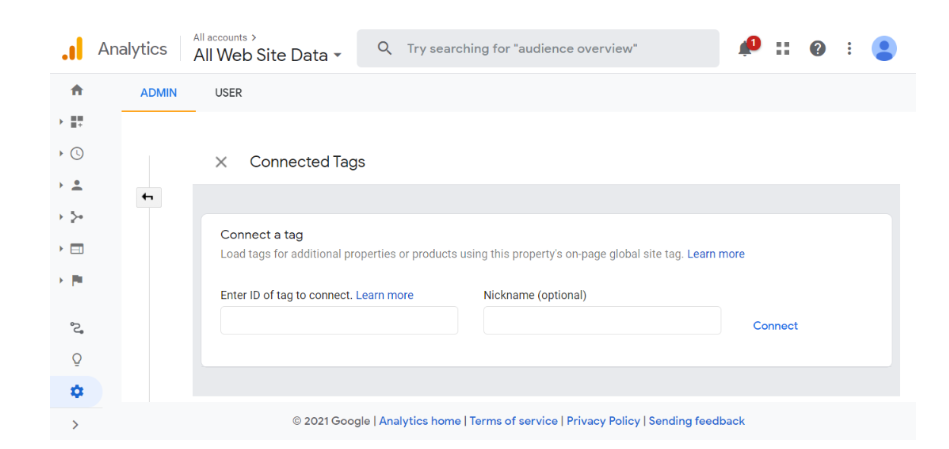
Step 3.4: You will notice the “Connected Site Tags” option if you scroll down. Choose this option.

Final SEO step

Step 3.5: To establish a new site tag, simply paste the Measurement ID that you created and copied in Step 3.

SEO process step

Your Universal Analytics property and GA4 property are connected once you select “Connect.”

Step 4

You Can Add Additional Google Analytics 4 Configuration

Your GA4 setup is ready if you properly complete the instructions above! However, some additional adjustments can advance your tracking. In your Google Analytics 4 property, you might need to:

  • Eliminate Internal Traffic
  • Make unique events
  • Custom Conversions Definition
  • Turn on Improved Tracking
  • Customise Your Audiences
  • Create Complex Comparisons
  • Integrate with BigQuery
  • Create Personalised Reports and Many More

These steps will help you successfully transition from the old to the new platform. Google Analytics 4 enables you to customise every aspect of data tracking. It is the perfect set of tools to assist you in releasing potential data for your company.

According to our SEO Company experts, you have to start the transition process as soon as possible. This will ensure a smooth transition and reduce any disruptions to website performance tracking.

Conclusion

Businesses now have the chance to upgrade to the new Google Analytics 4 platform and benefit from its new features and capabilities due to the retirement of the Universal Analytics platform. Businesses may transition seamlessly with the help of our BThrust professional advice and assistance. So they can continue to monitor website performance and obtain insightful knowledge of client behaviour.

We are the leading SEO Agency that helps a number of businesses to achieve their desired results. You can connect with our team if you have any concerns related to Google Analytics 4!

Google March 2023 Core Algorithm Update – What You Need to Know

Google confirms the first core update of this year. As we all know, these updates have a significant impact on search engine rankings so staying informed is crucial.

Google announced the March 2023 core update via Twitter, in which he said, “Today we released the March 2023 core update. When the rollout is complete, we will update our search engine ranking release history page”.

When announcing the update, Google didn’t provide much information about the update. But one thing is surely clear it intends to provide accurate, relevant, quality search results with frequent releases of such updates.

Core updates!! A reminder for SEO professionals!!

Core updates are a reminder for SEO professionals to stay alert and be prepared with a new and effective strategy to get an advantage over the competition. During such an event, core updates will create ranking fluctuations and impact your website, maybe in a better or worst way.

The best way to see your website performance during the rollout of the update is to monitor analytics and rankings for the next couple of weeks.

What is March 2023 Core Update?

As we all know, Google frequently introduces changes to its algorithm to improve its comprehension and ranking of content. With these updates, Google hopes to provide more accurate, high-quality search results.

These updates will also bring about changes in how Google assesses and rank websites, necessitating the need for SEO experts and website owners to remain updated and modify their strategies.

But the thing that makes us all worry is that there is no information about the March 2023 core update!

Read More : Google March 2023 Core Update Rolling Out Done

Key Takeaways You Need to Keep in Mind

As there is no information on the latest update. So, we are making some conclusions from earlier updates. Below, we have curated some key takeaways for you to keep in mind:

Time is Important

The core algorithm update don’t always show their impacts right away. It may take days or weeks for Google’s bots to scan and re-evaluate the web.

Pay Attention to Numbers

You should keep an eye on your website’s organic search traffic and keyword rankings. These metrics will help you know the effect of the update and identify the potential areas for development.

Quality Matters

With this core update, Google hopes to provide better search outcomes to users. That means consistently producing insightful and useful content that meets the target audience’s needs.

Focus on Small Details

Your website’s overall ranking depends on your website’s technical aspects, including site speed, mobile friendliness, and proper indexing. So, pay attention to each aspect.

Things to Do If Your Website Hit by Update

Field technician productivity

If your website is affected by the algorithm update, there are some things that you need to perform. As an SEO Agency Singapore, we have curated some significant things for you:

Focus on Quality Content

  • Check whether your content is unique, extensive, informative, and shareable.
  • Ask inquiries about the expertise of your content to check whether the content is written by a professional.
  • Check the way your content is presented and produced, such as spelling mistakes; many ads appear and display well on mobile.
  • Also, check how it stacks up against other articles.

Focus on Recovery

  • When the algorithm update has finished rolling out, there is no guarantee that a website will recover. There are many minor updates that Google does not publicise, but they can be used for site recovery.
  • Instead of analysing content the way humans do, search algorithms look for signals that can be used to comprehend how humans might evaluate content.

Follow E-E-A-T

  • Experience – Does the content provide the impression that the author has experienced in the subject, such as using the product in real?
  • Expertise – Check if the writer has an expertise in the topic and has deep knowledge of it.
  • Authority – Ensure that the content creator has well-recognised in this area and is the content a reliable source for others.
  • Trustworthiness – Can a consumer have trust that the writer and the content are reliable, honest, and accurate? Search algorithms look for signals used to know how people assess the content.

Conclusion

Now, you are aware of the latest Google’s March 2023 core algorithm update. It is such a reminder for SEO professionals always to be ready to maintain their competitive edge. They should stay informed, monitor analytics, focus on content quality and technical aspects of the website. This will help your website to rank higher!

If you want to know more, you can connect with our Bthrust SEO Agency Singapore team.

5 Successful Hallmarks of Creating Effectives Software Implementation Plan

When it comes to Custom Software Development implementation, we all require a successful plan. But how will you make a software plan? Or Why actually do you need a plan? The answer is simple!

The software implementation plan will help you to deploy the right software according to your business needs. Every business wants to have software that streamlines its workflows. Increase efficiency and generate more revenue. You will get an edge for your business that faces a lot of competition in their industries.

This plan ensures you collaborate with the right people for your software development. You can also avoid making a hasty decision. Basically, the aim of this plan ensures that the end user acquires the solution they truly want!

If you also want to create a software implementation plan, you need to follow some steps!

Checklist To Do Before Making Software Implementation Plan

Before creating a software implementation plan, you need to do some checklists. This checklist mentions the things that need to be done before the actual implementation.

We are mentioning below the following you need to cover:

  • What requires to be implemented?
  • When will the process start, and what things need to be checked beforehand?
  • Before implementation, are users required to log out of their systems?
  • Who will handle the support requests from users?
  • How will the existing system back up before the implementation?
  • Will the implementation process be done during business hours or a set of times?

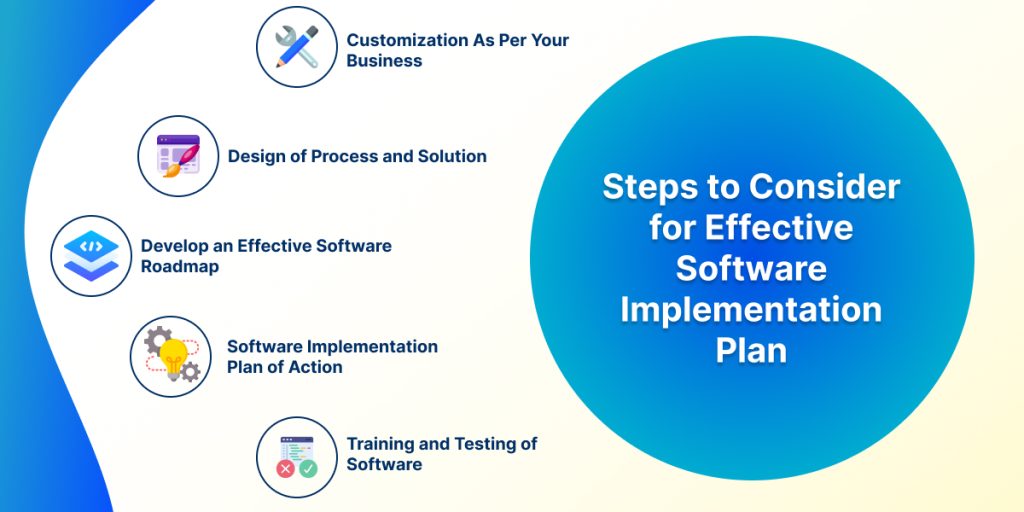
5 Steps to Consider for Effective Software Implementation Plan

SEO success factors

Nowadays, businesses have incredible opportunities to compete against competitors. According to the Singapore Software Development Company, the right tools and software can make these things accurate:

  • Improve the process by helping employees
  • Workflow optimization
  • Boost in productivity
  • Better customer experience

Acquiring new software is time consuming and expensive process. But with a pre-implementation plan, it will increase software adoption successful!

Here are the points we recommend:

Customization As Per Your Business

It is essential to customize the software according to your business requirements, processes, or environments. The software customization can vary on each requirement. At the same time, it can be simple by adding a new field or as complex by creating new automation or modules.

It’s important that you can only customize the process that makes sense for your specific business requirements. It will really help you to create successful software!

Design of Process and Solution

When it comes to implementing the software, you need to adjust multiple processes that match the logic which is used to build the software. Hiring a professional Custom Software Development company will ensure the appropriate process of design methods are used.

A solution design means building a roadmap where you map the new software requirements as per your business. So, everything will work together.

After some months of software launch, you realize the other methods work better. With the help of solution design, you can identify which features are used for your new software. You can also know which aspects need to be customized that fit your needs and goals.

Develop an Effective Software Roadmap

Many people consider an effective software roadmap as your business case. You can also call it a proposed project that is based on its benefits. The goal of making a roadmap is to protect your business from making costly mistakes that could hurt your business financially and reputationally.

You should consider some things in it:

  1. Identify your pain points of business
  2. Determine the solution that improves your employee productivity
  3. Analysis of cost and benefits
  4. Build a timeline
  5. Plan how you will deal with changes

These points will help you to create an effective software roadmap!

Software Implementation Plan of Action

The planning of software implementation is an integral part. The more you focus on the detailed plan, the chances of your success will increase more. Interviews with the end users, creative sessions for engineers and owners, and data analysis will help you.

Now, you should identify which process or team will be affected by software implementation. Below are some points related to plan you need to consider:

  1. Will the implementation have done in stages or at once?
  2. Does it require new measures for security?
  3. Who is in charge of the training of end users?
  4. How long does the software implementation last?

This will help you to create a more detailed plan!

Training and Testing of Software

It is the last step, but they are the most critical aspect. Training varies from user to user, but it has the same goal. You should avoid situation that forces people to use the new software. Instead, you should focus on the following things that will :

  1. Prepare a pre-plan of implementation for them. The sooner you will inform the people about the change is coming, they will likely to be more accepting.
  2. Assign a manager that can answer their queries, provide feedback, and other information.
  3. Ensure everyone knows the benefits of the software.

This will help them to learn a software in an easy way!

Conclusion

Implementation can be stressful, but the effective steps for making an implementation plan will help you out. Once you have built your plan, just stick to it to receive the best possible ROI from your software.

BThrust is the leading Singapore Software Development Company that will truly understand your business needs. Our experienced professionals will provide you with the right support to build an effective plan!

Top 5 Search Marketing Trends Must Have for Business Growth in 2023

New trends and technologies emerge every year as we know the world of digital marketing evolves. The new year 2023 just arrived, so it’s a great time to notice the important changes. These changes will help digital marketing and SEO Company to plan significant digital marketing initiatives for next year!

Many marketers have already started making out the next year’s digital marketing plan. Whether you are experienced or just started, you have to consider the latest trends.

Incorporate the latest trends into your digital marketing strategy to stay ahead of your competitors. A well-informed marketing strategy helps you to build a successful business. Digital marketing trends change constantly and force businesses to adapt their strategies!

When you start making a new year marketing strategy, work correctly. The days are gone when the only concept work is “content is always king”.

Now “More” is no longer “Better”. The game has been changed with quality over quantity. It’s important to reevaluate the priorities and enhance customer expectations.

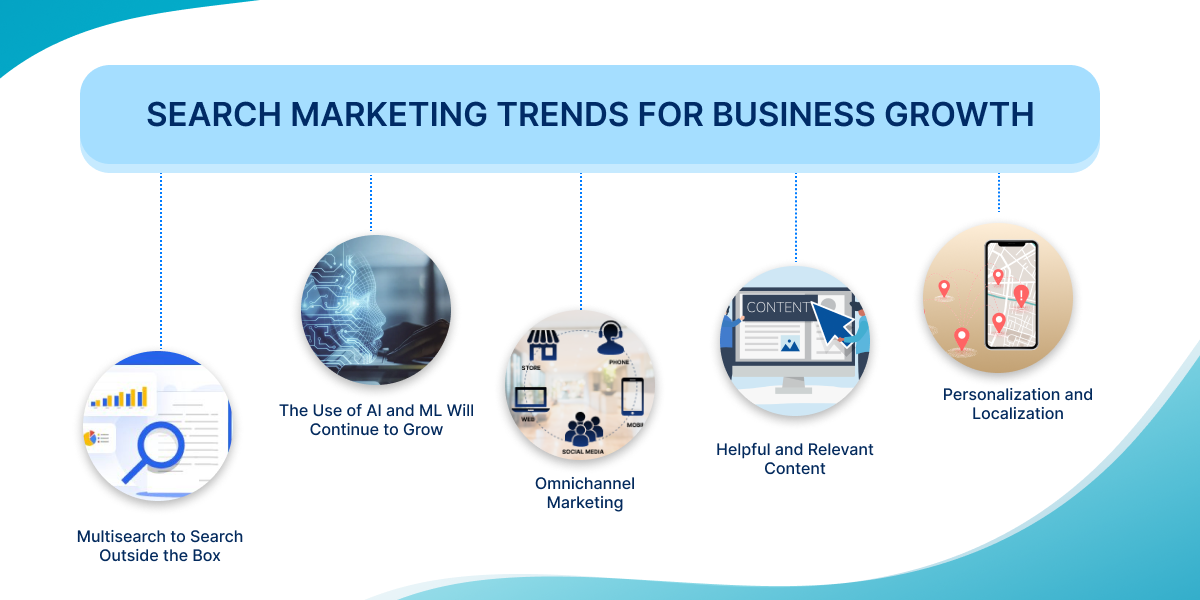
Below, we are mentioning the top 5 search marketing trends to consider for a successful business in 2023!

Multisearch to Search Outside the Box

It is stated that people spend 82% of their time searching. This year, Google launched Multisearch, which changes how we discover and receive information. It constantly tests various formats to show relevant search results from diverse sources.

You can now search between different assets, including videos, PDFs, text, images, etc. Take a picture and use Google Lens to explore everything about the picture. Then, google brings the most relevant search results faster!

The Use of AI And ML Will Continue to Grow

AI and ML consider a must-have strategy in 2023 that helps to solve complex marketing problems. Artificial intelligence (AI) based content is quite a popular feature for digital marketing, content marketing, and SEO Singapore.

Google is taking advantage of machine learning (MI) to auto-translate any language quickly. Besides visual search, auto-generation, and content translation, you will continue to see various AI models. These are excessively used to solve more complex problems.

Personalization and Localization

Mostly consumers are looking for information based on their interests, location, and some other factors. Many online shoppers prefer to buy something from a brand with a strong local presence and engagement rate with their customers.

You should also make sure that your global search marketing strategies are customized for location. Nowadays, Google matches the images to the user intent because it is stated that 36% of people’s mobile screen is occupied with images.

If you are a local business owner, consider the following:

  1. Always respond to the frequently asked questions (FAQ)
  2. Give relevant information and images
  3. Make sure to provide awesome omnichannel experiences to consumers

With the help of these tips, grow your local business effectively!

Omnichannel Marketing

Many consumers shifted to various devices, so it’s important to maintain a unified and consistent experience across all devices. It helps your brand build a stronger relationship between you and your audiences.

You can engage with a number of customers via multiple channels that drive sales. Multiple channels include everything from social media and SEO to in-store interaction. We all know whether it’s online or offline customer experience; it’s always essential for businesses to stay competitive.

Businesses need to centralize vital information and share it across various channels to acquire a seamless omnichannel experience in 2023.

Helpful And Relevant Content

Google recently released the quality raters guidelines and helpful content system. This new system is designed specifically that ensure the customer will find the relevant information quickly and easily they are finding. They don’t need to search anywhere and waste time at all!

You can accomplish this by covering all the touchpoints and micro-moments. It will make sure that helpful content is available across all the digital touchpoints.

This new algorithm works on machine learning that continuously trains itself based on the search results datasets. It can easily detect low-quality pages that have thin and duplicate content. These pages are basically created for ranking purposes, but they can be penalized accordingly.

If you want to make your website successful in 2023, you have to make sure that your content is relevant, informative, qualitative, and authoritative. By doing this, you are able to provide the best experience to the customers when they are searching for information online.

Conclusion

These are the must-have search marketing trends for the year 2023. Don’t wait too long to embrace them for your website if you want to stay ahead of your competitors.

Nowadays, every business competes in a changing landscape, and they are constantly evolving their marketing techniques and strategies to stay updated. Google always rolls out new algorithms, and new technologies also evolve. So, you just need to stay agile, innovative, and data-driven to succeed in 2023!

But with the help of experts, it must be challenging. BThrust is the leading SEO Agency in Singapore that has years of expertise in marketing. We have a team of professionals who help you create an effective strategy by keeping the latest update!

Reasons Why You Should Work with a Professional SEO Company

Want to secure an online space to make your website visible? Search engine optimization will do this for you!

A powerful SEO strategy will help you to build strong visibility on search engine. Your website considers the first point of interaction between your clients and the company. SEO Singapore works on your website to make it faster, more robust and user-friendly. As a result, this will lead your website to achieve a higher position on Google search results.

Not only this, there are many countless reasons businesses are working with professional SEO companies. We have compiled a list of a few reasons:

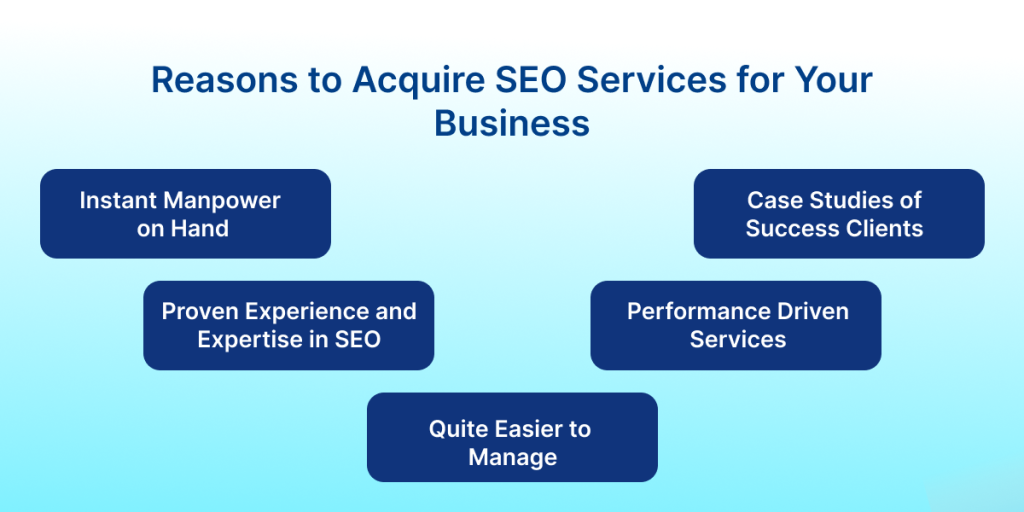
Reasons to Acquire SEO Services Singapore For Your Business

SEO service benefits

Many businesses are still working on traditional marketing to increase their business. They are not completely familiar with SEO. So, we have curated some reasons that will help you to know why hiring SEO services are better!

Instant Manpower on Hand

It is pretty simple when you engage with an SEO Company Singapore; you already have manpower on hand. This will save you time sorting via resumes, interviewing candidates, and hiring.

On the other hand, if you don’t know much about SEO, how will you find out that the person you are hiring is correct for the job? But, an experienced and knowledgeable SEO company has a team of specialists that help in setting the strategy as per your business requirements.

Proven Experience and Expertise in SEO

Hiring an SEO company that has a proven record of driving results for clients. They will not only get your campaign moving quickly but also help you with other essential things. It means they will answer your questions and consult with you on other online marketing techniques.

As an experienced SEO Company Singapore they also have a proven track record of helping businesses to achieve online success.

Quite Easier to Manage

When you hire a reputable SEO firm, they are always available for you. You can talk to them over a phone call regarding your project during business hours.

Sometimes SEO can be very confusing for many companies. So, they only expect a phone call meeting and the reports that show the value. You will receive it all!

It is true that if you hand over your project to a trusted SEO firm, it’s quite easier to manage. They will handle everything!

Performance Driven Services

Many SEO companies are working with the same mentality. It means they will do whatever it takes to keep you as a client. This mentality encourages an increase in productivity and provides a higher level of performance.

You can also hire an in-house SEO team to help you achieve great results. But their working mentality is quite different so the results can be varied.

Besides, all the SEO companies will track the progress of your project via analytics, ranking, and overall return on investment.

Case Studies of Success Clients

When looking for an in-house SEO or an SEO Singapore firm, you must go through their previous work. If you allow a newcomer to handling your SEO project, it may be disastrous for your business. So, always choose a reputable company with a successful client portfolio.

You can see many case studies that prove their expertise in SEO. When searching for an SEO service provider, you must ensure that they have a company portfolio to prove their expertise.

Maybe, these reasons are enough for you to know the value of hiring a professional SEO firm!

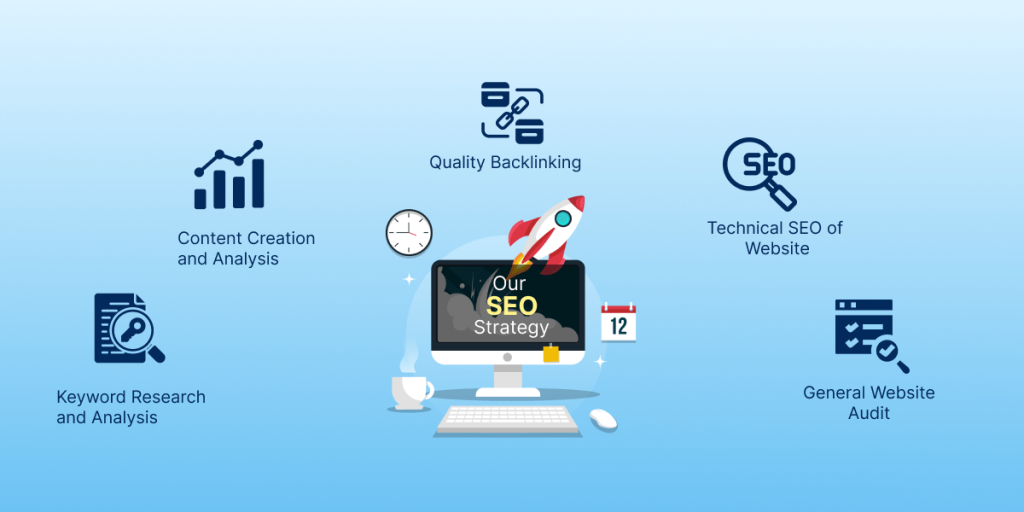
What does a Professional SEO Service Provide You?

Search engine optimization

An SEO professional can help you with many things. They will provide various benefits to your website that improve the search engine rankings and drive more traffic to your site. Below, we have mentioned the essential SEO services that a professional SEO company provide:

  • Keyword Research and Analysis- They will find the relevant keywords for your website.
  • Content Creation and Analysis- They will strategically create the content for your website, boosting your ranking and performance.
  • Quality Backlinking- They will work on quality backlinks to improve your website’s visibility and ranking.
  • Technical SEO of Website- They will work on your website’s technical aspects, including site structure, speed, indexing, and crawling.
  • General Website Audit- They will audit your website to know the errors.

These are the main things that an SEO service provider provides you.

Conclusion

These are the reasons why businesses are hiring an SEO company. As we know, the role of SEO is continuously increasing over the years. That’s why implementing quality SEO practices on your website is crucial. This will help your website to improve its ranking and performance.

If you want to engage with the best SEO company, BThrust is one to choose. They have been working in this field with successful results over the years. As a Singapore SEO Company, they have years of experience and knowledge that will help you to achieve your business objective!

whatsapp